
11 days · South

Classic South, Expanded Version
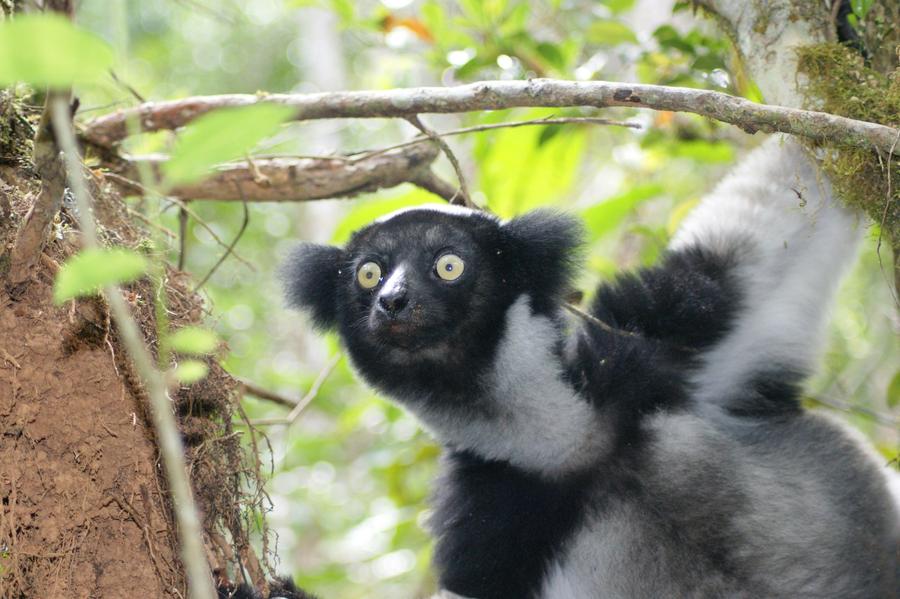
The classic route done properly: Andasibe, Ranomafana, Anja's ring-tailed lemurs, the canyons of Isalo and the reef at Ifaty.
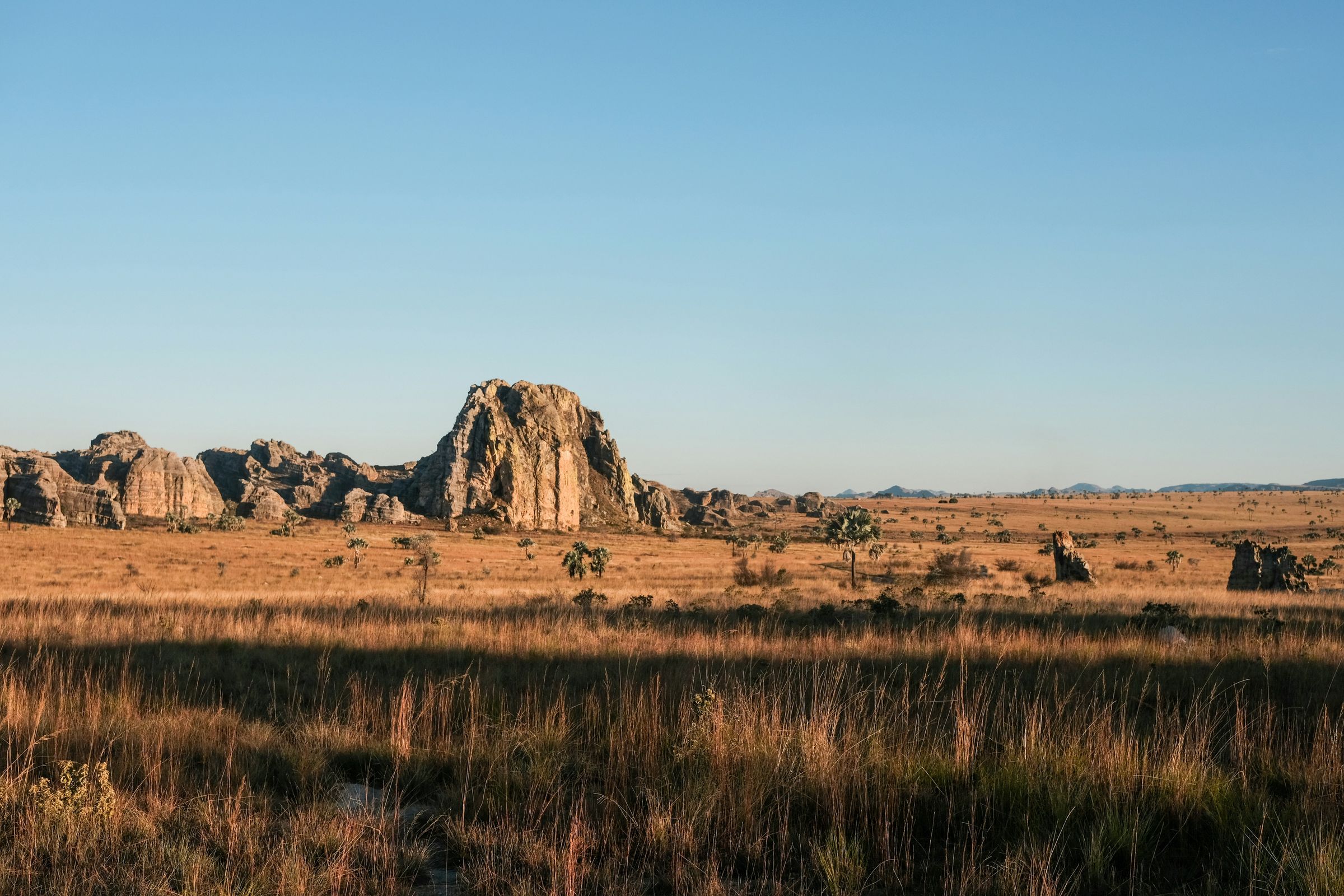
Isalo sits three-quarters of the way down the RN7, and most people come for a long walk with a swim at the end of it. How the walks compare, when the heat bites, what the park costs in 2026 and how we fit it into a trip.
Isalo National Park is a sandstone massif in southern Madagascar, cut by canyons up to 200 m deep, with palm-lined pools you can swim in and ring-tailed lemurs on the rocks. You reach it from Ranohira, a small town on the RN7 about 700 km by road south of Antananarivo, and you can only walk the park with a local guide. Give it an evening for the Window of Isalo at sunset and a full day on the trails.
Both of our set trips through Isalo stay two nights in Ranohira: the Classic South heading down to the coast at Ifaty, and the Ultimate Madagascar Adventure coming up from it. They're private, with your own vehicle and driver-guide, and can be reshaped around the walking you want.
If your trip heads south, yes. Ranohira is on the RN7 itself, so Isalo is a stop on the way to the coast rather than a detour. The walking is the point. Wildlife comes second: Madagascar National Parks counts seven lemur species here, against fourteen around Andasibe, so if rainforest lemurs are why you're going, Andasibe and Ranomafana matter more.
The catch is the way back. Antananarivo is 700 km up the road, which is why the Classic South ends with a flight from Toliara.
It's busy, too. Lonely Planet calls it Madagascar's most visited park, and a 2024 report in L'Express de Madagascar put it at about 200 visitors a day in high season. They bunch up in two places: the Piscine Naturelle and the Window at sunset.
Ranohira is strung out along the road, with the park office and a few places to stay. On the Classic South you get here on day 7, after nights in Antsirabe, Ranomafana and Ambalavao.
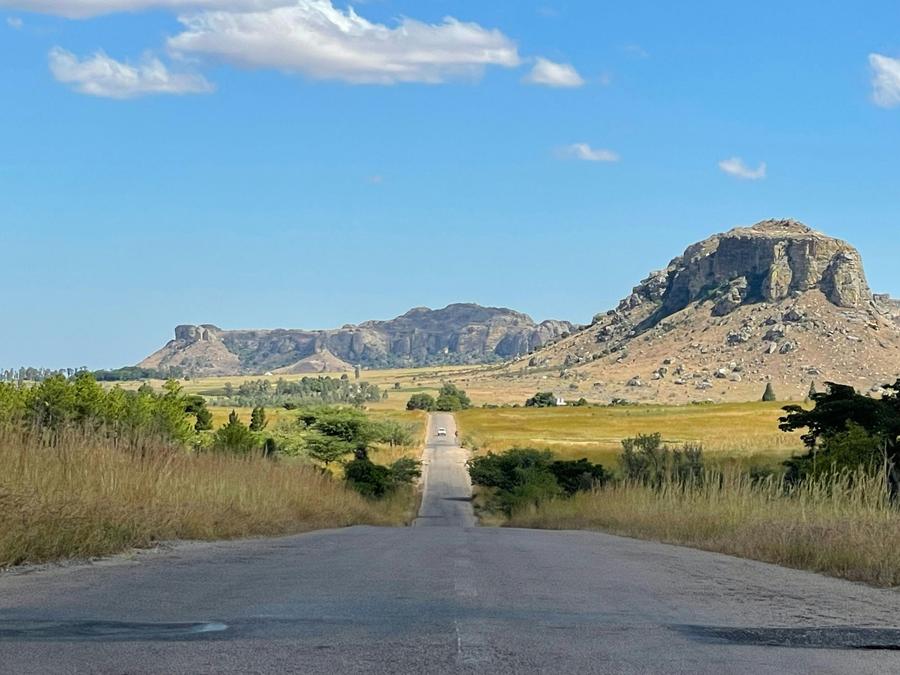
The last stop before Isalo is Anja Community Reserve, about 12 km south of Ambalavao, where ring-tailed lemurs live among granite boulders. After Ihosy the road crosses the open grassland of the Horombe plateau until Isalo's sandstone rises out of it. Ambalavao to Ranohira is roughly 220 to 240 km, usually four to six hours on the road.
Beyond Ranohira the RN7 runs on to the sea. Toliara is about 250 km away: five hours by Madagascar National Parks' reckoning, but nearly eight at the worst of the 2025 road damage. Ifaty is a short drive up the coast.
Read the UK government's travel advice before you plan this stretch. It calls the area between Ihosy, Toliara and Fort Dauphin tense, and Ranohira is on the road between the first two. It advises using a recognised tour operator there and not driving at night, and it reports attacks by cattle raiders in the south, one of them near Isalo, though not on tourists. Canada's advice reports armed attacks on the RN7 between Fianarantsoa and Toliara, especially at night. It also lists Isalo among places where violent assaults have been reported, and says not to visit parks alone. More in Is Madagascar safe?
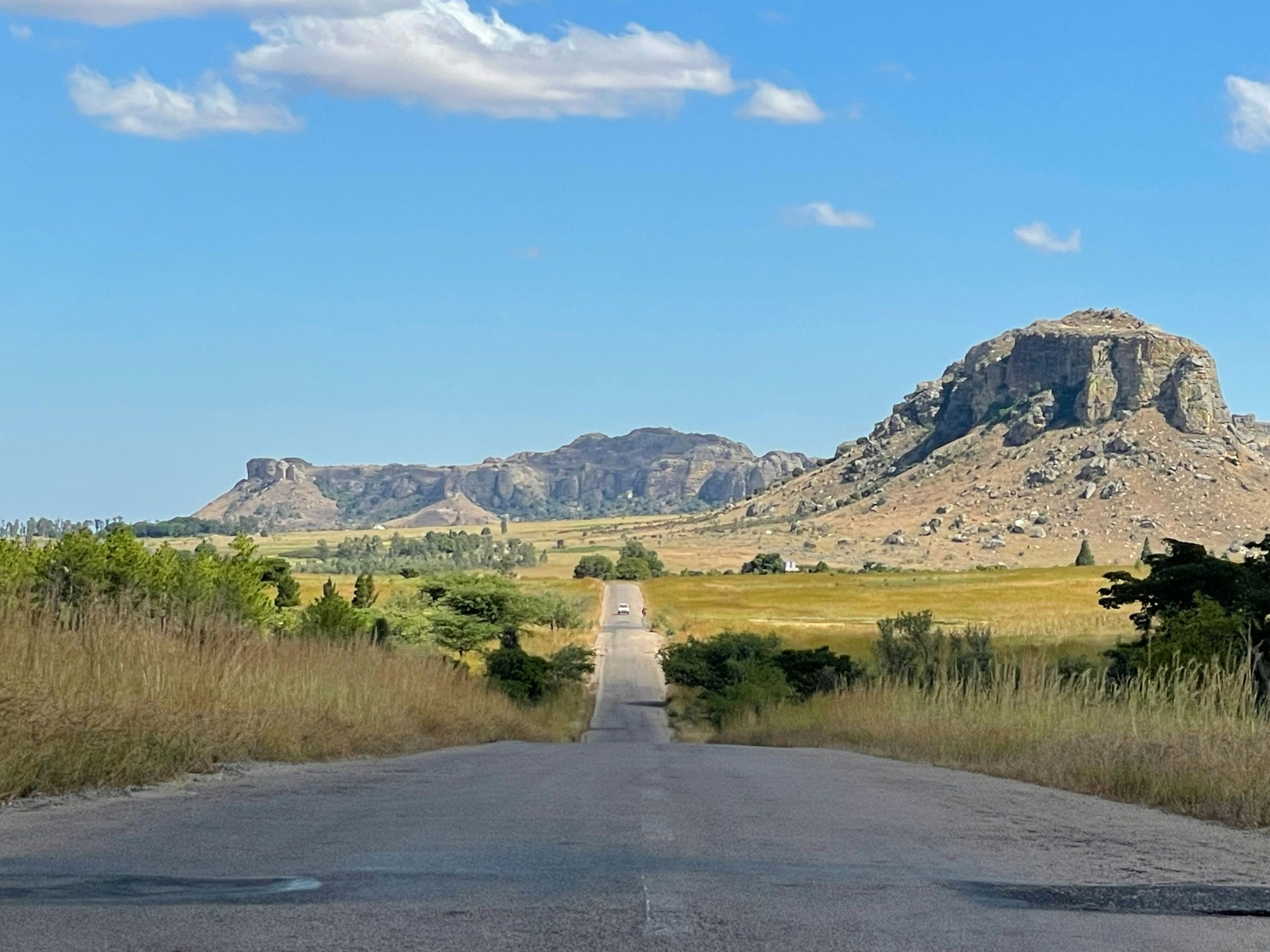
Most visits use two parts of the park: the Piscine Naturelle and Namaza, from car parks a few kilometres outside Ranohira, and the two canyons further out. Times are Madagascar National Parks' own unless we say otherwise.
Parts of the massif are burial ground, for the Bara and before them the Sakalava, so stay on the path your guide takes. And don't point at a tomb: in much of Madagascar that's fady, taboo.
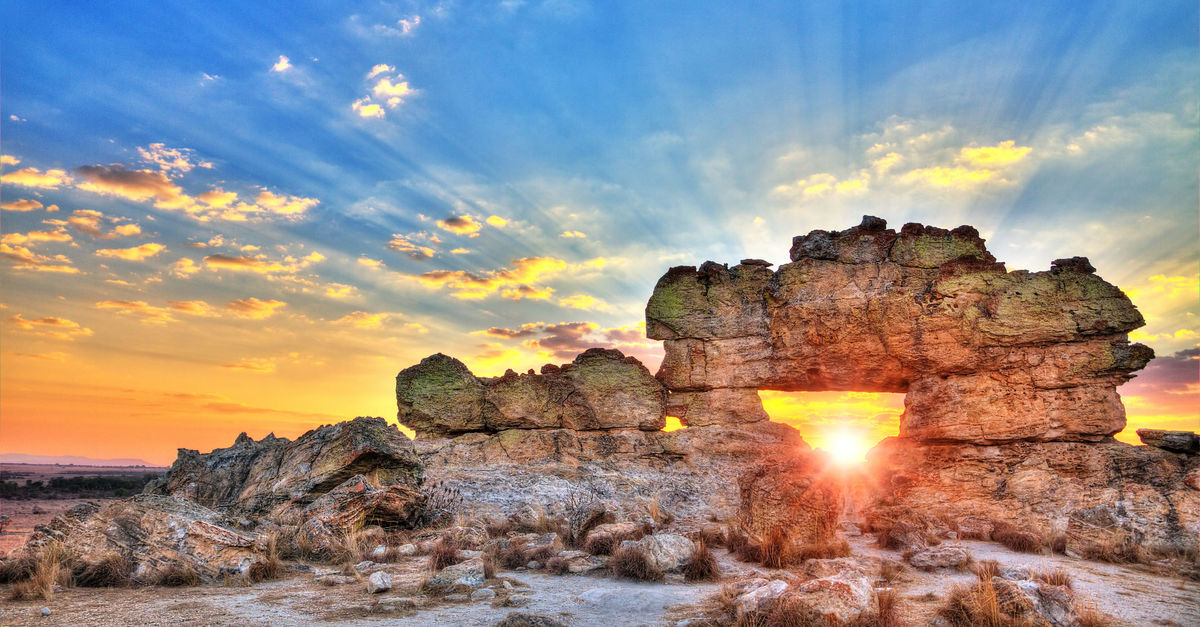
The Window is a natural arch in a sandstone outcrop south of Ranohira, about 800 m down a track off the RN7, and from the right spot the setting sun drops through it. It takes hardly any walking, so it's the one part of Isalo almost anyone can do.
You won't have it to yourself: the same 2024 report put the sunset crowd at about a hundred people a day, and it fills up in the last half hour. Lonely Planet's advice is not to go alone, because of robberies, and to go when other vehicles are there. While everyone faces the arch, turn round now and then. If the sky is clear, the plains and rocks behind you go gold too.
On the Classic South the Window is the first evening, after a free afternoon in Ranohira. Coming up from the coast, as the Ultimate does, you pass the turn-off before you reach town, and since you set the departure time, an early start from Ifaty leaves time to stop there for sunset.
Tell us your dates and what you would like to see. We reply within 24 hours with a written itinerary and a firm price.
Heat is the hard part of Isalo, more than the climbing. The plateau has little shade, while the canyon floors, with water and trees, stay cooler. Start early.
If you can walk for three or four hours with one short climb, you can do the Piscine Naturelle or the canyons. The full loop is a long day, and the 180 m drop into Namaza is hard on knees that already complain on stairs.
Carry at least two litres of water each (three on the full loop or in October and November), a hat, sun cream and shoes with some grip, plus swimwear and a small towel. From June to August add a warm layer for the early start and the evening at the Window.
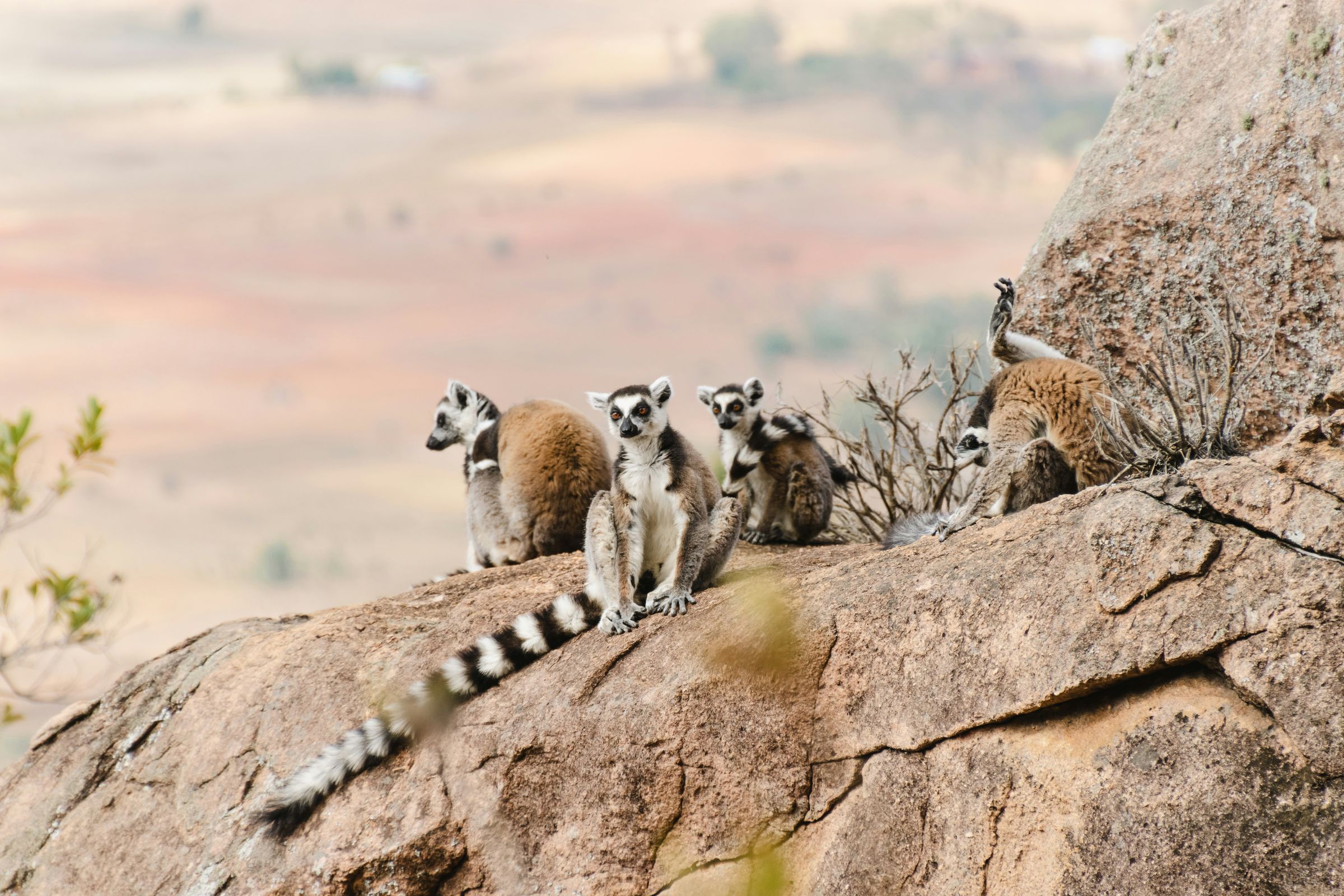
By day you might meet ring-tails, Verreaux's sifakas and brown lemurs. Ring-tailed lemurs and sifakas are often seen along the trails. Around the Namaza campsite, where many walkers stop for lunch, some have learned that people mean food, so please don't feed them.
Ring-tails give birth in August and September, and after a couple of weeks the babies ride on their mothers' backs, so from about September you may see them. For ring-tails close up, Anja is the better bet: its lemurs are well used to people and known for sunning themselves on the boulders, generally early in the morning. For the other species, see Where to see lemurs in Madagascar.
Birders can look for Benson's rock thrush, which Madagascar National Parks lists as endemic to Isalo. On the plateau, squat elephant's-foot pachypodiums grow wedged into the bare rock.
The park is open all year, and the dry months suit walking best. These are the World Meteorological Organization's 1991 to 2020 averages for Ranohira:
For the whole island, see The best time to visit Madagascar.
You can't walk in Isalo without a local guide. Tickets are validated at the park office in Ranohira, where guides are hired too, and the guide is paid per group on top of the ticket.
At the time of writing, Madagascar National Parks charges a foreign adult 65,000 ariary a day to enter, about 13 euros, according to its price board. It has announced that its fees will roughly double from late 2026 (1 November at most parks, according to the Malagasy press), and the press has put Isalo's new rate at 130,000 ariary, about 26 euros. Guide fees depend on the circuit and your group size. Check current rates, and whether the pools cost extra, with Madagascar National Parks before you go.
On our trips you don't deal with any of this: park entrance fees and local guides are in the price we quote.
Two nights suits most people. One night gets you the Window and a short walk before you drive on, and feels rushed. A third night covers both halves of the park, or buys you a night at one of the campsites inside the massif, at Namaza or the Piscine Naturelle. For more walking than that, Isalo also works as a multi-day trek, and we can add the days to either trip.
The Classic South (from €1,730 per adult, for two or more) is the natural fit if Isalo is on your list: eleven days from Andasibe's indri to the reef at Ifaty. The Ultimate Madagascar Adventure (from €3,070) adds the west, with the Tsiribihina River, the Grand Tsingy, Kirindy and the baobabs, before reaching Isalo from the coast. Current UK advice on the river is in our safety guide, and we can reshape the trip without it, for example by flying to Morondava for the west.
Tell us your dates and how much walking you want, on the booking form or WhatsApp. A real person in Antananarivo replies, usually within 24 hours, with a written itinerary and a firm price, and there's nothing to pay until you've seen them.
Photos: Falco Negenman, Marcelo Delgado and Guillermo Suarez on Unsplash.
Yes. Madagascar National Parks requires every visitor to walk with a local guide. You validate your ticket at the park office in Ranohira, where guides are hired, and pay the guide per group on top of the entry fee. On our trips both are included.
At the time of writing, in October 2026, the entry ticket for a foreign adult is 65,000 ariary a day, about 13 euros. Madagascar National Parks has announced that its fees will roughly double from late 2026 (1 November at most parks, according to the Malagasy press), and the press has put Isalo's new rate at 130,000 ariary, about 26 euros. Guide fees are extra. On our trips both are in the price.
Two nights suits most people: sunset at the Window of Isalo on arrival, then a full day walking either the Piscine Naturelle and Namaza loop or the two canyons. A third night lets you do both.
Yes. The Piscine Naturelle, a palm-fringed pool about 3 km from its car park, is the most popular. In the Namaza canyon, by the Cascade des Nymphes waterfall, the Piscine Noire and the Piscine Bleue have cool, deep water. Bring swimwear.
Probably, though nobody can promise it. Ring-tailed lemurs and Verreaux's sifakas are often seen along the trails and around the Namaza campsite, and brown lemurs live in the park too. For close-up ring-tails, Anja Community Reserve, about 12 km south of Ambalavao on the RN7, is on the way.
May to September is the most comfortable for walking, and June to August is coolest, with average highs of about 24 to 26 °C. October and November are the hottest months, with average highs of about 31 °C. December to March is the wet season, when France's travel advice warns against walking the canyons, especially in the afternoon, because sudden storms can flood them. The park is open all year.
Private trips with your own vehicle and driver-guide. Every one can be reshaped around your dates.
The classic route done properly: Andasibe, Ranomafana, Anja's ring-tailed lemurs, the canyons of Isalo and the reef at Ifaty.
Three weeks and nearly every landscape the island has: river cruise, Tsingy, baobabs, remote Vezo coast and the southern parks.
The golden bamboo lemur and Ranomafana's other lemurs, how hard the trails are, the 2025 night walk rules, the fees, Centre ValBio and how many nights to stay.
Indri, ring-tails, sifakas, the aye-aye and mouse lemurs: where each one lives, when to go, and how close you really get.
Car hire with a driver-guide, self-drive, domestic flights or taxi-brousse: the trade-offs, drive times in 2026, and why the west needs a 4x4.

Send your dates and a rough idea. We reply within 24 hours with a written itinerary and a firm price. No deposit to ask a question.