
11 days · South

Classic South, Expanded Version
The classic route done properly: Andasibe, Ranomafana, Anja's ring-tailed lemurs, the canyons of Isalo and the reef at Ifaty.
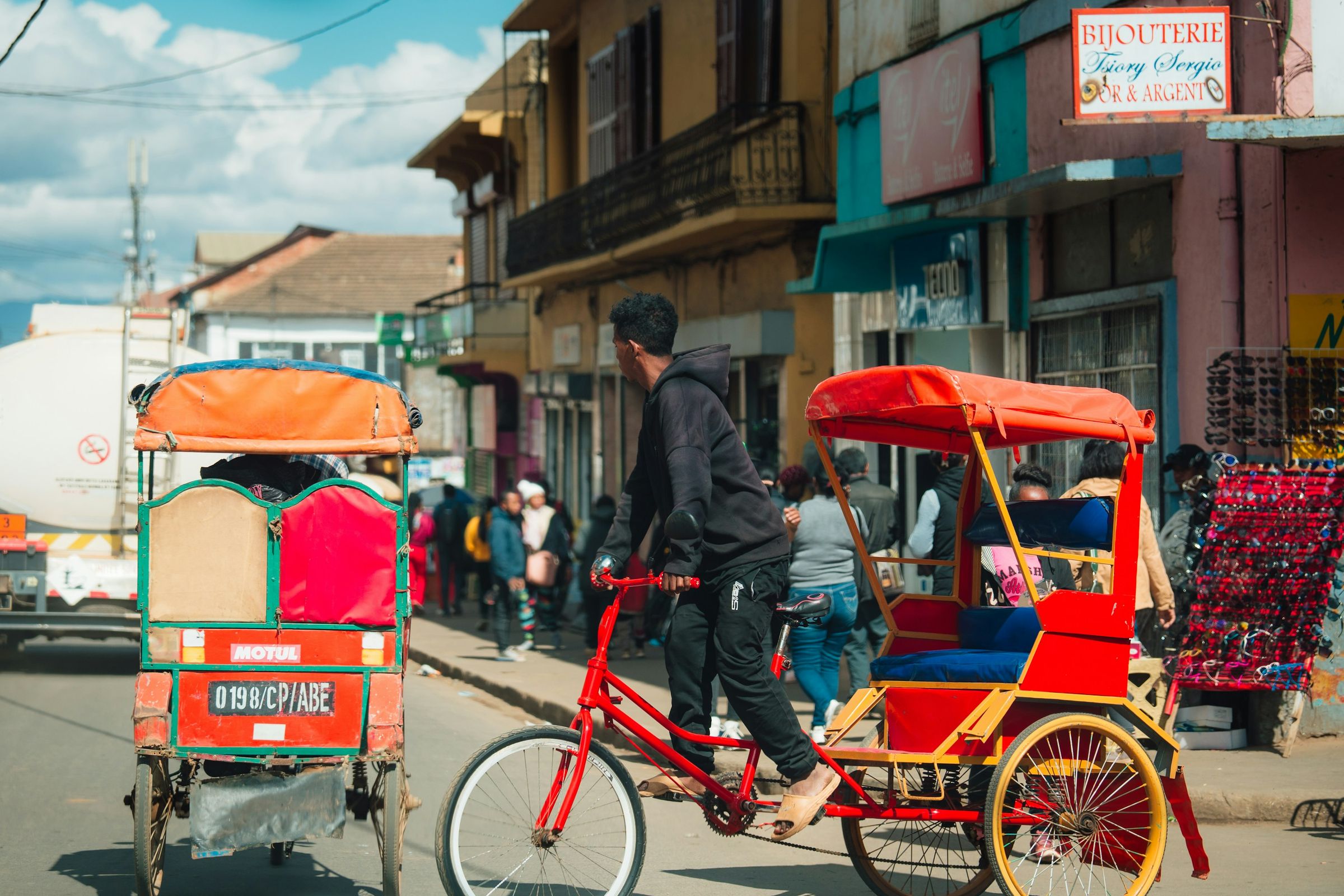
What the ariary is worth in October 2026, what to bring, where to change it, what the cash machines give, cards and their surcharges, what things cost and who to tip. Plus what our trip prices already pay for, so you know how much cash you'll actually need.
Madagascar's currency is the ariary (MGA, written Ar). The central bank's 13 October 2026 reference rates were about 5,000 ariary to the euro and 4,540 to the US dollar. That makes 10,000 ariary roughly 2 euros or $2.20 before fees. Plan to obtain ariary after arrival, from a cash machine or a licensed exchange counter.
For travel around the country, plan to use cash. Cards work in the larger hotels and a few restaurants, often with a surcharge, and cash machines pay out only 400,000 to 800,000 ariary at a time (about 80 to 160 euros). On our trips the vehicle, driver-guide, hotels with breakfast, park fees and local guides are already paid, so your cash goes on meals, drinks and tips.
The ariary replaced the Malagasy franc in 2005, at five francs to one ariary. Check which currency an older quoted amount uses.
The notes are 100, 200, 500, 1,000, 2,000, 5,000, 10,000 and 20,000 ariary, and you'll mostly handle notes. Change is often short, so keep 1,000s and 2,000s for taxis and tips, and break big notes at hotels and supermarkets. Some people, mostly older and in the countryside, still count in francs: if a market price sounds five times too high, ask which one it's in.
The central bank's reference rates for 13 October 2026 were about 5,000 ariary to the euro and 4,540 to the US dollar. Those are reference figures, not the amount an exchange counter promises to hand over.
For pounds, check your bank's conversion as well as the ariary rate. A British traveller buying euros before departure may pay one conversion at home and another in Madagascar, so compare the total cost with using a card for cash withdrawals.
Check the day's figure on the central bank's website and ask the bureau about commission. The useful comparison is the final amount of ariary you receive for the notes you hand over.
Bring euros. Banks deal mainly in euros and dollars, and Rough Guides says euros are easier to change and tend to get a better rate, so British travellers do better with euros than pounds. Euros are often accepted in tourist areas such as Nosy Be, but paying in ariary usually works out cheaper, because a price quoted in euros can use a rate that suits the seller.
Banks and bureaux change dollars too, and some places in Antananarivo and the tourist areas take them. Bring clean, undamaged notes, recent ones if you can. Smaller notes are easier to use than very large denominations.
Bring a card too, ideally a Visa and a Mastercard. Visa is the more widely taken, but some machines accept only one network. American Express is close to useless here.
Canada's travel advice says ariary may not be exported, so change any substantial surplus before departure. Foreign cash must be declared on arrival from 7,500 euros, says the UK Foreign Office, or it can be seized when you leave. Buying the visa at the airport? Carry the fee in euro notes as well as a card, as our visa guide explains.
Count the notes at the counter, and keep the receipt until you've left the country. You can change ariary back at Ivato and some banks in the capital, though not every bank will, and only in round amounts, since the counters have no euro coins. Do it before security: at the time of writing the law doesn't let you pay in ariary in Ivato's departure lounge.
Cash machines are in Antananarivo and the larger towns, among them Antsirabe, Fianarantsoa, Toamasina and Tulear, and Morondava, Nosy Be and Sainte-Marie usually have one or two. Outside the towns there are very few. Check the card-network logos and the fee on screen before accepting a withdrawal.
Tell us your dates and what you would like to see. We reply within 24 hours with a written itinerary and a firm price.
Larger hotels, and some restaurants and shops in Antananarivo and the tourist areas, take cards, Visa far more often than Mastercard. Many add a surcharge, often around 5 per cent and sometimes up to 10, so ask whether the cash price is lower, and have the cash anyway in case the terminal is down. Hotels that quote in euros will usually take the ariary equivalent: check which rate they use.
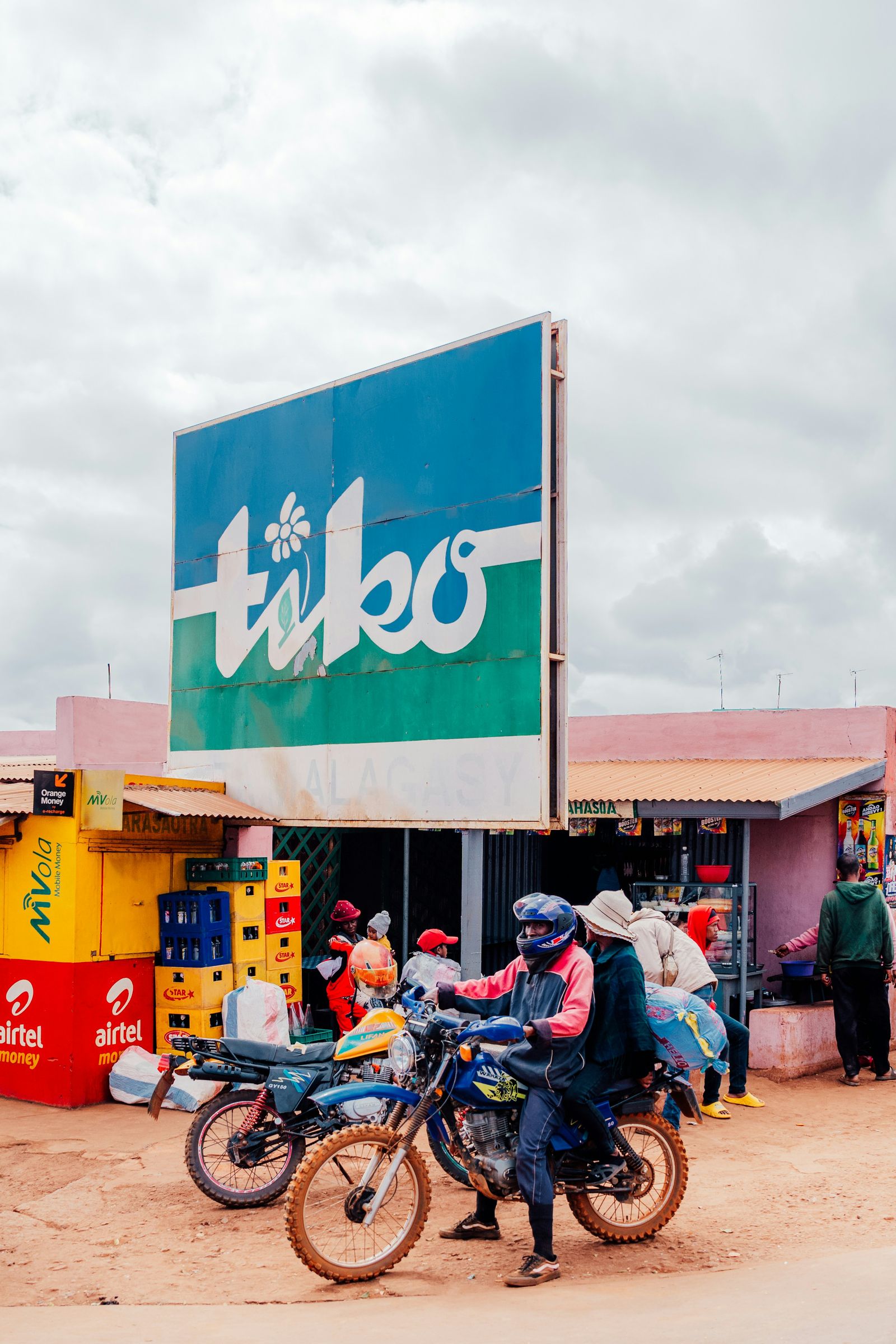
Kiosks like these, for MVola, Orange Money and Airtel Money, are where people top up the mobile-money accounts many Malagasy use to pay by phone. Visitors with a local SIM can sign up, though on a guided trip you won't need it.
Every set trip is private and priced per adult, from two people. It includes your own vehicle and English-speaking driver-guide, accommodation with breakfast, and park entrance fees and local guides, which we book and pay directly. So there's nothing to pay at the park gate, and the rooms are already paid for.
On the 10-day West Adventure, from €1,540, the camping equipment and river crew for the Tsiribihina are arranged too. What's left for your wallet is lunches and dinners, drinks, tips and personal spending, plus any flight a trip leaves out, such as the one back from Tulear at the end of the Classic South, from €1,730.
Our trip cost guide puts meals, drinks and tips at roughly 25 to 45 euros a day each, so a couple on the 11-day Classic South needs about 550 to 1,000 euros between them, before souvenirs. We'd bring about half in euros and take the rest from cash machines on the way. Asking for a written quote on the booking page costs nothing.
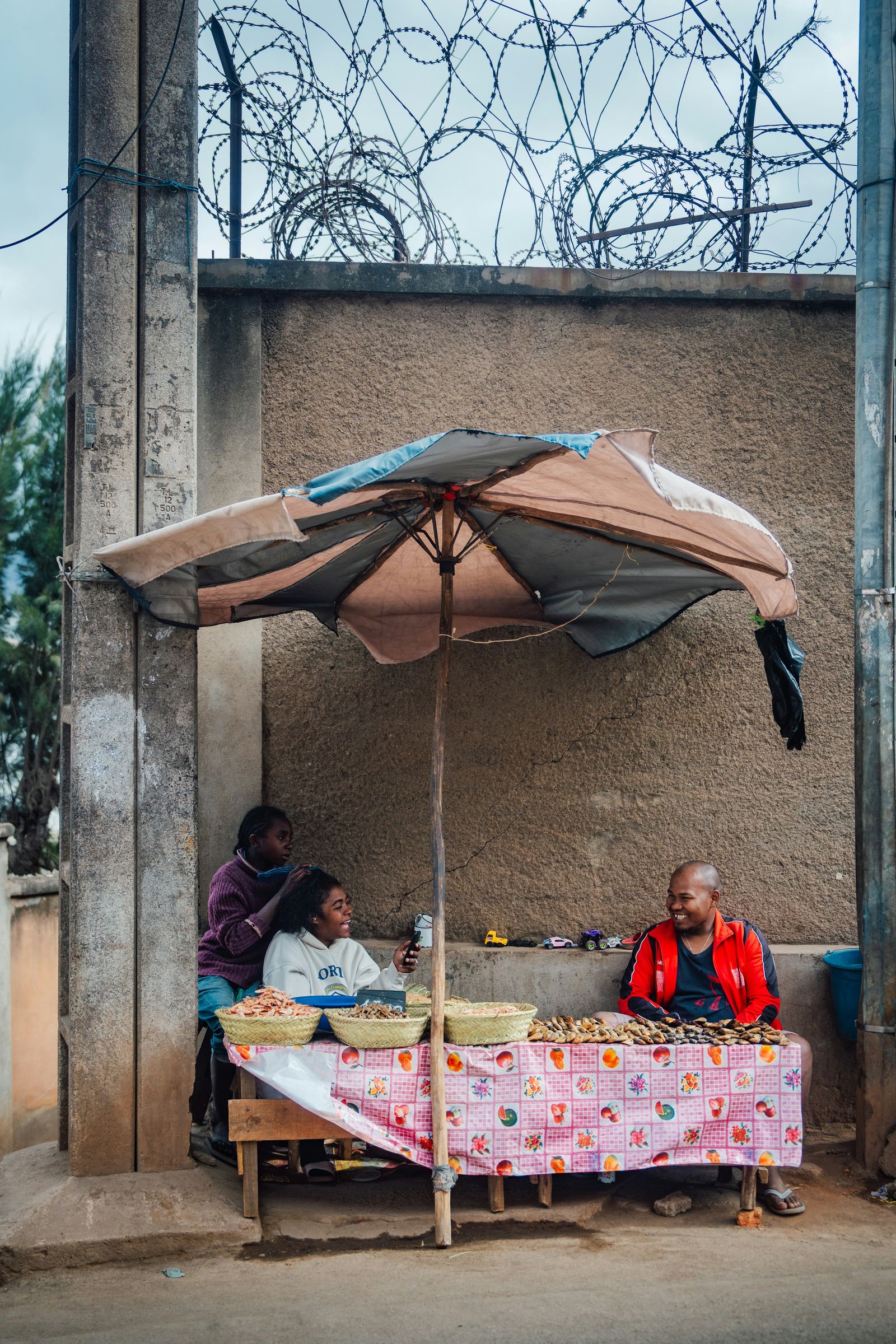
Outside the hotels, prices are low. Rough figures from crowd-sourced price surveys and the Malagasy press:
Allow more for meals at a resort than at a simple town restaurant. For anything without a printed price, such as a taxi or a pirogue ride, agree the amount before you set off. What's on the plate is in our Malagasy food guide.
Tips aren't included in our prices. Pay them in ariary, since euros and pounds are little use to most people on the island. Sources differ, so treat these as a starting point:
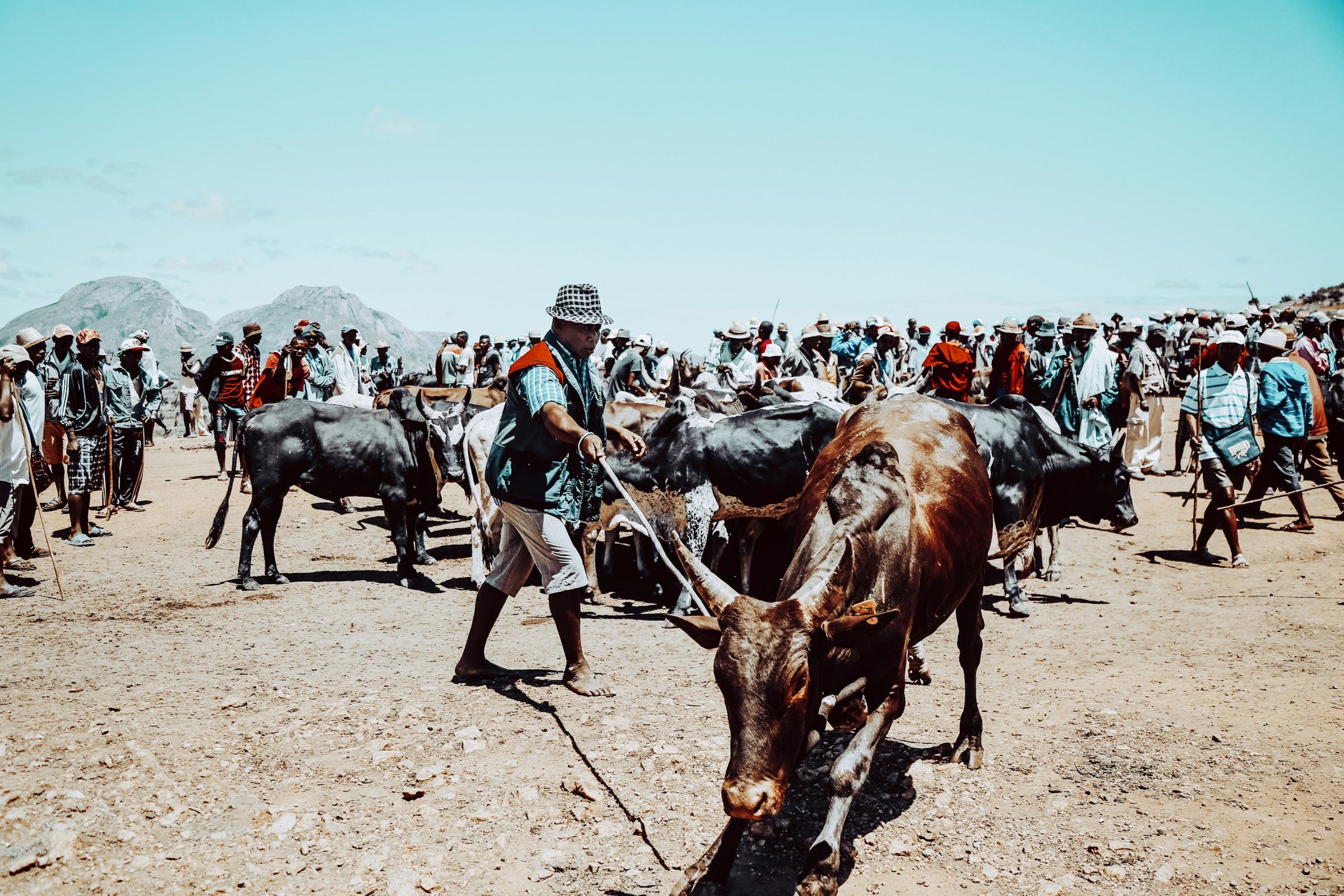
On the Classic South, the RN7 runs through Antsirabe on day 3 and Fianarantsoa on day 6, and both have cash machines. Don't count on another in Ambalavao or around Isalo. Plan your next top-up for Tulear, while keeping a reserve in case a machine fails, which the road to Ifaty passes through on day 9, so leave Fianarantsoa with enough for three days. If you're in Ambalavao on a Wednesday, its zebu market, one of the biggest in the country, runs from before dawn until Thursday morning.
On the 10-day West Adventure, take out what you need in Antananarivo or Antsirabe on day 1. Then come four days on the river, camping on the bank, and the Tsingy at Bekopaka, where you shouldn't count on a cash machine. Morondava, at the end, usually has one or two.
At the time of writing, the UK Foreign Office advises seeking alternative routes on the Tsiribihina after armed robberies on boats. Every trip we run can be reshaped, so ask us about a version without the river. Our safety guide explains the advice.
Plan where you'll keep bulky bundles of ariary.
For plugs, SIM cards and the rest, see what to know before you go.
Photos: Sitraka and Graphic Node on Unsplash.
The Malagasy ariary (MGA, written Ar), which replaced the Malagasy franc in 2005. Notes run from 100 to 20,000 ariary, and the 20,000 note is worth about 4 euros. Plan to obtain ariary on arrival, from a cash machine or a licensed counter changing euros or dollars.
The central bank's 13 October 2026 reference rate was about 4,540 ariary to the US dollar, making 10,000 ariary about $2.20 before fees. The euro was about 5,000 ariary. Check the day's rate and the counter's charges before exchanging money.
Euros are taken directly in some tourist areas, such as Nosy Be, and dollars sometimes, but most of the country runs on ariary, and paying in ariary usually works out cheaper. Bring euros if you can, since they're easier to change, or clean dollar notes in twenties and fifties.
Cards work in the larger hotels and some restaurants in tourist areas, mostly Visa, often with a surcharge of around 5 per cent or more. Cash machines are in the larger towns, but each withdrawal is usually capped at 400,000 to 800,000 ariary (about 80 to 160 euros), and machines run out of notes. Take out cash before long drives.
On our private trips the vehicle, driver-guide, hotels with breakfast, park fees and local guides are included, so you need cash for other meals, drinks and tips: roughly 25 to 45 euros a day each. Bring part in euros, take the rest from cash machines in the bigger towns, and keep a reserve of euros apart.
There's no fixed rule. As a rough guide: around 5 to 10 euros a day from the group for a driver-guide on a multi-day trip, 2,000 to 10,000 ariary per person for a park guide after a good day, about 1,000 to 2,000 ariary a bag for porters, and 5 to 10 per cent in restaurants. Tip in cash, in ariary.
Private trips with your own vehicle and driver-guide. Every one can be reshaped around your dates.
The classic route done properly: Andasibe, Ranomafana, Anja's ring-tailed lemurs, the canyons of Isalo and the reef at Ifaty.
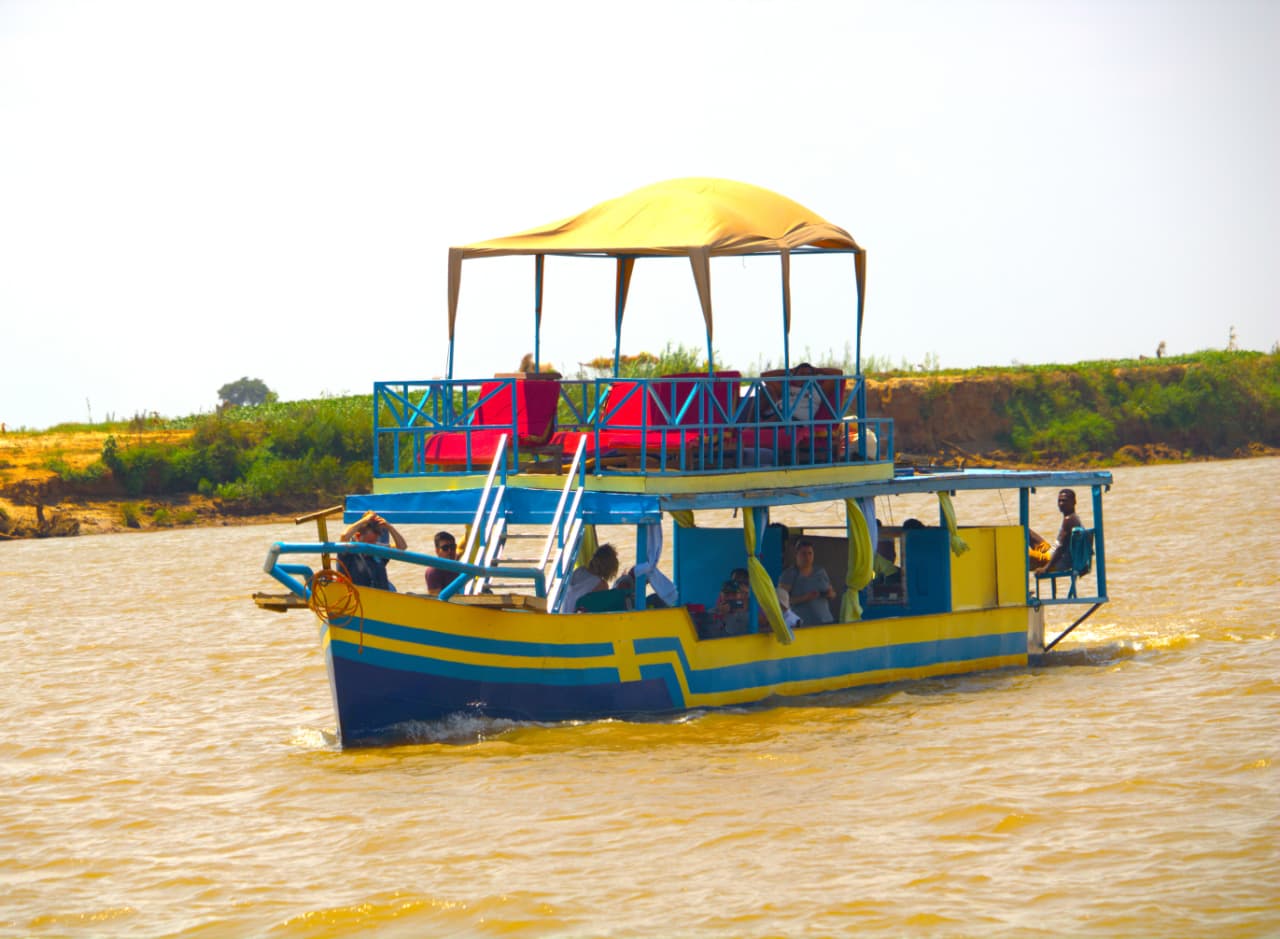
Four days drifting down the Tsiribihina with camps on the riverbank, then the Grand Tsingy, Kirindy's nocturnal forest and the baobabs.
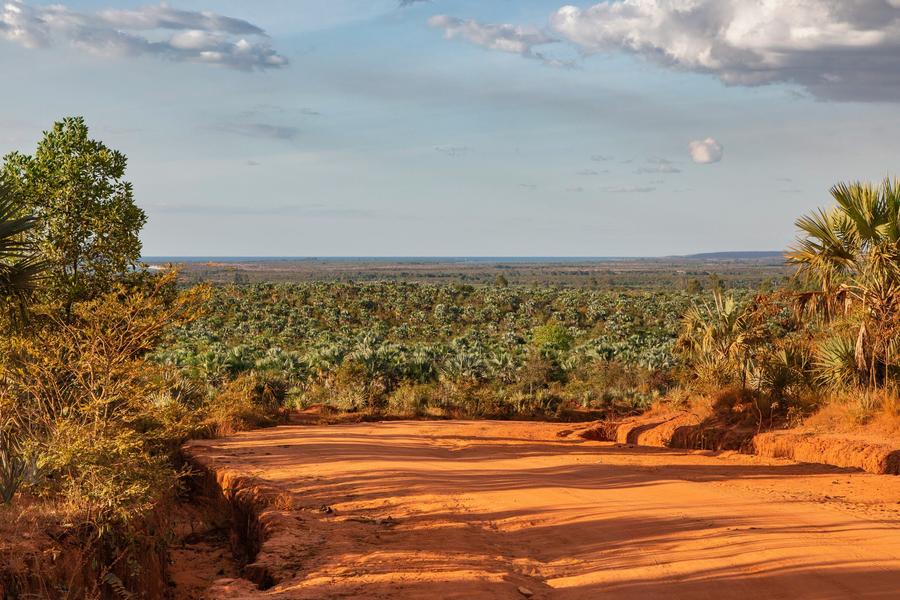
What a private Madagascar trip costs, what our prices include, and what goes on top: flights, the visa, meals and tips, plus park fees if you travel on your own.
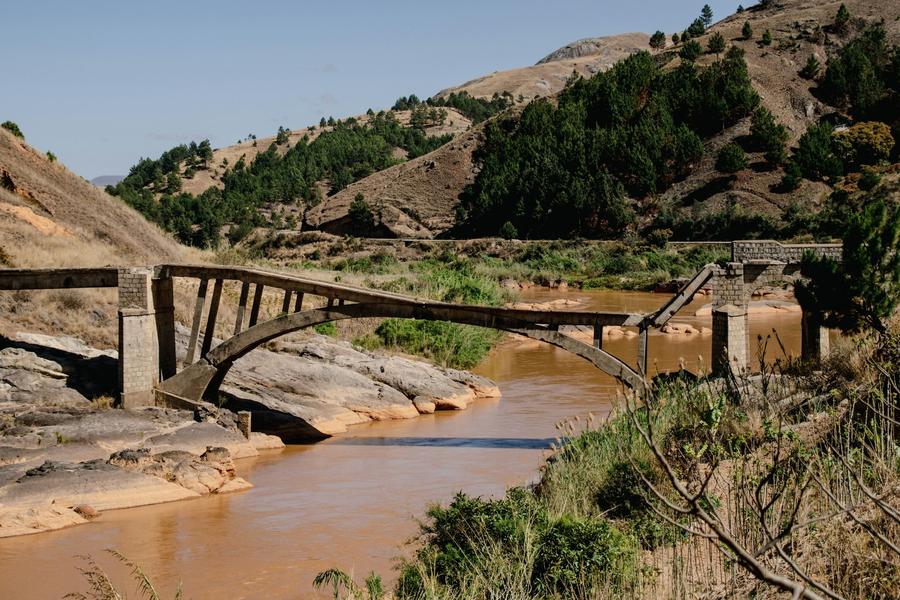
The visa, cash and the ariary, malaria and water, slow roads, power cuts and SIM cards, fady and photos, packing, tipping and the seasons: what to know before a first trip.
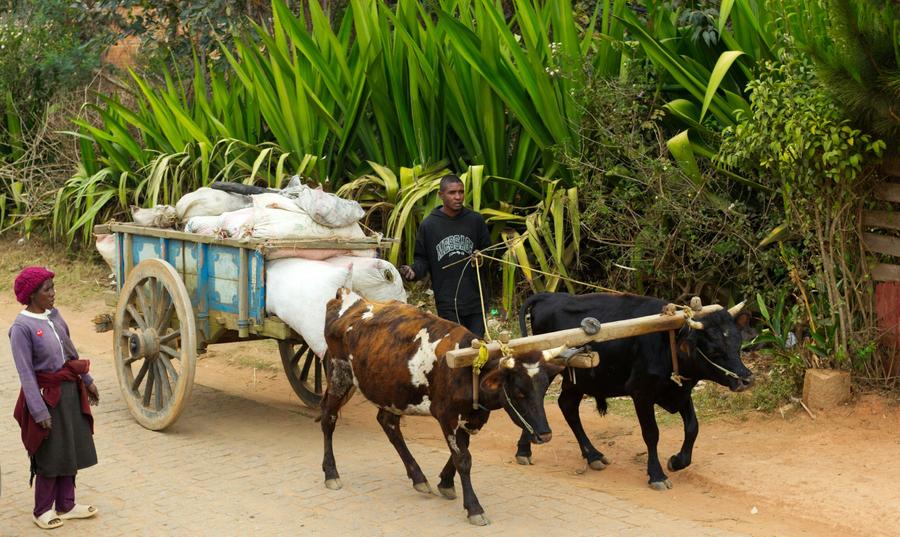
What the US, UK, Canadian and French advisories say (October 2026), and what to actually do about crime, night roads, malaria and cyclones.

Send your dates and a rough idea. We reply within 24 hours with a written itinerary and a firm price. No deposit to ask a question.