
5 days · West
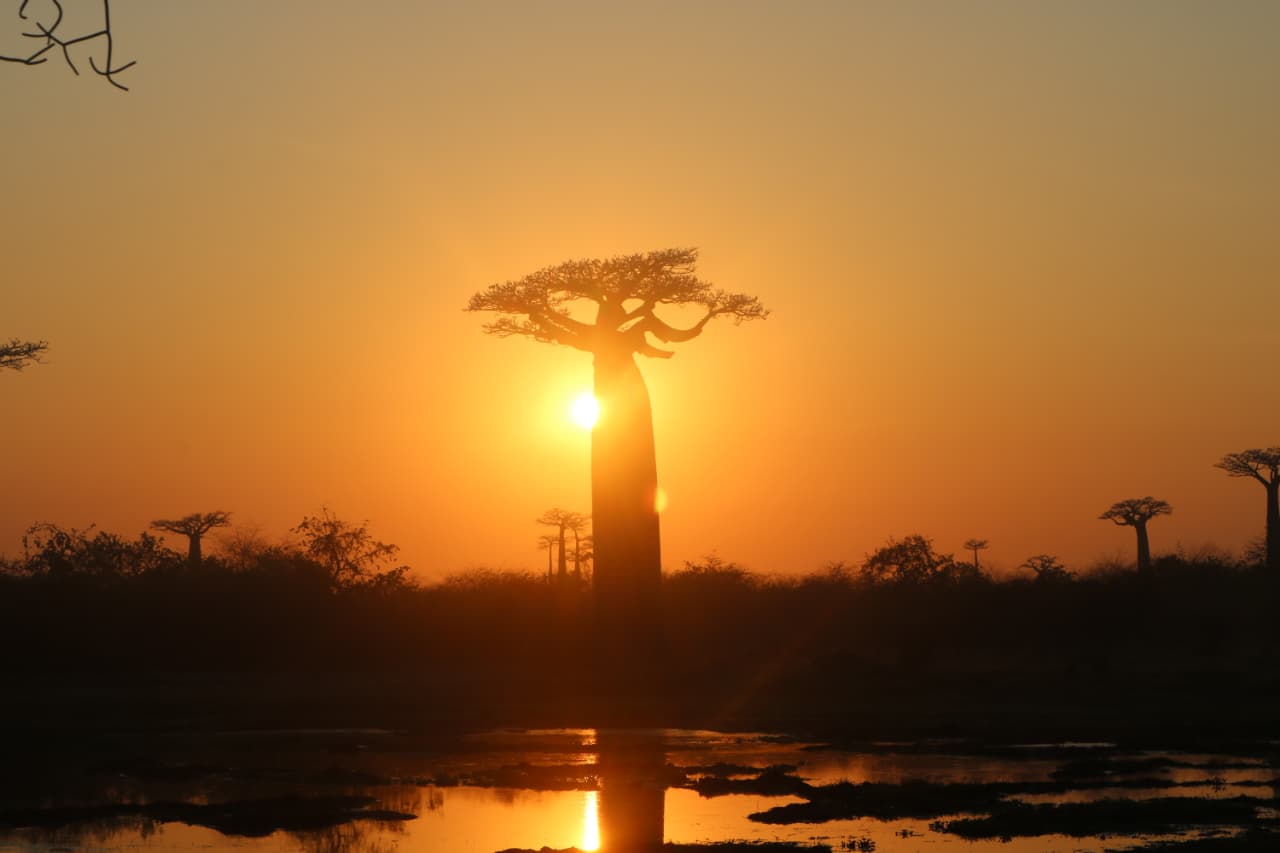
West: Baobabs and Tsingy
Sunset on the Avenue of the Baobabs, a night walk in Kirindy, the Grand Tsingy hike and a canoe on the Manambolo River.
Nine species, every one of them threatened, each in its own corner of the island. Why sifakas dance, which forest holds which species, the months for babies, how close you really get, and which of our private trips go where.
Sifakas are big, long-legged lemurs that leap from trunk to trunk and, when they have to cross open ground, bound sideways on their hind legs with their arms held up. That's the "dance". There are nine species, all found only in Madagascar, and each lives in its own region. For the dancing Verreaux's sifaka, go west to Kirindy or south to Isalo. Decken's lives at the Tsingy de Bemaraha, the diademed sifaka at Mantadia near Andasibe, and Milne-Edwards' at Ranomafana. They're wild, so nobody can promise you one.
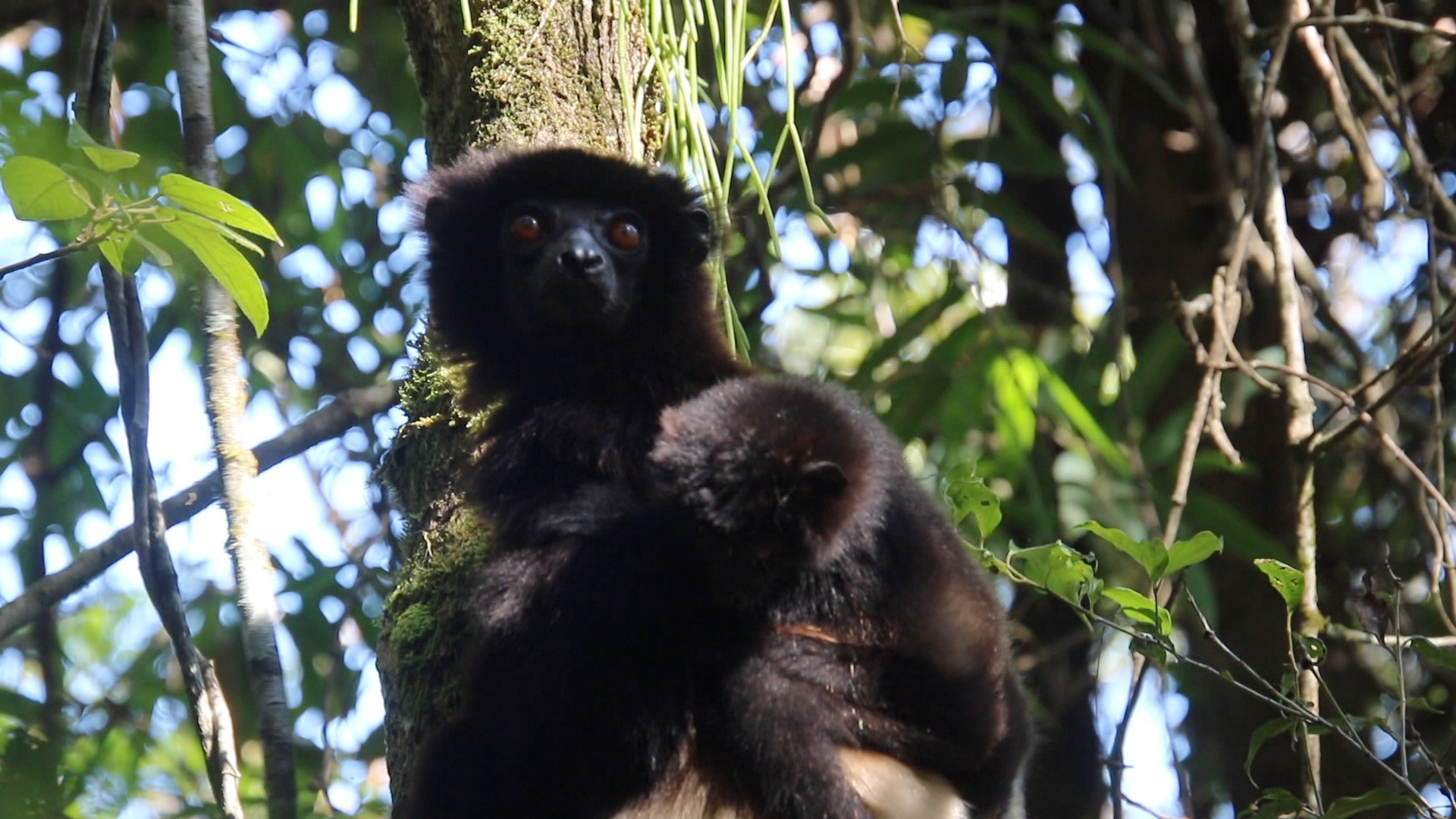
The mother and baby at the top of this page are a still from Christian's own camera, filmed in September 2026. Of our set trips, the Ultimate Madagascar Adventure covers the most sifaka country, with three species along its route. Every trip is private and can be reshaped.
Sifakas make up the genus Propithecus, in the same family as the indri, the largest living lemur. Most weigh 3 to 6 kg, with a head and body of 40 to 55 cm and a tail about as long again. The name copies their alarm call, which the Duke Lemur Center writes as "shif-auk".
They live in groups of two to about a dozen and eat mostly leaves, with flowers and fruit when they can get them. In the trees they cling upright to a trunk and push off with their legs, and a Verreaux's sifaka can clear 10 m in one leap. They're active by day and sleep high in the canopy.
Because their bodies are built for leaping, not walking. A sifaka's legs are long and powerful, and its arms are only about two-thirds as long. That's ideal for springing between upright trunks and no use for walking on all fours, so they don't. When a group has to cross a gap too wide to jump, such as a track or a clearing, they drop down and bound across sideways on their hind legs, arms thrown up for balance.
It's a way of crossing open ground, not a display, and it lasts a few seconds. Mostly you'll watch sifakas feed and leap in the branches, which we think is the better sighting anyway.
If the dance itself is what you want on camera, Berenty is another place to discuss, a private reserve on the Mandrare river in the far south, about two hours' drive from Fort-Dauphin. Its habituated Verreaux's sifakas sometimes cross open ground, but nobody should make an animal move for a photograph. None of our set trips go there, and at the time of writing the UK Foreign Office says the security situation in the south between Ihosy, Toliara and Fort-Dauphin remains tense. If Berenty matters to you, ask us.
Verreaux's sifaka has white fur with a hint of yellow, black hands and feet, and a bare black face. It lives in the dry forests of the west and south, and it's the sifaka most people mean by "dancing lemur". The IUCN moved it to Critically Endangered in 2020.
Kirindy Forest, a dry forest reserve about 60 km north-east of Morondava, has a German Primate Center research station. All three of our western trips spend a night there, and the daylight walk is the one for sifakas: the morning of day 2 on the 5-day Baobabs and Tsingy trip, from €810 per adult, day 9 on the 10-day West Adventure and day 8 on the Ultimate. The night walk looks for mouse lemurs and, with luck, the fossa: our fossa guide explains the odds.
Madagascar National Parks lists Verreaux's sifaka among Isalo's seven lemur species. On the Classic South's full day in the park, day 8, ring-tailed lemurs and sifakas are often seen along the trails. Some around the Namaza campsite have learned that walkers carry lunch, so please don't feed them. For the ring-tails, see where to see ring-tailed lemurs.
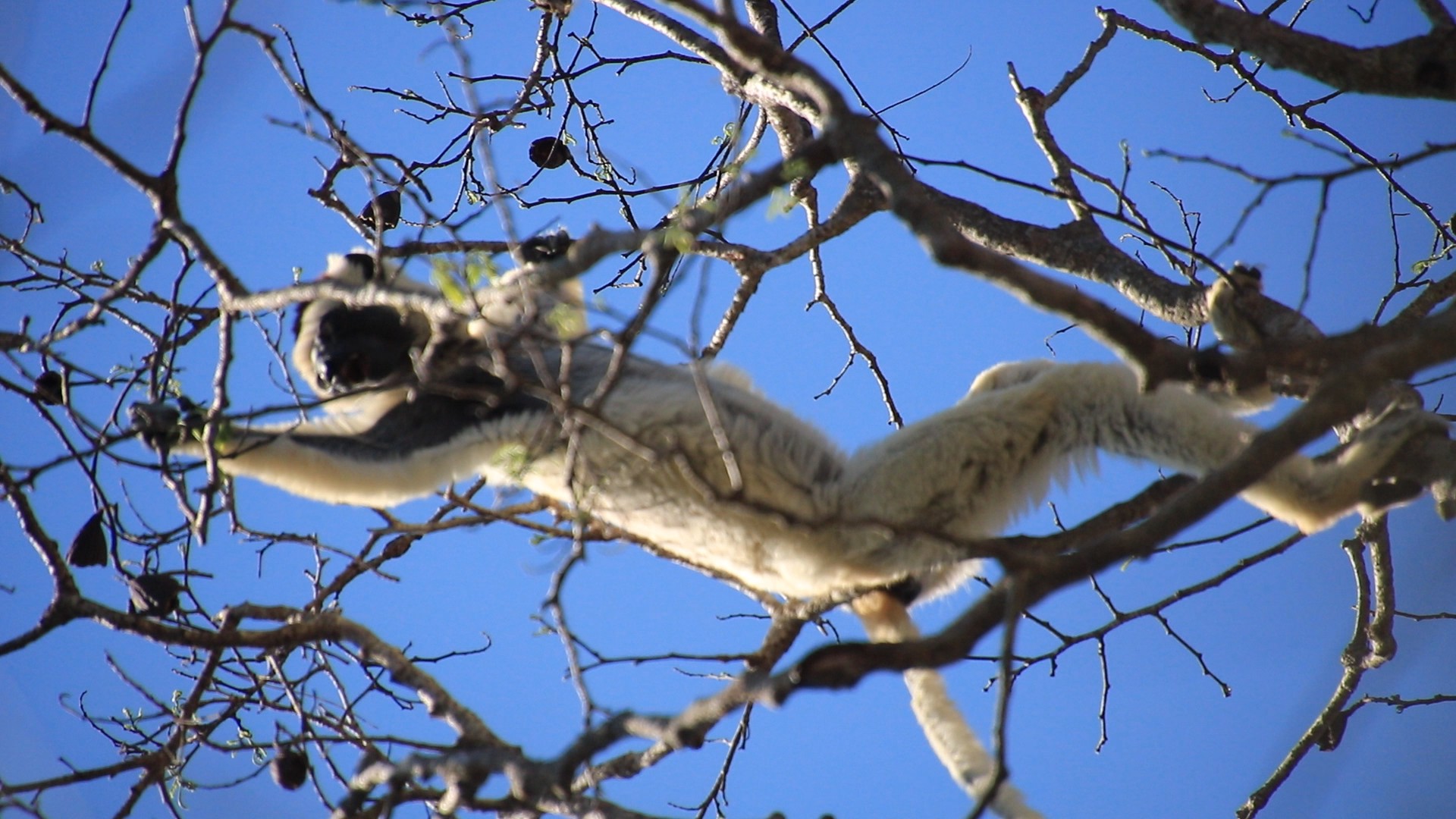
Decken's sifaka looks a lot like Verreaux's: creamy white, sometimes tinged yellow-gold, with an entirely black face. It lives north of the Manambolo, the river you canoe through the gorge at Bekopaka, and Madagascar National Parks names it as the flagship species of the Tsingy de Bemaraha. It too has been Critically Endangered since 2020.
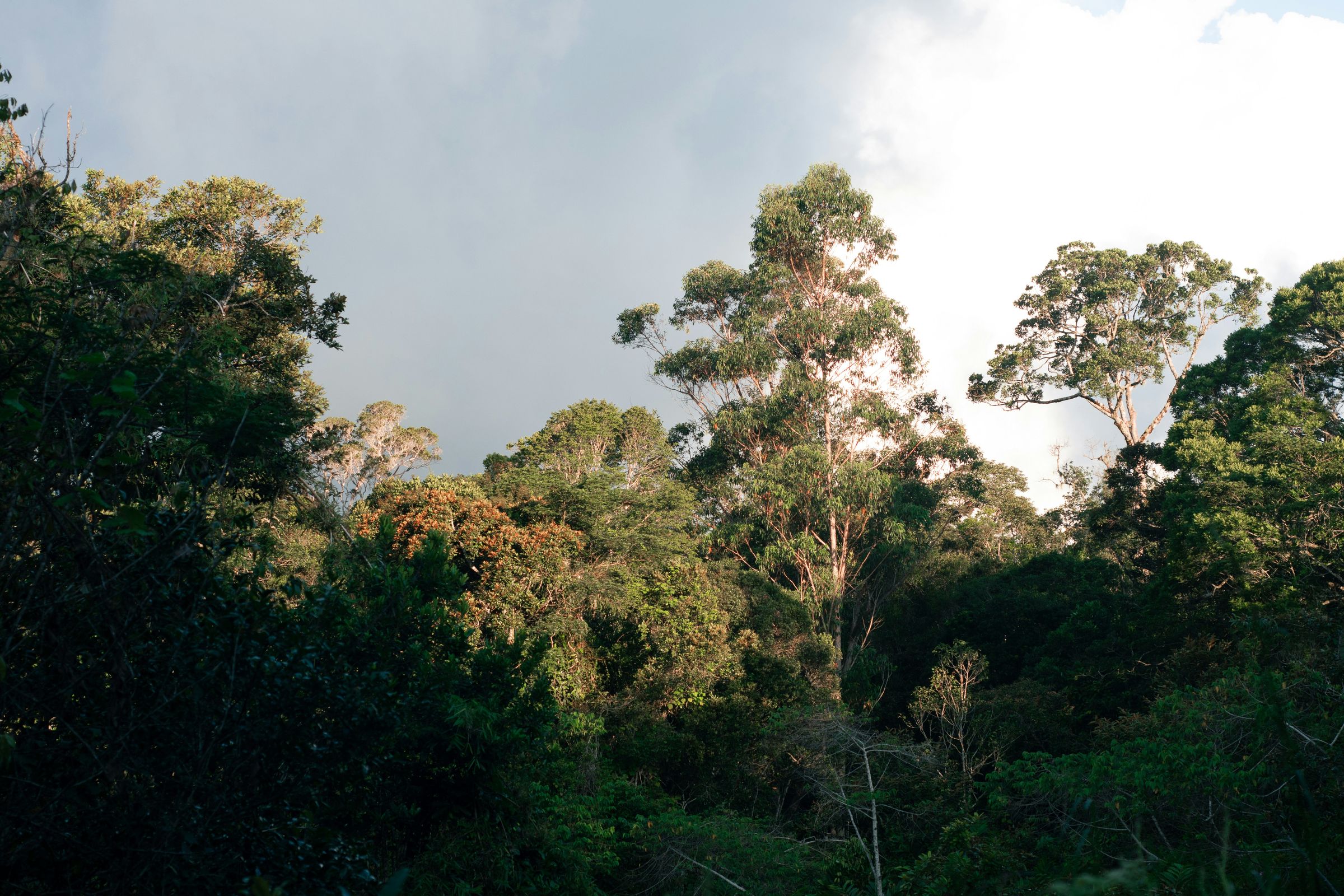
The Tsingy is a trip for the rock first, but with luck you'll meet sifakas on the forest stretch of the Grand Tsingy walk. The Ultimate's Grand Tsingy day, day 6, names Decken's sifakas among the things to look for, and the 5-day trip gives the Tsingy two days. The park opens only in the dry season, usually mid-April to November, and June to mid-October is safest for the Grand Tsingy. More in our Tsingy guide.
Tell us your dates and what you would like to see. We reply within 24 hours with a written itinerary and a firm price.
The most colourful of them has yellowish-golden arms and legs, a white lower back and tail, a slate-grey head and a black face under a white band, the "diadem" of its name. It's also the biggest sifaka, at around 6.5 kg, and Critically Endangered.
Andasibe-Mantadia National Park, three to four hours east of Antananarivo, has two parts. Analamazaotra, the small southern part, is the indri's forest, and a reintroduced population of diademed sifakas lives there too. Mantadia, the much bigger northern part, is 15 to 20 km up a muddy track. Madagascar National Parks lists the diademed sifaka there. The trails are steeper, and you'll meet far fewer people.
Our 2-day Andasibe trip, from €320 per adult, spends its second morning in Analamazaotra for the indri, so a diademed sifaka there is a bonus if you're lucky. If this sifaka is the point, add a night for Mantadia. The Classic South and the Eastern trip also start at Andasibe, and our Andasibe guide has the rest.
This is the sifaka at the top of the page: almost black, with a paler saddle low on its back and orange-red eyes. It lives in the mountain rainforest of the south-east, as far south as Andringitra, in groups of three to nine. It's the one sifaka the IUCN rates Endangered rather than Critically Endangered, and local fady, taboos against harming it, have helped protect it.
Ranomafana National Park has 14 lemur species and steep, often wet trails, so wear shoes with grip. Our Classic South, from €1,730 per adult, spends days 4 and 5 there on its way down the RN7, then reaches Isalo's Verreaux's sifakas on day 8. The Ultimate's day 18 in Ranomafana names Milne-Edwards' sifaka among the things to look for. More in our Ranomafana guide.
None of our set trips go to these three, but every trip can be reshaped, so ask us what it takes.
The other two, the black Perrier's sifaka and the crowned sifaka, have small ranges in the north-east and north-west, well away from the usual routes.
Yes, all nine. In 2020 the IUCN moved Verreaux's, Coquerel's, Decken's and the crowned sifaka from Endangered to Critically Endangered, which left eight of the nine in its highest threat category. Milne-Edwards' sifaka, at Endangered, is the exception. Across all lemurs, the same assessment found more than nine in ten species threatened, mostly through forest loss and hunting.
Park fees and local guides help fund the parks and community reserves. On our trips both are in the price. The IUCN's primate specialists also ask travellers to prefer Malagasy-owned operators. We are one.
Sifakas live in their forests throughout the year, but access varies with the season. The dry season, May to mid-November, is easiest: cooler walking, and the roads to Kirindy and the Tsingy usually open.
Birth timing varies by species and locality. Animal Diversity Web gives June to September for Verreaux's sifaka. Young cling to their mothers before becoming independent, so a late dry-season visit may find mothers carrying them. Avoid choosing a single week on the assumption that every species has the same birth calendar.
For the west, our pick is September to mid-October, when the babies are on their mothers' backs and the Grand Tsingy is still open. Whatever the month, go early: Verreaux's sifakas are busiest in the morning and late afternoon. The best time to visit Madagascar goes month by month.
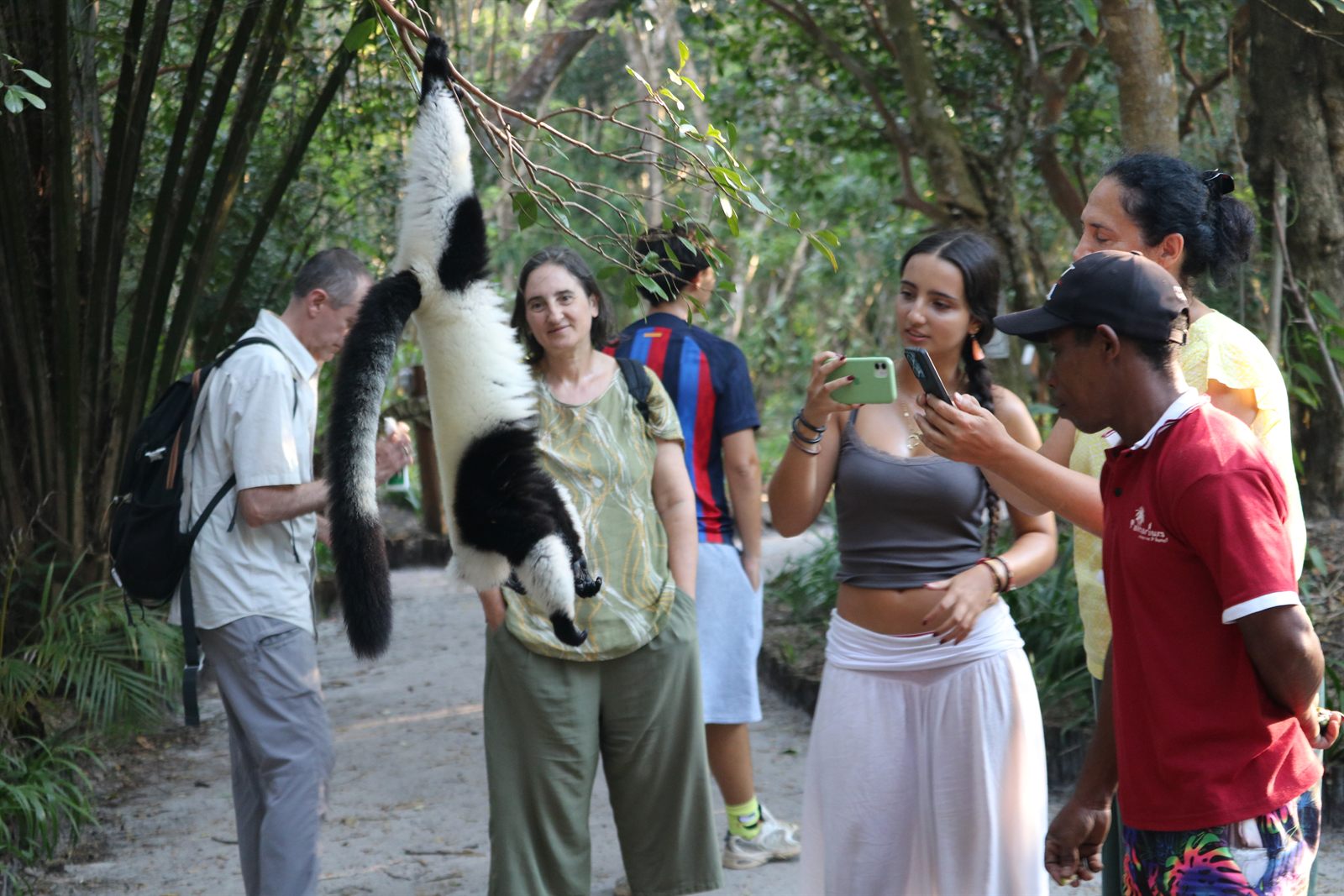
In the national parks the lemurs are wild and keep their distance. That's the point, and a long lens or a patient guide is what gets you the shot. Groups used to guides will often carry on feeding while you watch, which is what "habituated" means in a park. It doesn't mean tame.
Expect to look up. Bring binoculars rather than relying on a close photograph. The IUCN's primate specialists recommend staying at least 7 m from any lemur, even when it's above you, spending no more than 30 minutes with one group, and never feeding or touching one: habituated lemurs can bite, and diseases pass both ways. Our lemur safari page covers the private reserves, where lemurs come closer.
The 5-day west trip fits the forests of two species into five days. The Classic South gives you a chance of three, from Andasibe to Isalo. So does the Ultimate, from €3,070 per adult, and since it starts in Antananarivo, two days at Andasibe add a chance of the diademed sifaka. The Ultimate also spends three days on the Tsiribihina river, where at the time of writing the UK Foreign Office advises seeking alternative routes after armed robberies on boats. We can reshape it without the river (safety guide).
Tell us which sifakas you're after and how many days you have, on the booking form or WhatsApp. A real person in Antananarivo replies, usually within 24 hours, with a written itinerary and a firm price.
Photo: Sandy Ravaloniaina on Unsplash.
Nine, all in the genus Propithecus and all found only in Madagascar: Verreaux's, Decken's, Coquerel's, crowned, diademed, Milne-Edwards', silky, Perrier's and golden-crowned. The easiest four to reach are Verreaux's at Kirindy and Isalo, Decken's at the Tsingy de Bemaraha, the diademed sifaka near Andasibe and Milne-Edwards' at Ranomafana.
They're crossing open ground. A sifaka's legs are long and powerful and its arms much shorter, a body built for leaping between upright trunks, so it doesn't walk on all fours. When a group has to cross a gap too wide to jump, it hops across sideways on its hind legs with its arms up for balance. It lasts a few seconds and only happens where the trees run out.
Verreaux's sifaka is the famous dancer. Our western trips look for it on a morning walk in Kirindy Forest, near Morondava, and the Classic South on its day in Isalo National Park. Berenty, a private reserve about two hours' drive from Fort-Dauphin, is known for sifakas dancing across the road, though it isn't on our set trips.
In Andasibe-Mantadia National Park, three to four hours east of Antananarivo. Madagascar National Parks lists it in Mantadia, the bigger northern part, up a muddy track, and a reintroduced population lives in Analamazaotra, the indri's forest. Our private 2-day Andasibe trip, from €320 per adult, spends a morning in Analamazaotra. Add a night if you want Mantadia too.
Yes. Since the IUCN's 2020 lemur assessment, eight of the nine sifaka species are Critically Endangered, including Verreaux's, Decken's, Coquerel's and the diademed sifaka. Milne-Edwards' sifaka is Endangered. Forest loss and hunting are the main threats.
Sifakas live in their forests throughout the year, but dry-season access is usually easier. Birth timing varies: Verreaux's sifakas give birth between June and September in the account used here. Later dry-season visits may find mothers carrying young. Confirm the Tsingy's opening if you want to combine it with Kirindy.
Private trips with your own vehicle and driver-guide. Every one can be reshaped around your dates.
Sunset on the Avenue of the Baobabs, a night walk in Kirindy, the Grand Tsingy hike and a canoe on the Manambolo River.

The classic route done properly: Andasibe, Ranomafana, Anja's ring-tailed lemurs, the canyons of Isalo and the reef at Ifaty.
Three weeks and nearly every landscape the island has: river cruise, Tsingy, baobabs, remote Vezo coast and the southern parks.
Chameleons at Peyrieras, a walk among the lemurs at Vakona, a guided night walk, and an early start in Analamazaotra, where the indri call most mornings.
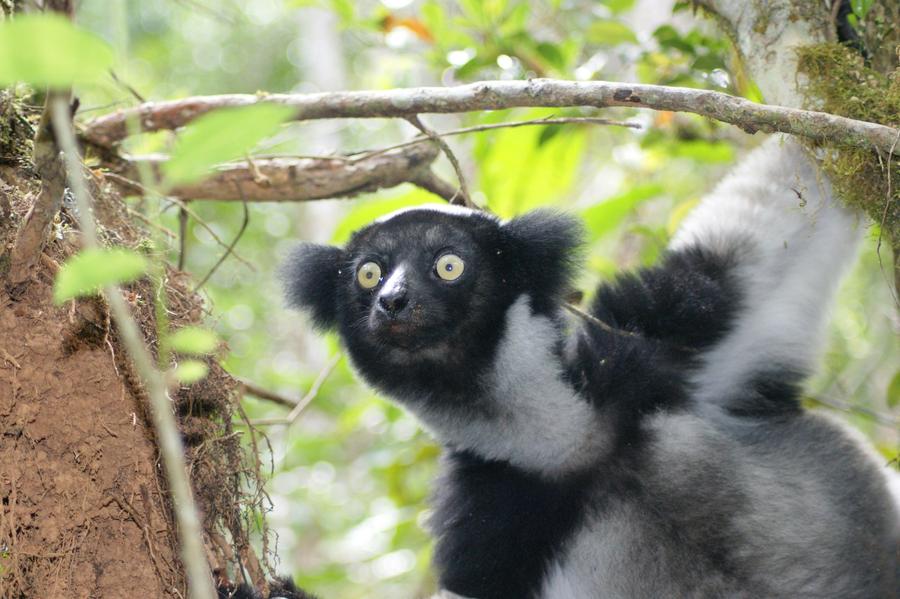
Indri, ring-tails, sifakas, the aye-aye and mouse lemurs: where each one lives, when to go, and how close you really get.

Where ring-tailed lemurs live, how a visit to Anja works, Isalo and the Tsaranoro valley, when babies ride on their mothers' backs, and how close you should get.
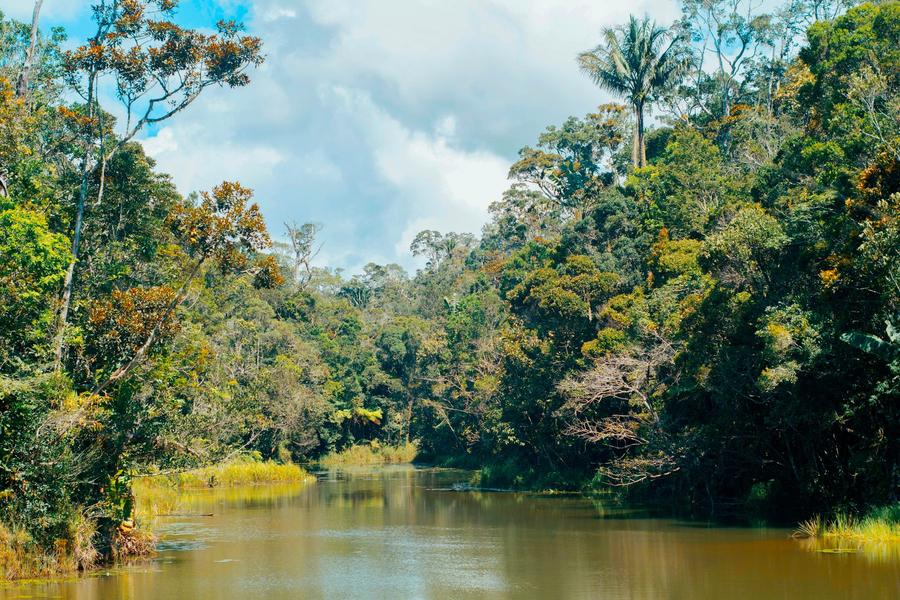
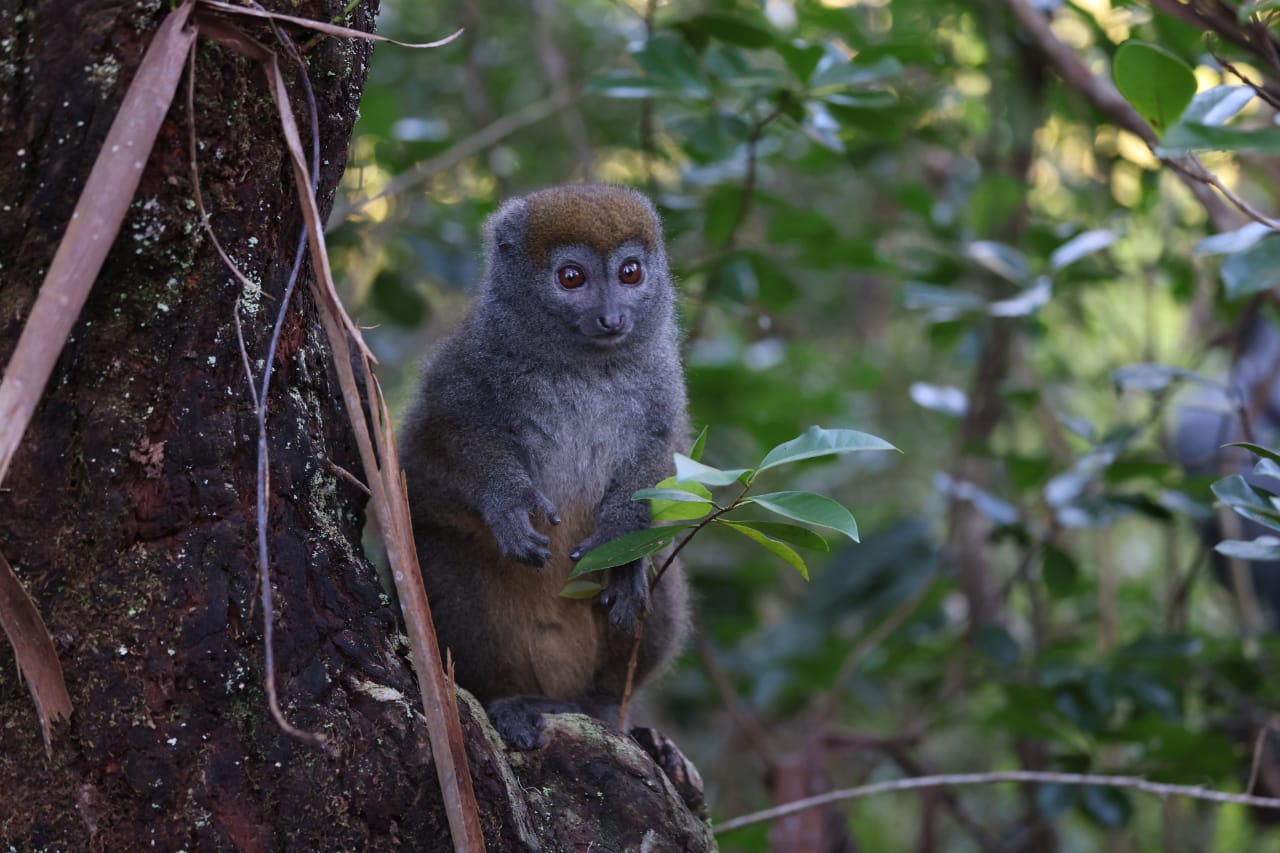
The golden bamboo lemur and Ranomafana's other lemurs, how hard the trails are, guided night walks, the fees, Centre ValBio and how many nights to stay.
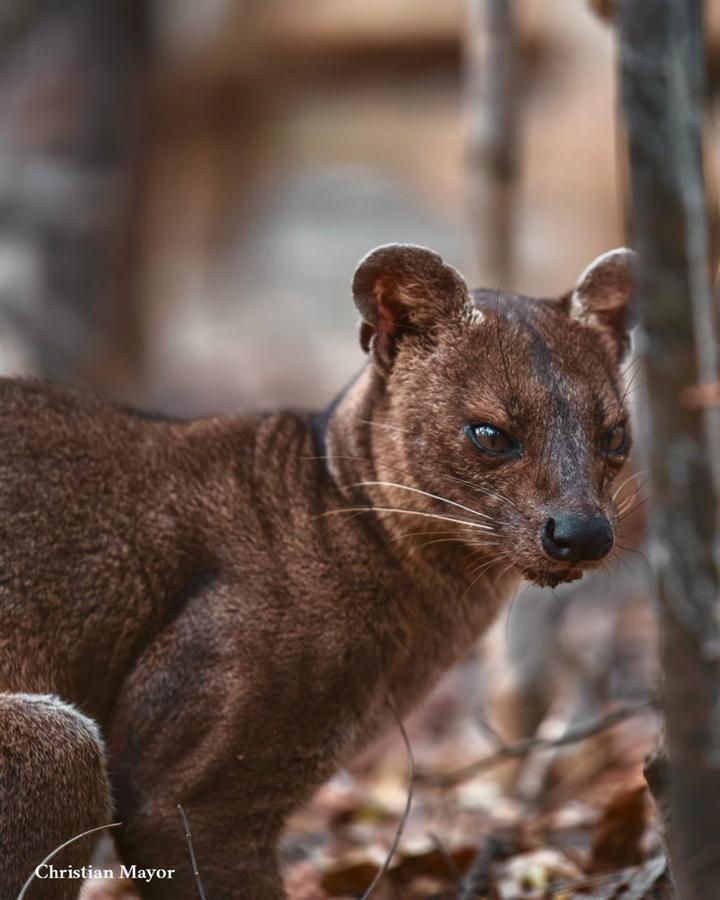
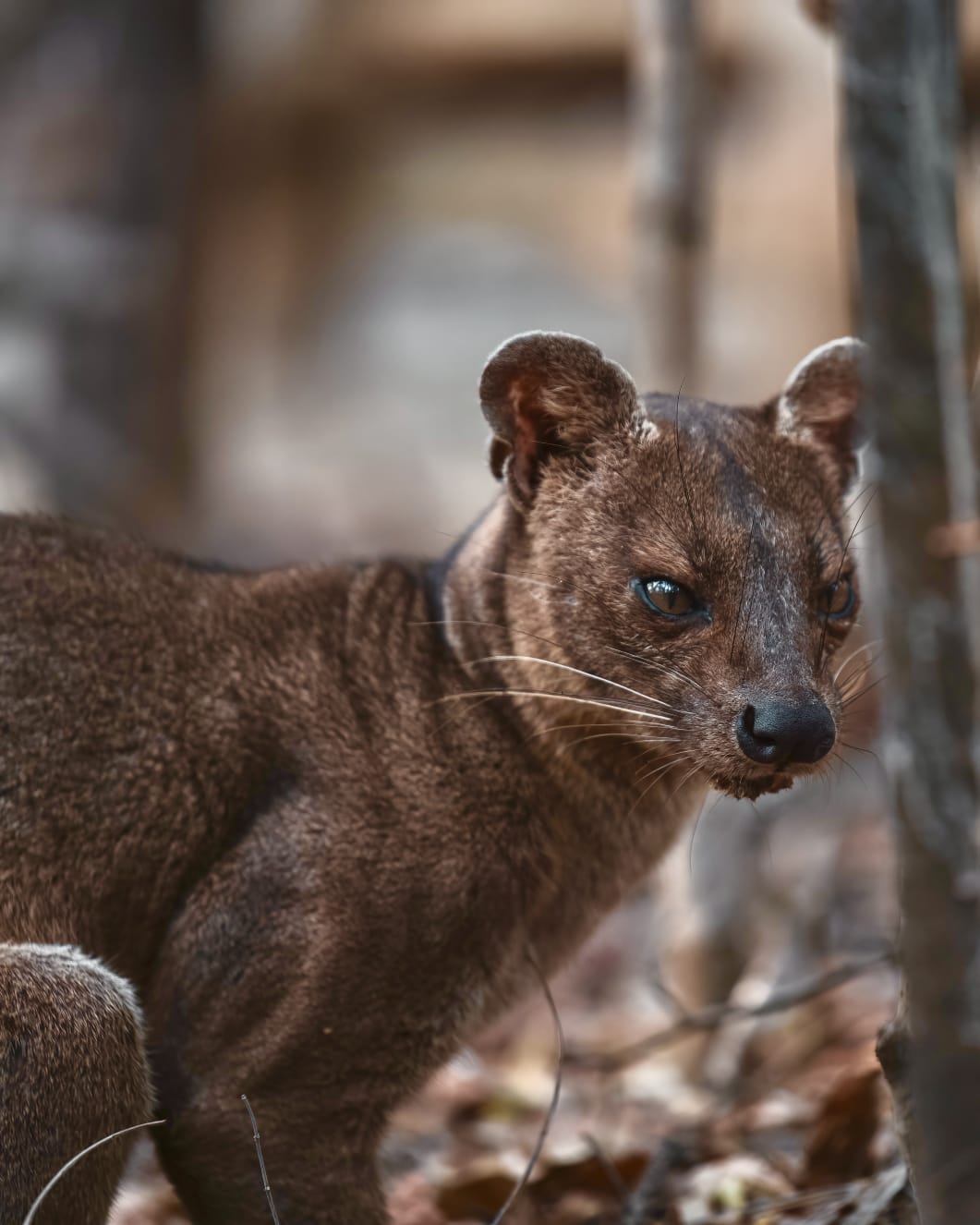
What the fossa is, where and when you have a real chance to see one, and how Kirindy Forest fits between the baobabs and the Tsingy.

Send your dates and a rough idea. We reply within 24 hours with a written itinerary and a firm price. No deposit to ask a question.