
5 days · West
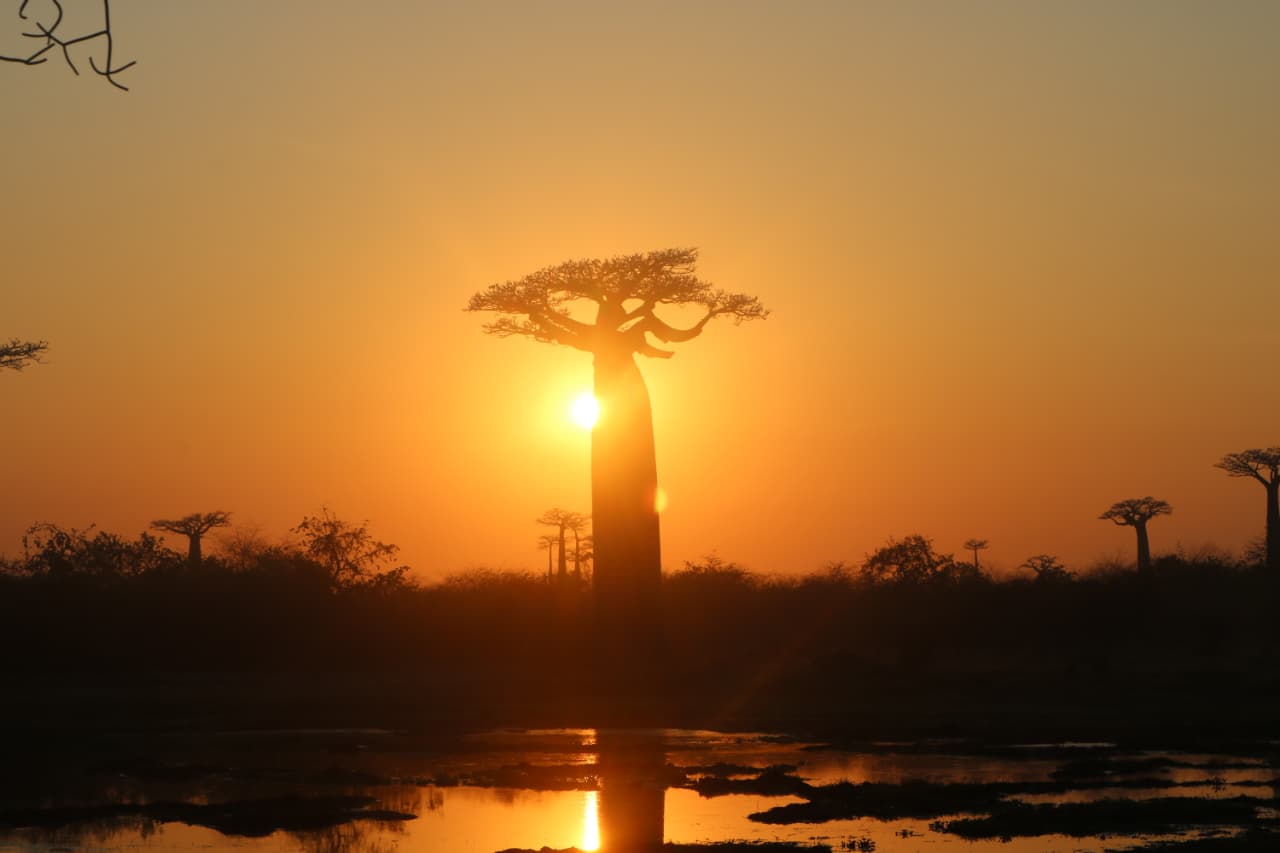
West: Baobabs and Tsingy
Sunset on the Avenue of the Baobabs, a night walk in Kirindy, the Grand Tsingy hike and a canoe on the Manambolo River.
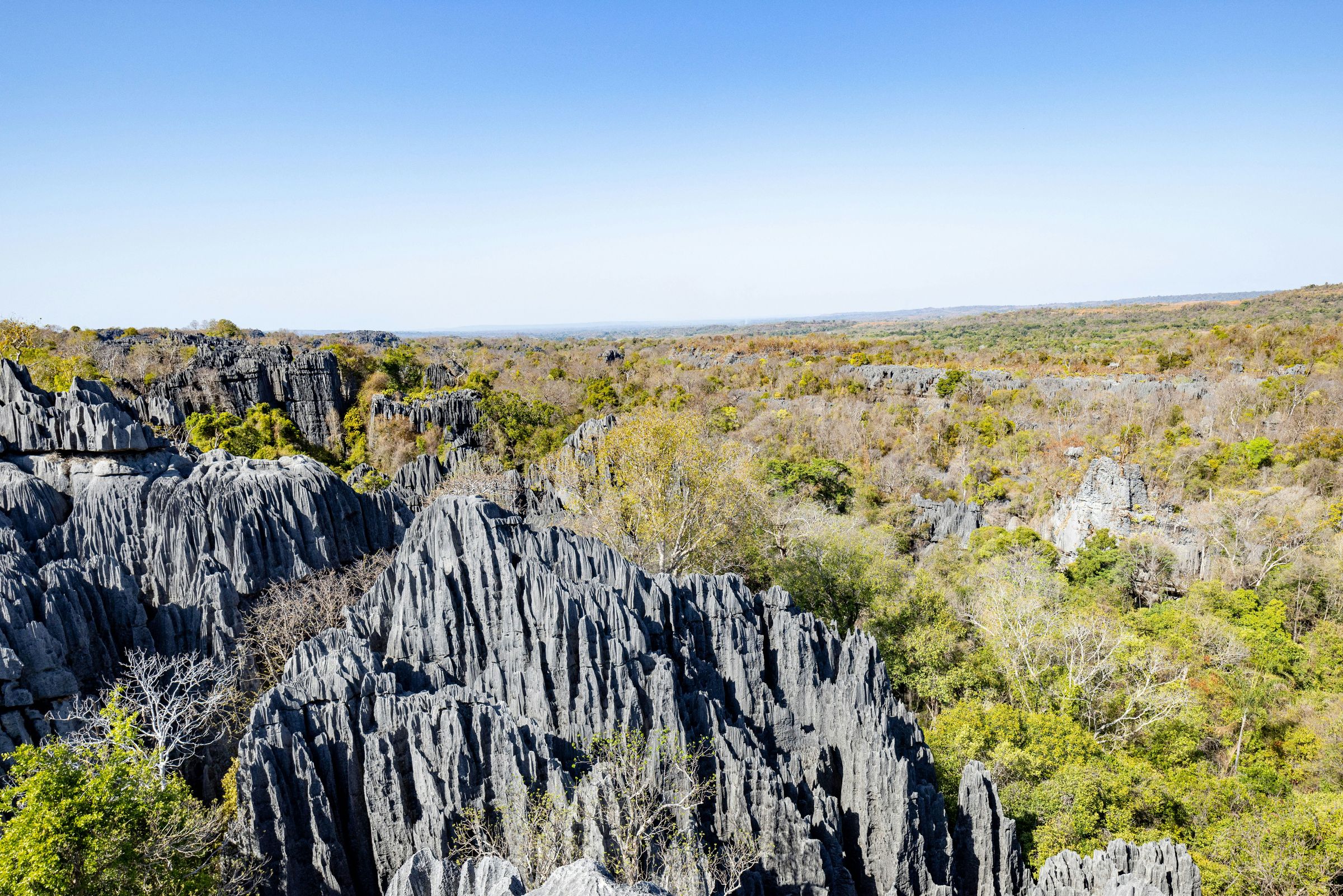
A forest of limestone blades you climb through on ladders and fixed cables. What the Grand and Petit Tsingy involve, when the park is open, how to get there and how many days to give it.
Tsingy de Bemaraha is a national park in western Madagascar where rain has cut a block of limestone into knife-edged pinnacles, and you go through them on foot with a park guide, clipped to fixed cables on the harder circuits. You reach it from Bekopaka, about 200 km and a long day's drive north of Morondava, and only in the dry season, usually from mid-April to November. Give it two full days, one for the Grand Tsingy and one for the Petit Tsingy and the Manambolo gorge, which makes four or five days from Morondava.
The park has been a UNESCO World Heritage Site since 1990, listed as the Tsingy de Bemaraha Strict Nature Reserve, and all three of our western trips spend at least a full day in it. If it's the red Tsingy Rouge or Ankarana you're after, those are in the far north, south of Diego Suarez, and our 11-day and 12-day northern trips cover them.
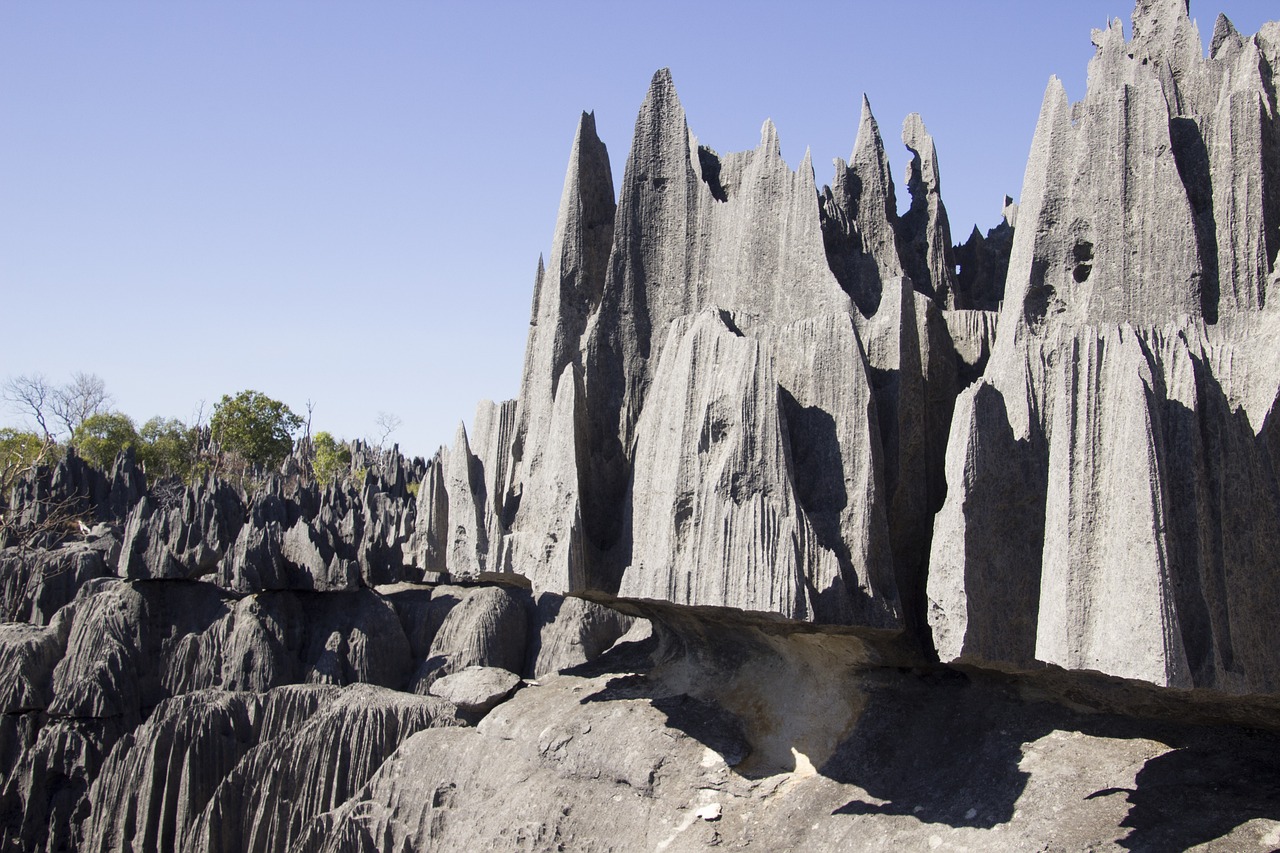
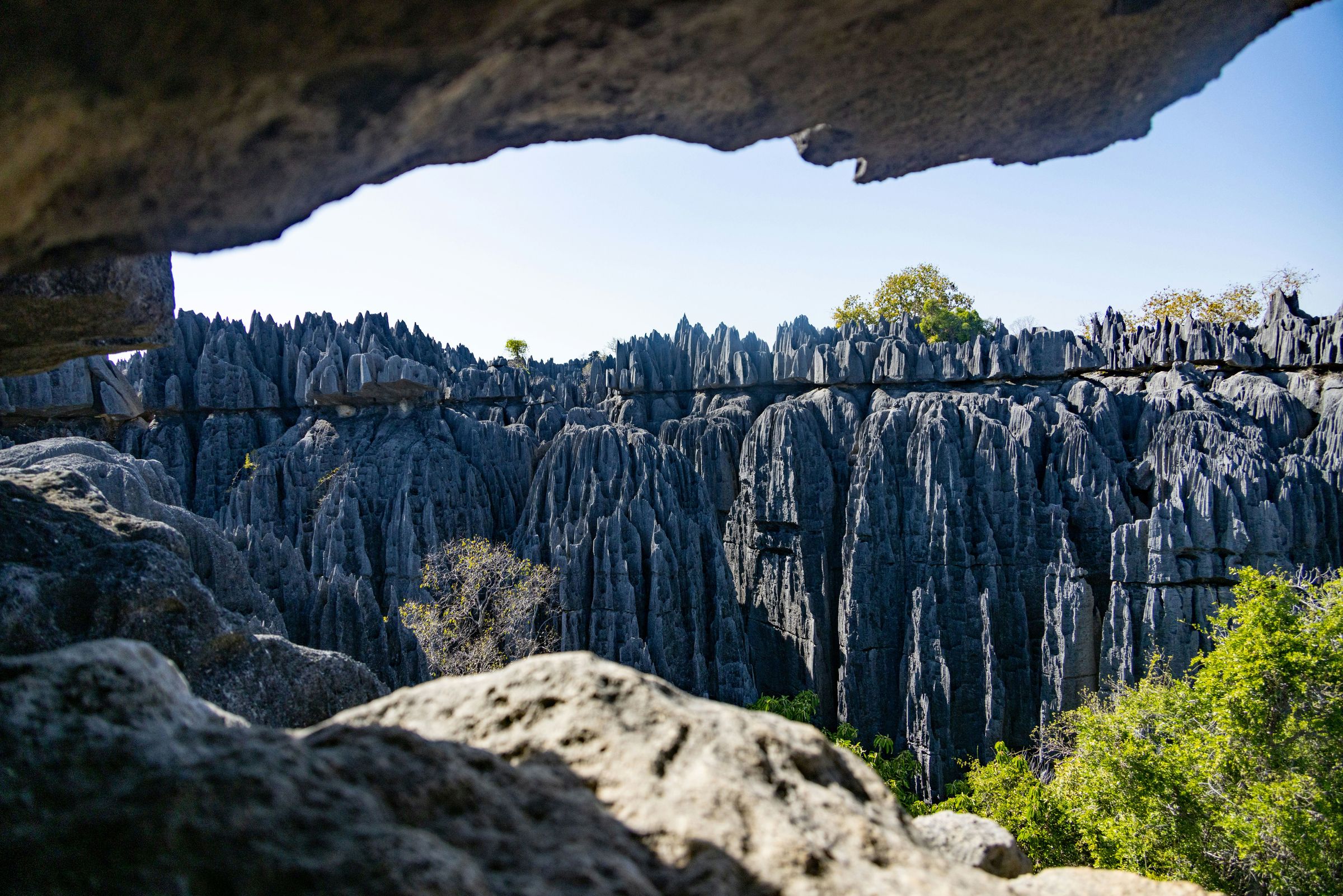
The rock is a great block of Jurassic limestone, and rainwater has dissolved it along its cracks, leaving dead-straight canyons up to about 120 metres deep between blades and needles of stone. Tsingy is usually translated as "where one cannot walk barefoot". Ten minutes on the rock and you'll agree.
The park has two areas to visit.
If you can only do one, make it the Grand Tsingy, provided you're fit and fine with heights. If you're not, the Petit Tsingy and the Manambolo gorge give you the place with far less exposure.
Grand Tsingy days start early, to be on the rock before the worst of the heat. On our five-day trip you leave after an early breakfast for the drive north, an hour or more on the track, then walk for about an hour through dry forest before the climbing starts.
Your park guide fits you with a harness and karabiner and gives a short safety briefing. After that the route climbs ladders fixed to the rock, follows sections where you clip on to fixed cables, squeezes through narrow gaps, and crosses suspension bridges strung between the pinnacles. Up top there's very little shade, and the rock is sharp enough to cut skin and shoe rubber.
The distances are short and the times are long. Madagascar National Parks gives the Andamozavaky circuit as about 4 km and four hours of walking, and the longer Broadway, which joins it to the Ranotsara circuit, as about 6 km and six hours. On our five-day trip the hike usually takes four to seven hours, depending on the route and your pace, and the afternoon is free to rest or swim.
Think twice if you have a real fear of heights or of tight spaces, and tell us before the trip: there are easier circuits, and the Manambolo gorge is done mostly sitting in a canoe. With young children, check first: some Grand Tsingy sections have a minimum height for safety, and the Petit Tsingy suits young families better. Light gloves help on the rock, and so do shoes with a firm sole.
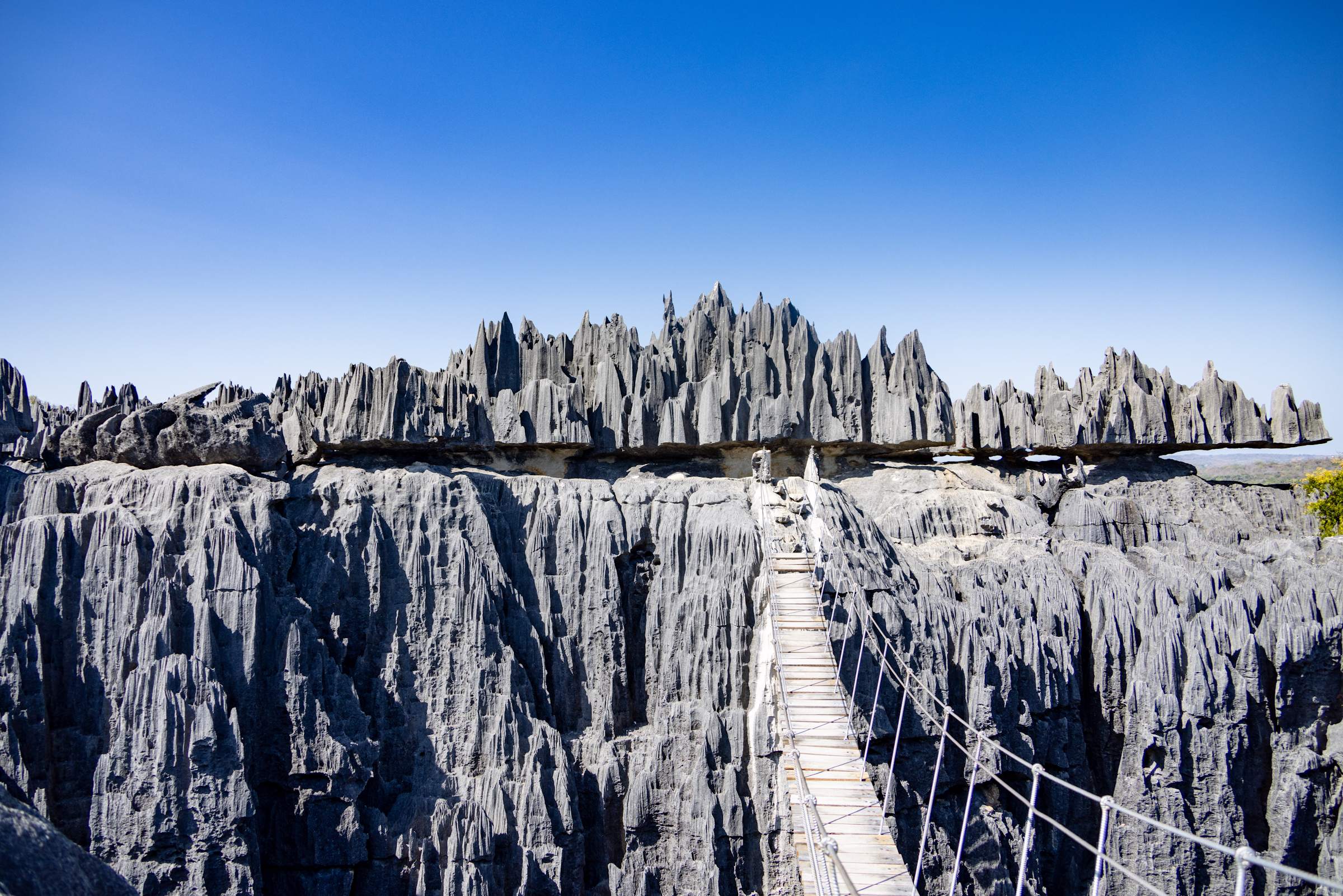
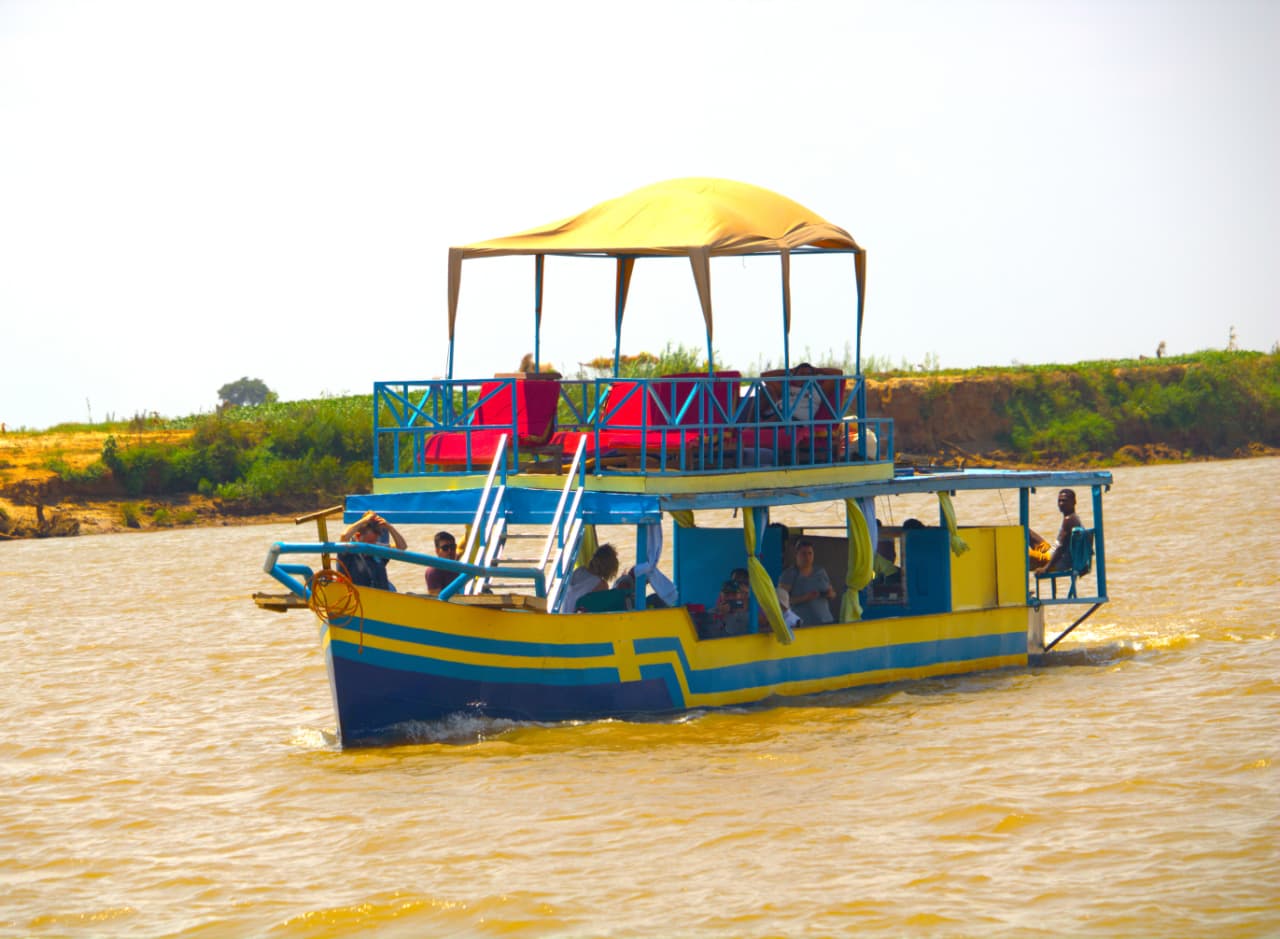
The second day is gentler. In the morning you take a pirogue, a wooden dugout canoe, along the Manambolo river under high cliffs, stopping at caves with stalactites and stalagmites and at old tombs in the rock, known as Vazimba tombs. Madagascar National Parks puts the gorge trip at about an hour and a half there and back.
In the afternoon comes the Petit Tsingy: the same strange rock at a friendlier scale. That's day four of our five-day West trip.
Tell us your dates and what you would like to see. We reply within 24 hours with a written itinerary and a firm price.
The season is set by the rains and the road. In the wet season the dirt road north from Morondava turns to mud and the rivers rise. Madagascar National Parks publishes no opening dates, but its advice for getting here between mid-January and May is to come by motorbike from Belo-sur-Tsiribihina, ideally in a group of at least three bikes. That tells you most of what you need to know.
In practice the park opens once the road has dried out, usually around mid-April (that's when the 2026 season began), though some years the track is hard going into May. It closes again when the rains set in, usually in November and some years not until December. Parts of the Grand Tsingy often stay shut until about June. The rains decide the dates: in 2022 an early rise in the Manambolo river closed the park from 16 November, and one UK specialist has since stopped recommending it after mid-October.
So if the Grand Tsingy is the point of your trip, aim for June to mid-October. July to September is the busy season. In April and May the road may be open and the Petit Tsingy walkable while parts of the Grand Tsingy are still closed, so ask us what's open before you book an early date, and the same goes for late October and November. Our five-day trip runs from April to November, and the 10-day and 20-day trips from May to November.
Most visitors come through Morondava on the west coast, an hour's flight from Antananarivo (most days in 2026) or two long days by road. Our Avenue of the Baobabs guide covers that leg, and what the US travel advisory says about the road.
From Morondava to Bekopaka is about 200 km on the RN8, almost all of it dirt, and it takes 8 to 10 hours. You pass the Avenue of the Baobabs on the way out of town, cross the Tsiribihina by ferry at Belo-sur-Tsiribihina, the usual lunch stop, and take a second ferry over the Manambolo near Bekopaka. It's worth breaking the drive with a night at Kirindy Forest, about two hours from Morondava, which adds a night walk for nocturnal lemurs. Our five-day trip does exactly that.
You can also come by river. Boats drift down the Tsiribihina from near Miandrivazo to Belo over three to five days, camping on the bank, and the road takes you on to Bekopaka. Our 10-day trip spends four days on the river and the 20-day trip three. At the time of writing, though, the UK Foreign Office says armed criminals have boarded boats on the Tsiribihina and robbed passengers, and it advises seeking alternative routes. Everything we run can be reshaped, so if you'd rather skip the river, you can fly to Morondava and join the western route there, as our five-day trip does.
On the road, the UK's advice for western Madagascar is to use a recognised tour operator between Besalampy and Morombe, a stretch that takes in Morondava and the whole road to the Tsingy, because of the risk of violent highway robbery, particularly at night. It also advises against driving at night, and tour vehicles on the Bekopaka road often travel in convoy. Our safety guide has the wider picture.
Bring cash: don't count on finding a cash machine in Bekopaka. On our trips the park fees and guides are already paid, but you'll want cash for meals other than breakfast, and for tips.
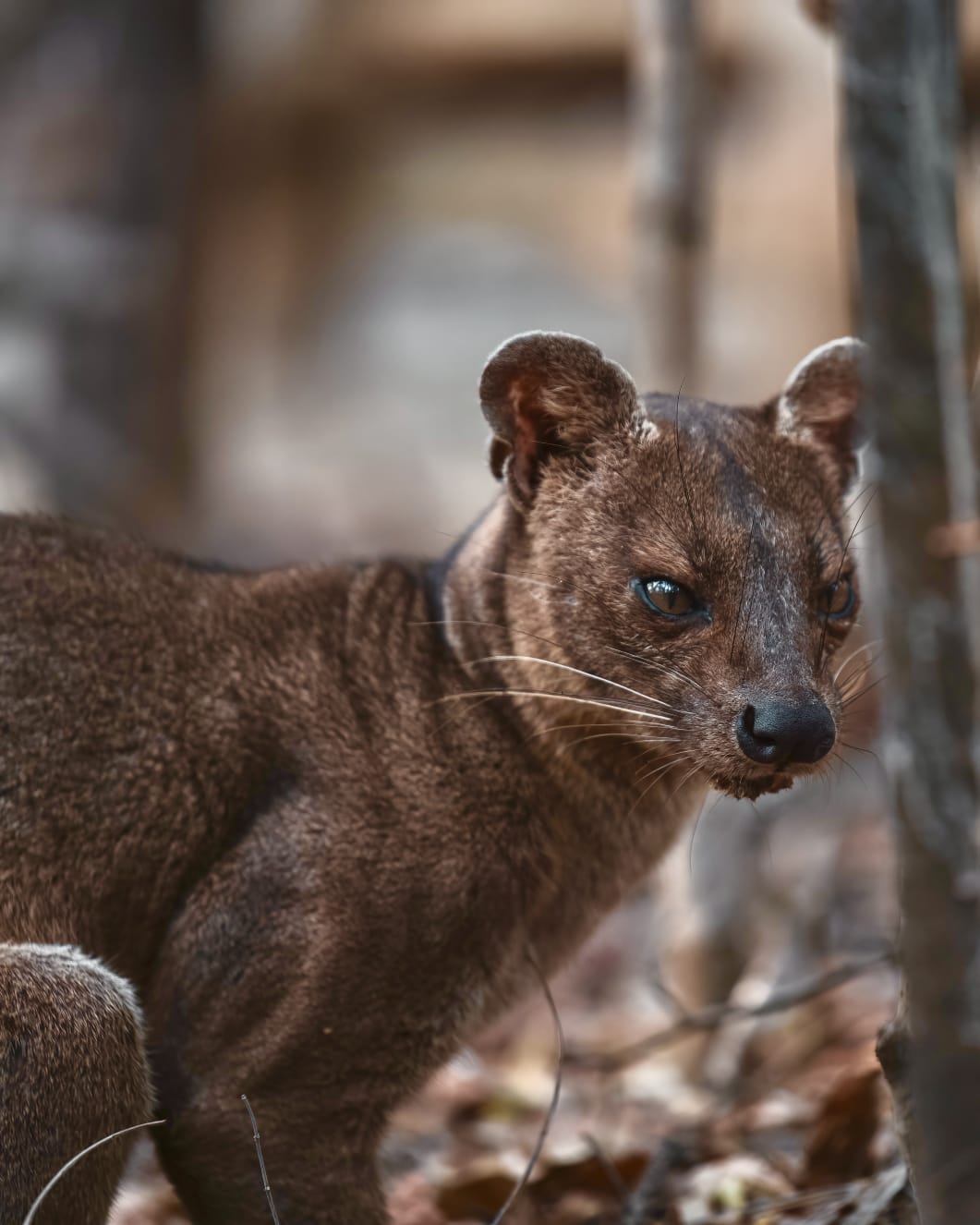
The Tsingy is a trip for the rock first, but the forest around it has its own animals. The park's flagship is Decken's sifaka, a white sifaka listed as Critically Endangered since 2020, and red-fronted lemurs move through the dry forest in groups. With luck you'll meet one or the other on the forest stretch of the Grand Tsingy walk.
Several of the park's other lemurs are nocturnal, so for a proper night walk the stop at Kirindy on the way in is the better bet. If reptiles are your thing, look out for Brookesia perarmata, a leaf chameleon that Madagascar National Parks lists among the park's endemic species. Our guide to where to see lemurs covers what lives where across the island.
If you're comparing Tsingy tours, count the full days in the park rather than the total length, because the drive eats a day at each end. Our 10-day and 20-day trips spend one full day here, on the Grand Tsingy. The shortest sensible trip from Morondava is four days, or five with the night at Kirindy, which is how our five-day West trip runs, from €810 per adult.
You sleep in Bekopaka, the village at the park's southern edge, which has a handful of hotels and lodges, most of them comfortable rather than luxurious. On the five-day trip it's three nights there, at the Olympe Hotel or similar.
For more of the west, the 10-day West Adventure, from €1,540, arrives by river from the highlands, and the 20-day Ultimate Madagascar, from €3,070, adds the Vezo coast and the southern parks. Our western trips are private, with your own vehicle and driver-guide, and we book and pay the local park guides directly.
Photos: Rafael Peier on Unsplash.
You stay in Bekopaka, the village by the park entrance, and go in with a local park guide, in the dry season only (usually from mid-April to November). Most people get to Bekopaka through Morondava, which has flights from Antananarivo most days in 2026 (about an hour) and is 650 to 700 km away by road. From Morondava it's about 200 km north on the RN8, 8 to 10 hours on dirt with two river ferries, often split with a night at Kirindy Forest. Some trips arrive instead by boat down the Tsiribihina river, though at the time of writing the UK Foreign Office advises seeking alternative routes after armed robberies on river boats.
June to mid-October, if the Grand Tsingy is the point of your trip. The park opens only in the dry season, usually around mid-April once the road from Morondava has dried out, and closes when the rains set in, usually in November and some years not until December. In 2022 an early rise in the Manambolo river closed it from 16 November. Parts of the Grand Tsingy often stay shut until about June. July to September is the busy season. If you're going in April, May, late October or November, ask us what's open.
Hard enough to take seriously. The circuits are only about 3 to 6 km, but you climb ladders, clip a harness to fixed cables, squeeze through narrow gaps and cross suspension bridges, mostly in full sun on very sharp rock. Allow four to seven hours. You need reasonable fitness and a good head for heights. If heights or tight spaces worry you, the Petit Tsingy and the Manambolo gorge are far gentler, and there are easier circuits.
Yes. Every visit to a Madagascar National Parks site has to be with a guide, and at Bemaraha the local park guides are hired at the park office near Bekopaka. They provide the harness for the cabled sections. On our trips the park guide is booked and paid by us, alongside the driver-guide who travels with you.
Fees are changing. For years a foreign adult has paid 55,000 ariary a day (roughly 11 euros) to enter Bemaraha. Confirm the current tariff with Madagascar National Parks for your dates. Park guides are paid on top, per circuit and per group, and their association at Bemaraha raised its rates in 2026. Check current figures before you go. On our trips, park entry and local guides are included in the price.
Two full days in the park if you can, the Grand Tsingy on one and the Manambolo gorge and the Petit Tsingy on the other. With only one, do the Grand Tsingy. Bekopaka is 8 to 10 hours from Morondava by road each way, so allow four days from Morondava, or five with a night at Kirindy Forest, which is how our five-day West trip runs, from €810 per adult.
Private trips with your own vehicle and driver-guide. Every one can be reshaped around your dates.
Sunset on the Avenue of the Baobabs, a night walk in Kirindy, the Grand Tsingy hike and a canoe on the Manambolo River.
Four days drifting down the Tsiribihina with camps on the riverbank, then the Grand Tsingy, Kirindy's nocturnal forest and the baobabs.
Three weeks and nearly every landscape the island has: river cruise, Tsingy, baobabs, remote Vezo coast and the southern parks.
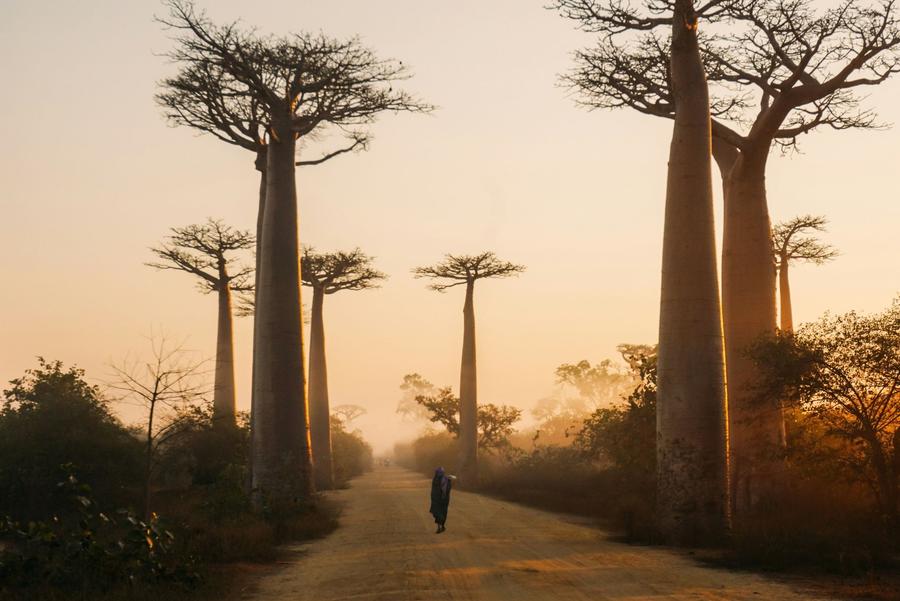
When to go, how to get to Morondava, what the rains change, and how to fit the Avenue in with Kirindy and the Tsingy.
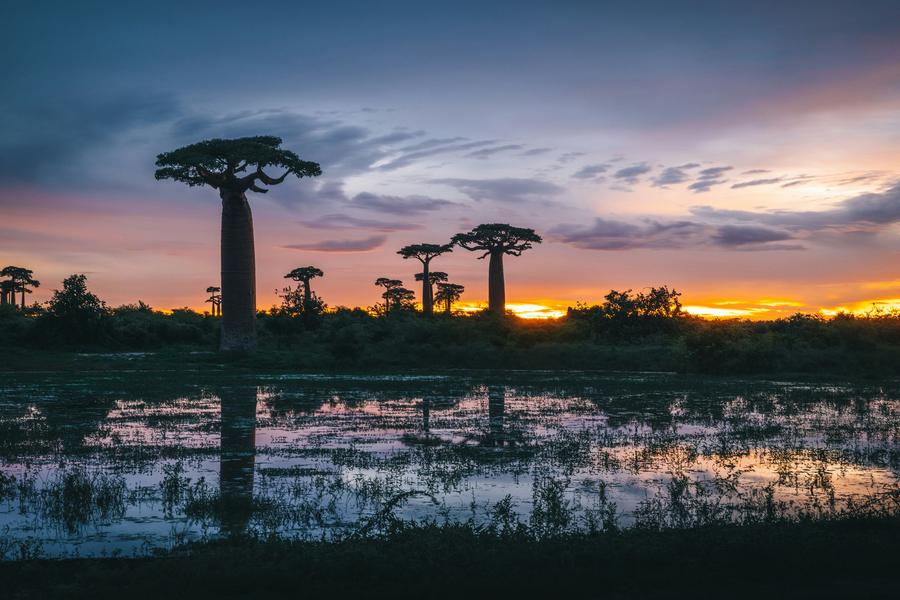
Month by month and region by region: dry roads, cyclones, the Tsingy's short season, whales, lemur babies, birds and chameleons.
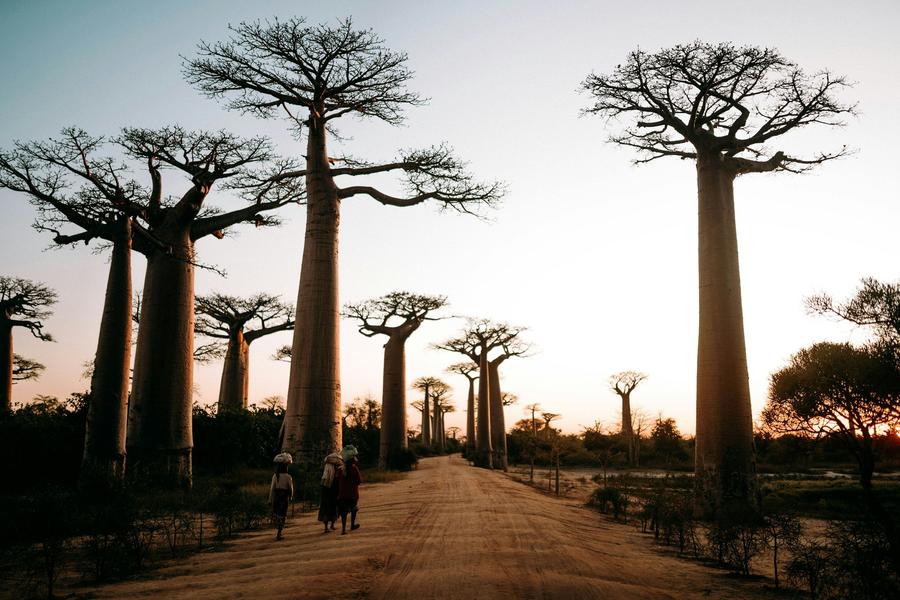
The flight or the long road in, Kirindy to the north, Belo-sur-Mer to the south, the beach the sea is eating, the dry months and how many nights to stay.
Clothes for each region and month, shoes for the Tsingy and Isalo, night walks, malaria, boats, plugs and power cuts, the domestic flight limit, and what to leave at home.

Send your dates and a rough idea. We reply within 24 hours with a written itinerary and a firm price. No deposit to ask a question.