
5 days · West
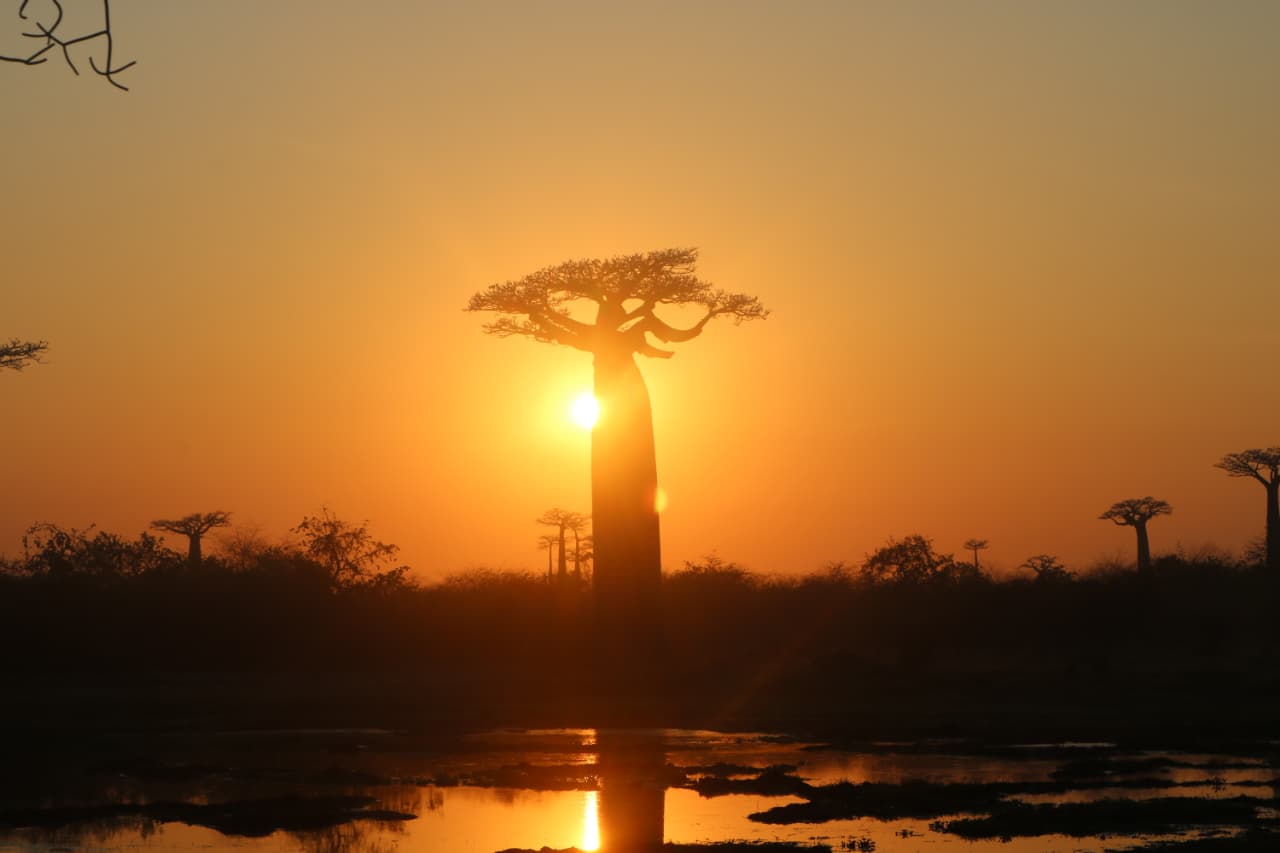
West: Baobabs and Tsingy
Sunset on the Avenue of the Baobabs, a night walk in Kirindy, the Grand Tsingy hike and a canoe on the Manambolo River.
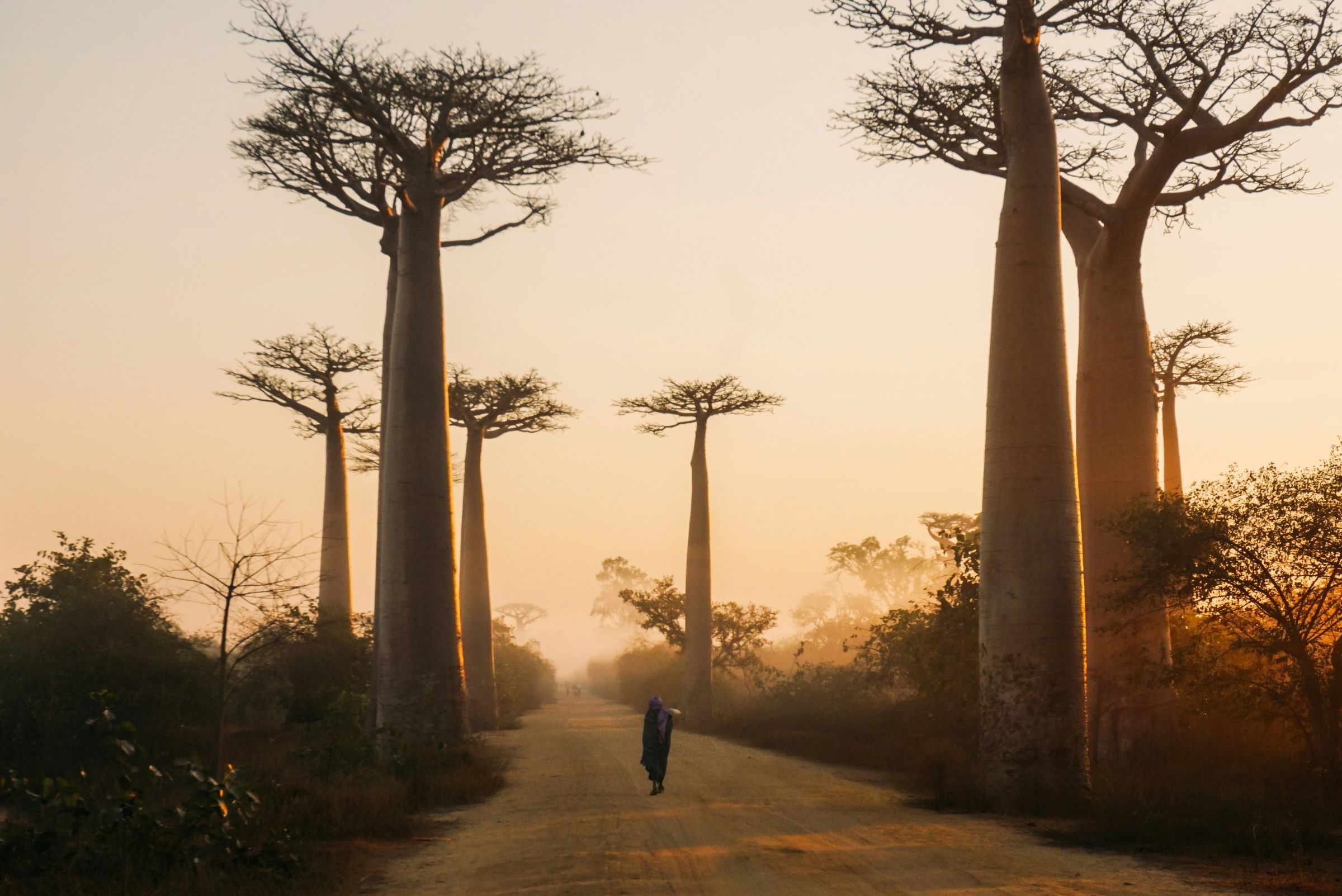
Easy to reach from Morondava, and busiest at sunset. When to go for the light and the quiet, what the rains change, how to get there, and how to add Kirindy and the Tsingy.
The Avenue of the Baobabs is a short stretch of dirt road 15 to 20 km north of Morondava, on Madagascar's west coast, lined with giant Grandidier's baobabs. Go at sunset or sunrise: sunset is the classic light and the crowded hour, sunrise is usually quieter. Fly from Antananarivo to Morondava in about an hour or drive it in two long days, and if you want Kirindy and the Tsingy de Bemaraha as well, give the west five days from Morondava.
All three of our western trips stop here. The Avenue is also easy to do on your own, by taxi from Morondava. It's the road beyond it that needs planning.
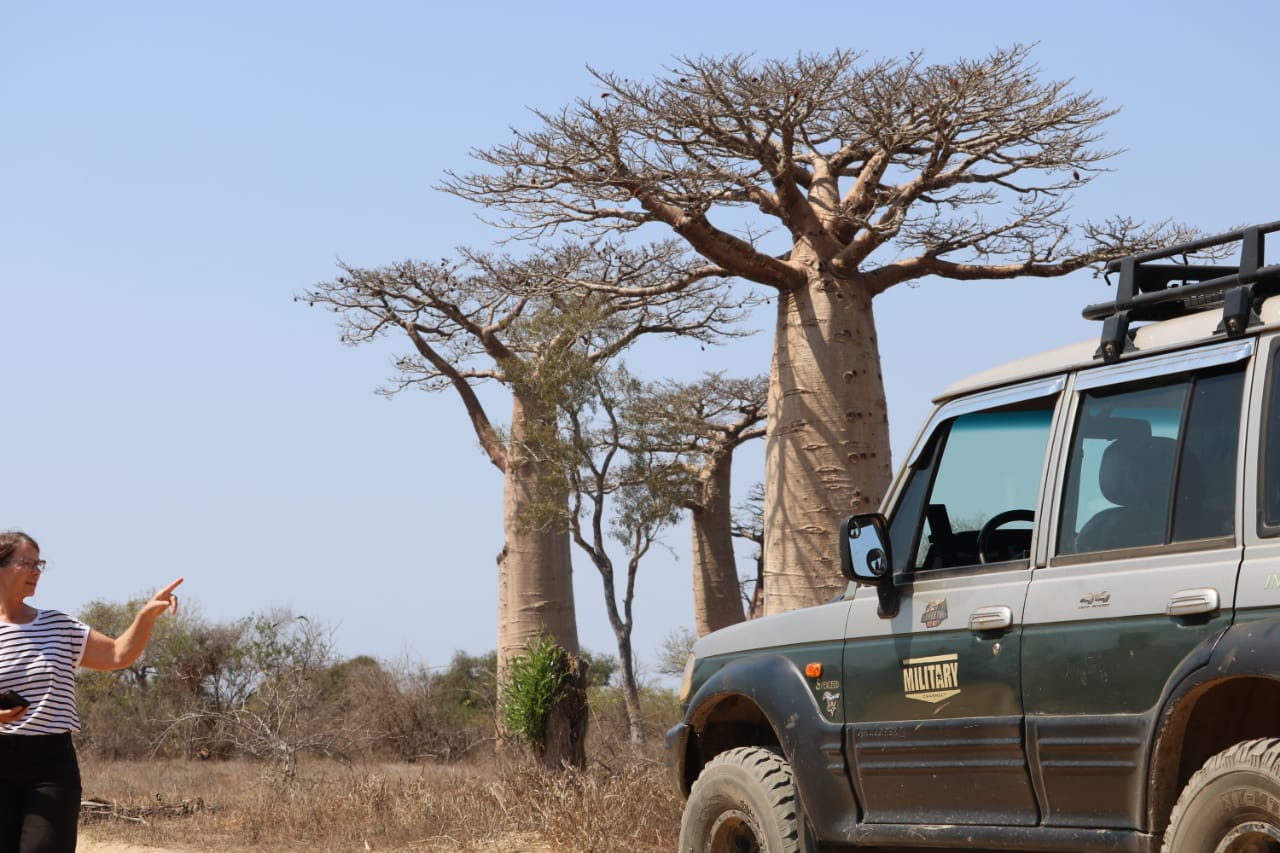
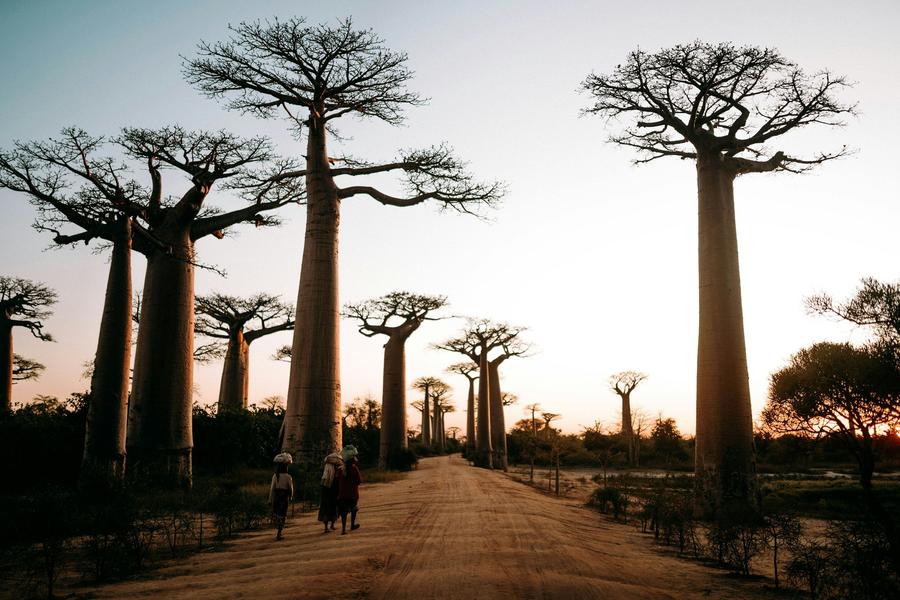
The main stretch is only a few hundred metres of red dirt road, with big baobabs on both sides and many more standing in the rice fields and scrub around them. They're Grandidier's baobabs, reniala in Malagasy, usually translated as "mother of the forest". A grown tree is a smooth, reddish-grey column up to 3 metres across and 25 to 30 metres tall, with a flat top of horizontal branches.
The world has eight baobab species and six of them grow only in Madagascar. This one is found only in the southwest, roughly between Morondava and Morombe, and it's listed as Endangered. In 2015 a government decree made the Avenue and the fields around it a protected area, under its French name, the Allée des Baobabs.
Ask how old the trees are and you'll hear 800 years, or 1,000. Treat both as guesses.
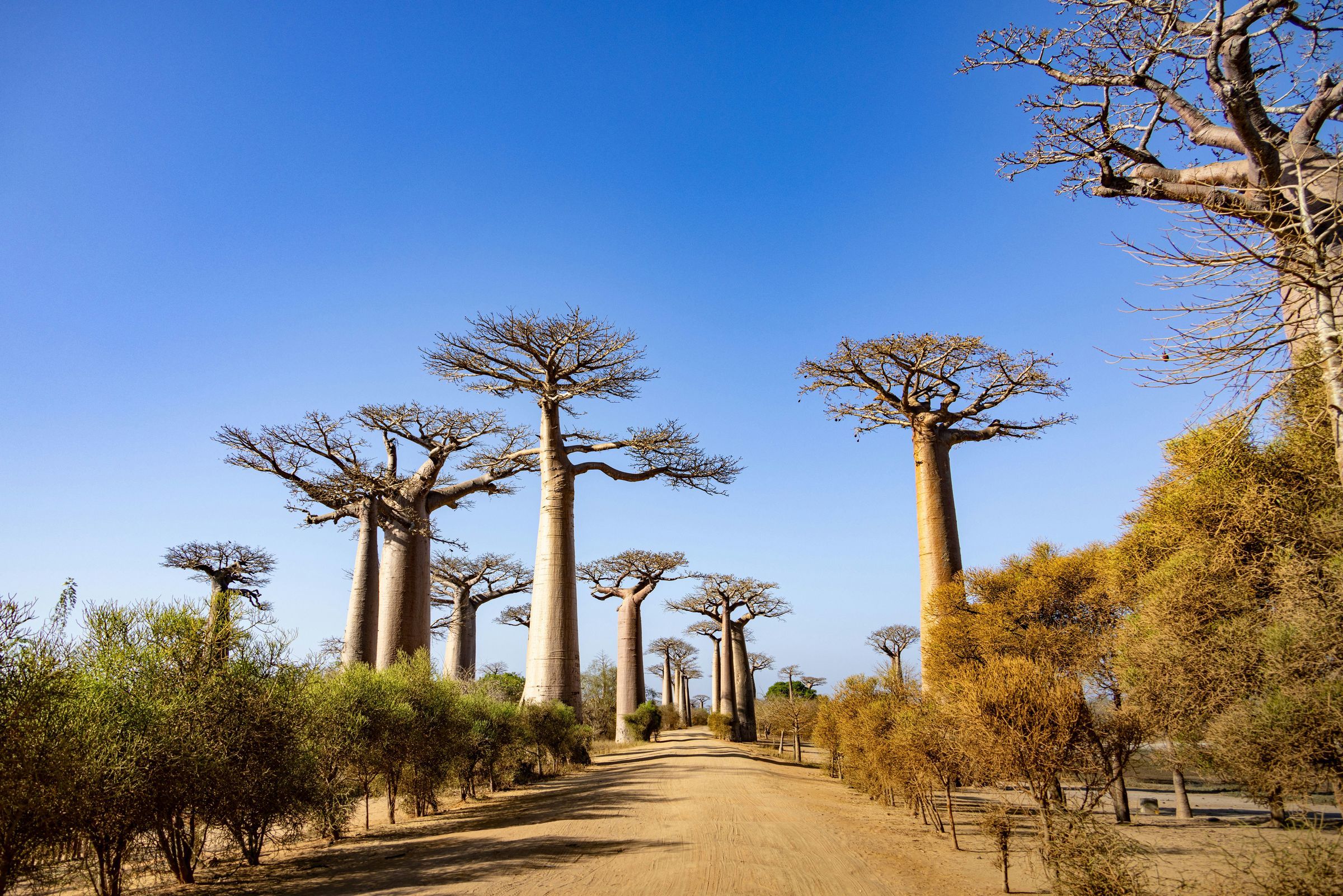
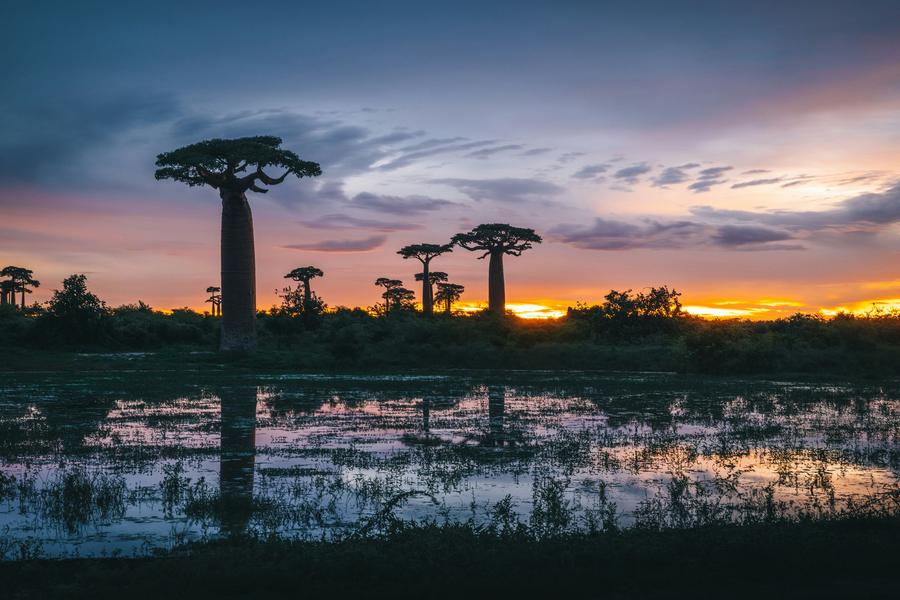
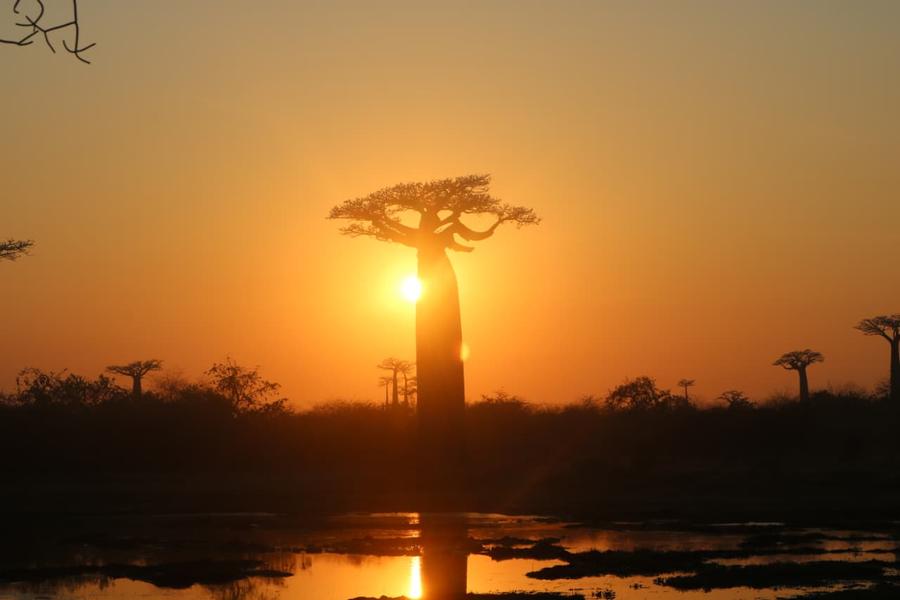
Sunset is when the Avenue looks like the postcards, and it's when everyone comes. Vehicles coming back from the Tsingy time their drive to arrive for it, ours included, so it can be very busy, especially from July to September. Get there an hour before sunset to walk the road before the crowd builds.
Sunrise is usually quieter. At the southern end of the Avenue there's a community-run visitor area with a café that serves breakfast, clean toilets, a craft shop selling baobab jam and oil, and parking for a few thousand ariary. Lonely Planet says it opens at 5 am. Midday is quiet too, in flat, hard light.
The catch is Kirindy. Its night walk starts in the early evening, so on the day you drive up from Morondava you can't have both the sunset and the walk. Our five-day West trip stops at the Avenue for photos on the way north and comes back for sunset on its last day. The 10-day West Adventure gives you a sunset and then the next morning's sunrise.
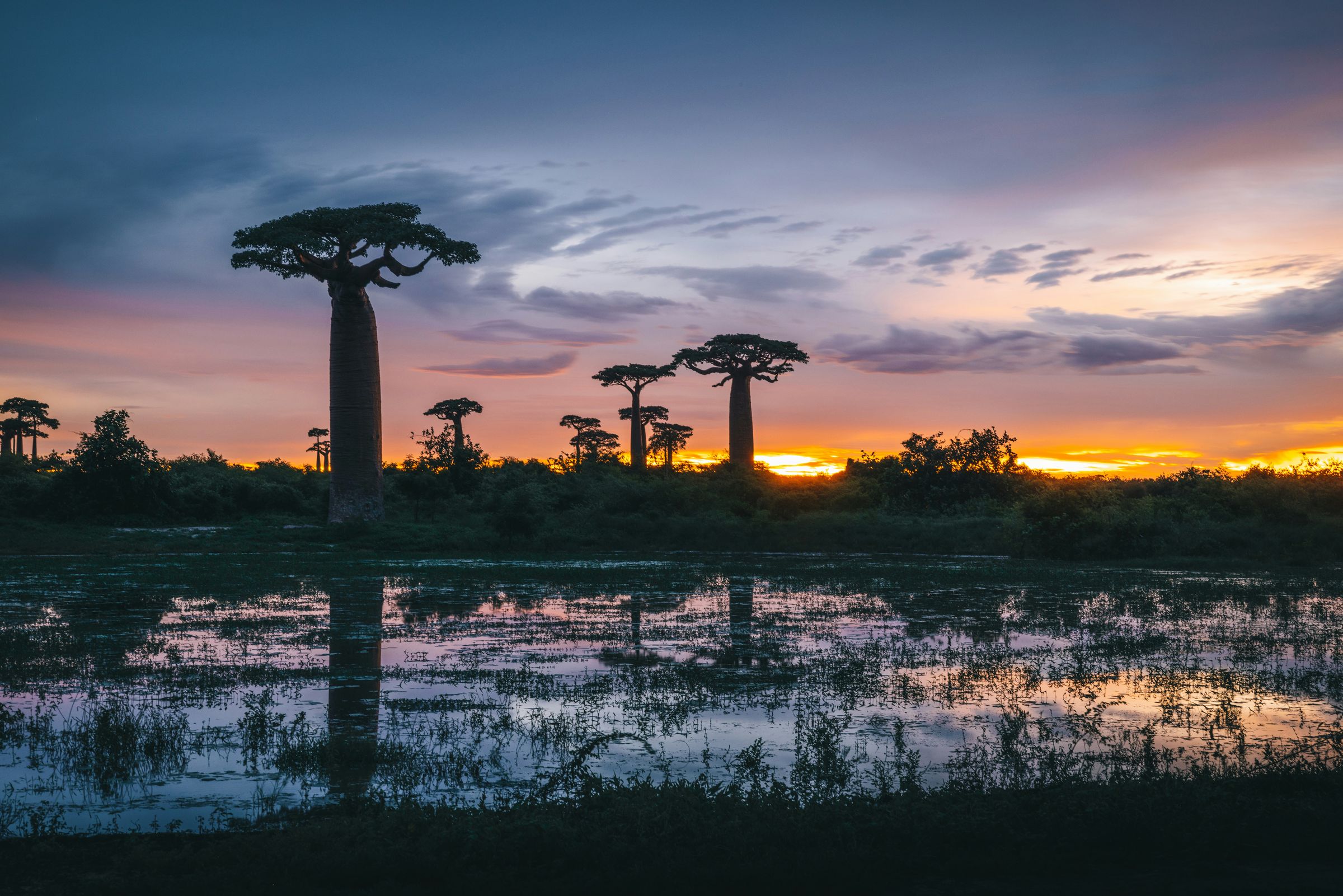
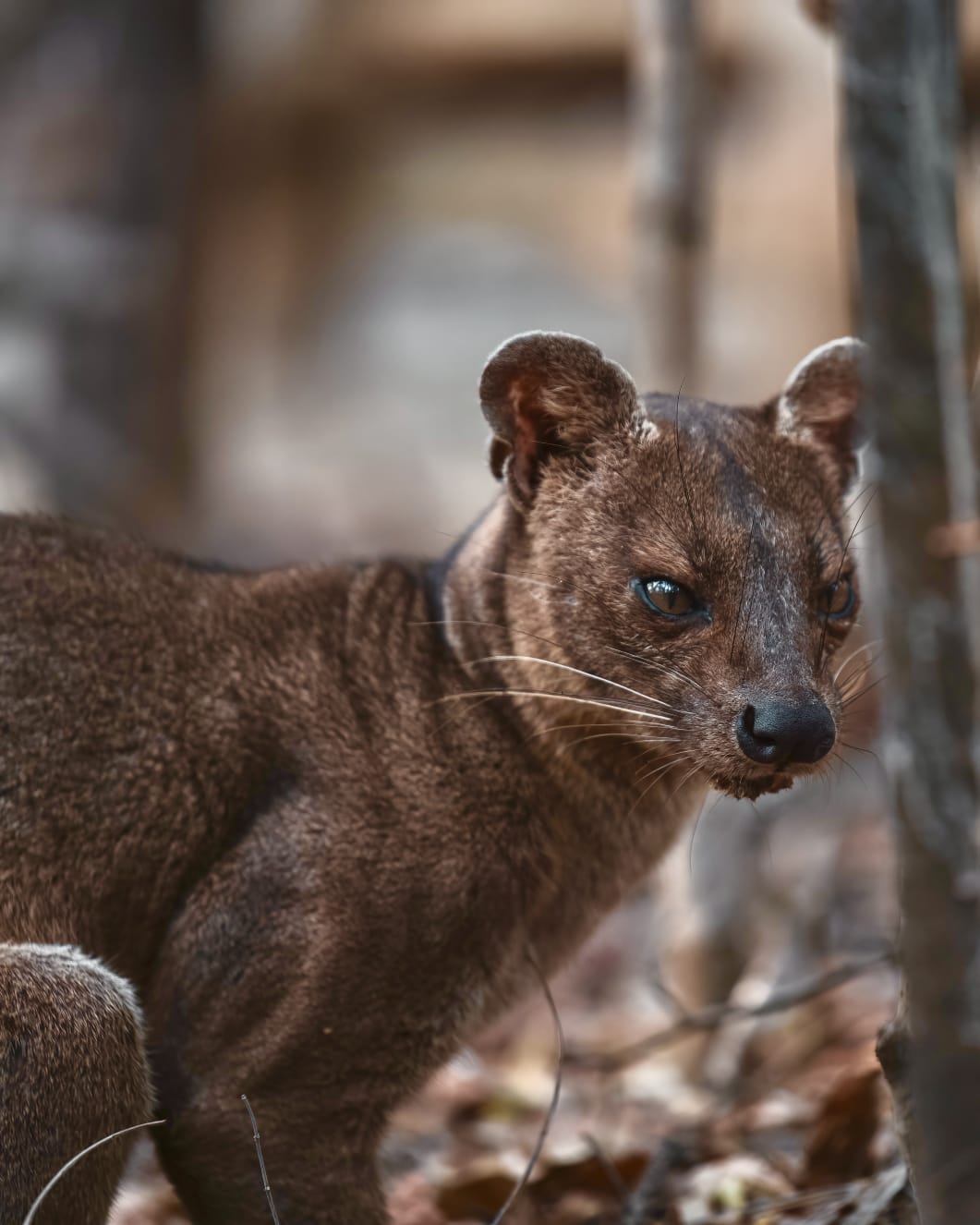
Most of Morondava's rain falls between December and March, and the Avenue changes with it. Grandidier's baobabs are in leaf from about October to May and bare in the dry months, so the classic silhouette of naked branches is a June to September picture. In the rains the paddies around the trees flood, and at dawn you can catch green crowns doubled in the water. Kew gives May to July as the flowering period for Grandidier's baobab, with the flowers opening around dusk. Flowering varies, so treat that as a seasonal guide. Fork-marked lemurs and fruit bats are thought to do the pollinating.
You can usually still reach the Avenue from Morondava in the wet season, though the dirt road can turn to mud after heavy rain. It's cyclone season too, which normally runs from November to April. The road north is the real problem. Madagascar National Parks' own advice for reaching the Tsingy between mid-January and May is to go by motorbike, and the park closes for the rains anyway (more in our Tsingy guide).
So a rainy-season visit means the Avenue from a base in Morondava, not the full western loop. Our western trips run from April or May to November, and our best time to visit guide covers the rest of the island month by month.
Morondava is the base, so the real question is how you get there.
From Morondava the Avenue is 30 to 45 minutes by car, the last part on dirt. If it's all you want to see, a taxi from town does the job (Lonely Planet puts the return fare at 60,000 ariary or more), and you don't need a tour.
Going on north is a different matter. The road to Kirindy and Bekopaka is dirt, with two river ferries. At the time of writing, the UK Foreign Office advises using a recognised tour operator in western Madagascar between Besalampy and Morombe, because of the risk of violent highway robbery, particularly at night. That stretch takes in Morondava, the last leg of the road from Antananarivo and the road north to the Tsingy. The Foreign Office also advises against driving at night. Our safety guide has the wider picture, and our guide to getting around Madagascar compares a driver-guide with self-drive and flying.
Tell us your dates and what you would like to see. We reply within 24 hours with a written itinerary and a firm price.
Plenty of people see the Avenue and turn round. Keep going north and there are two more baobabs worth a stop, then the dry forest of Kirindy.
Don't confuse Kirindy Forest with Kirindy-Mitea National Park, which is south of Morondava. Our guide to where to see lemurs shows how Kirindy fits with the island's other forests.
The Avenue sits on the RN8, the road north from Morondava to Belo-sur-Tsiribihina and Bekopaka, the village at the edge of the Tsingy de Bemaraha. Go to the Tsingy and you pass it twice, so it makes a natural first and last stop.
That's how our five-day West trip runs, from €810 per adult. We meet you at Morondava airport or your hotel, stop at the Avenue, and go on to Kirindy for the night walk. Day two starts with a morning walk in Kirindy, then it's the long drive to Bekopaka, with two river ferries and lunch in Belo. Day three is the Grand Tsingy, and day four the Manambolo gorge by canoe and the Petit Tsingy. On day five we drive back by the Baobab Amoureux for sunset on the Avenue.
The 10-day West Adventure, from €1,540, starts in Antananarivo and comes the long way: the highlands, four days down the Tsiribihina river camping on the bank, the Grand Tsingy and Kirindy, then a sunset and a sunrise at the Avenue before your flight from Morondava. At the time of writing, the UK Foreign Office says armed criminals have boarded boats on the Tsiribihina and robbed passengers, and it advises seeking alternative routes (our safety guide has more). We can reshape the trip without the river, for example by flying to Morondava and joining the western route there, as the five-day trip does. The 20-day Ultimate Madagascar, from €3,070, does the west and then carries on down the Vezo coast and inland to Isalo and Ranomafana.
For the Avenue alone, one night in Morondava is the minimum, because the light you came for is at the ends of the day. Two nights give you a sunset and a sunrise without one eye on your flight.
With Kirindy and the Tsingy, five days from Morondava is about as short as it sensibly goes, because Bekopaka is 8 to 10 hours away by road and the Grand Tsingy needs a full day to itself.
Our western trips are private, with your own vehicle and driver-guide, and you set the departure times. Each one can be reshaped: change the length, swap a park, add Nosy Be at the end or slow the pace down.
Photos: Yasmine Arfaoui, Rafael Peier and Nicolas Jehly on Unsplash.
Yes, if you time it for the light. The Avenue is only a few hundred metres of dirt road, but at sunrise or sunset, with baobabs up to 30 metres tall on both sides, it looks like the postcards. On its own it's a long way to come, with a flight or two long days' drive to Morondava and a night there. If you're going on to Kirindy and the Tsingy de Bemaraha, you pass it twice anyway.
About 15 to 20 km north of town, on the road to Belo-sur-Tsiribihina. By car it usually takes 30 to 45 minutes, the last part on dirt. Lonely Planet puts a return taxi from Morondava at 60,000 ariary or more, and the car park charges a few thousand ariary per vehicle (prices at the time of writing).
Both give you low, warm light. Sunset is the classic and the busiest time, because vehicles coming back from the Tsingy de Bemaraha aim to arrive for it, especially from July to September. Sunrise is usually quieter, and the community-run visitor area at the southern end opens early, with a café that serves breakfast. With two nights in Morondava you can do both.
Not for the Avenue alone. It's a short taxi ride from Morondava, and walking the road costs nothing beyond parking. Going further north is different: the road to Kirindy and the Tsingy de Bemaraha is dirt with two river ferries, visits to the Tsingy have to be with a local guide, and the UK Foreign Office advises using a recognised tour operator in this part of western Madagascar, and not driving at night. That's where your own vehicle and driver-guide earn their keep.
Usually, yes, from Morondava, though the dirt road can turn to mud after heavy rain. Most of the rain falls from December to March. The baobabs are in leaf then and the rice fields around them flood, so you can get reflections the dry-season photos never show. The road north is the problem: the Tsingy de Bemaraha closes for the rains, so a wet-season trip means the Avenue from a base in Morondava rather than the full western loop.
Not in a way worth doing. The flight to Morondava takes about an hour, but the light you're going for comes at sunrise and sunset, so plan at least one night there, and two if you want both. By road it's 650 to 700 km, two long days of driving each way.
Five days from Morondava is the practical minimum: a night at Kirindy on the way north, three nights in Bekopaka for the Tsingy and the Manambolo gorge, then the drive back for sunset at the Avenue. That's our five-day West trip, from €810 per adult. Add the flight from Antananarivo, or two long days on the road each way.
Private trips with your own vehicle and driver-guide. Every one can be reshaped around your dates.
Sunset on the Avenue of the Baobabs, a night walk in Kirindy, the Grand Tsingy hike and a canoe on the Manambolo River.
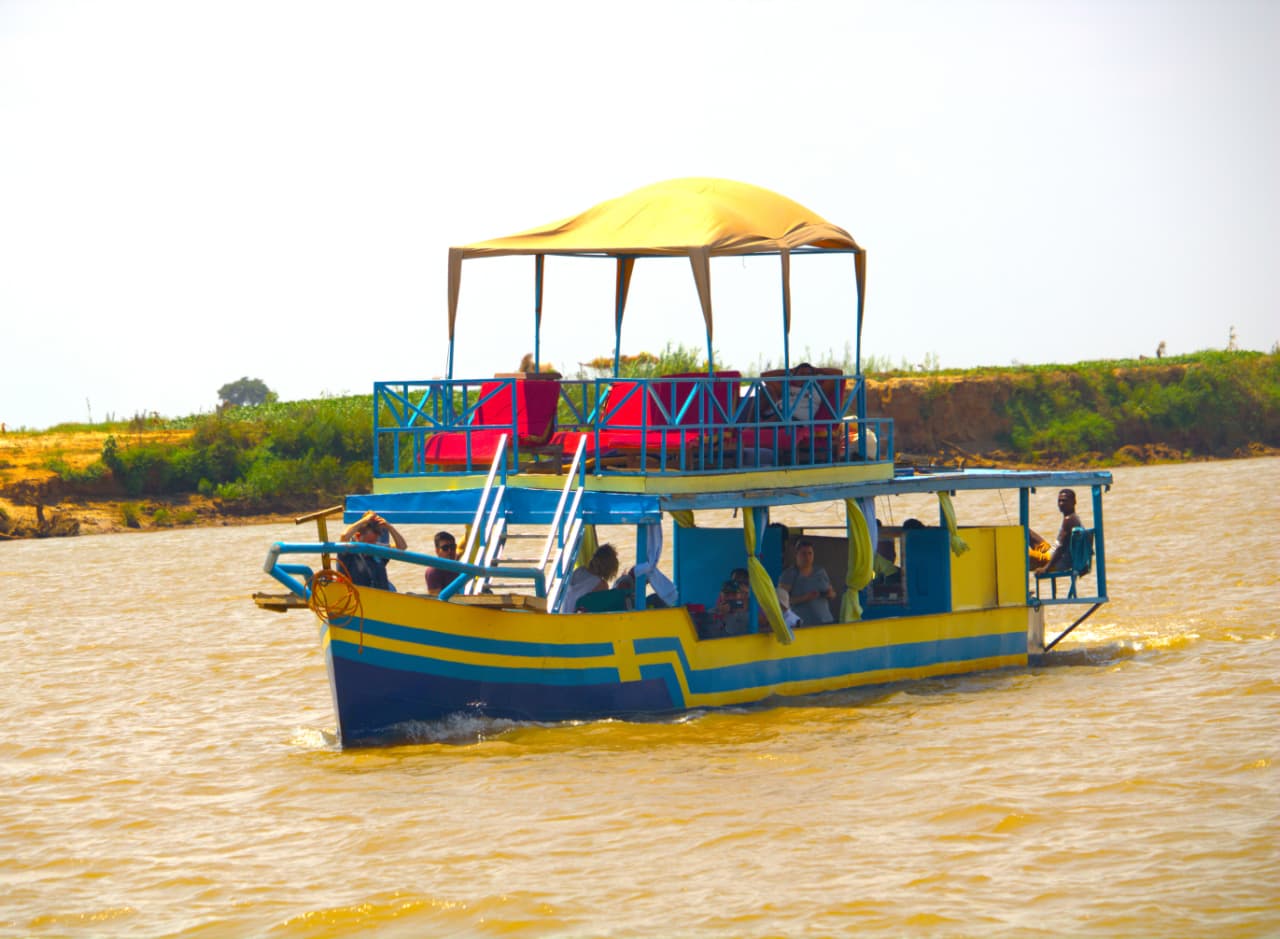
Four days drifting down the Tsiribihina with camps on the riverbank, then the Grand Tsingy, Kirindy's nocturnal forest and the baobabs.
Three weeks and nearly every landscape the island has: river cruise, Tsingy, baobabs, remote Vezo coast and the southern parks.
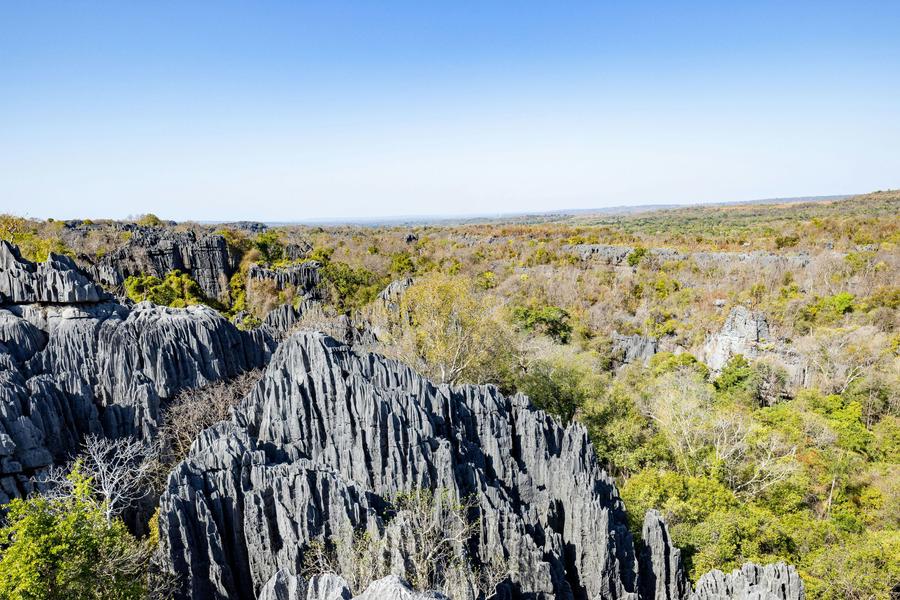
Grand or Petit Tsingy, the road from Morondava, the opening season, what the climbing involves and how many days to allow.
Month by month and region by region: dry roads, cyclones, the Tsingy's short season, whales, lemur babies, birds and chameleons.
The flight or the long road in, Kirindy to the north, Belo-sur-Mer to the south, the beach the sea is eating, the dry months and how many nights to stay.
The six baobabs found only in Madagascar, where each one grows, when they flower and drop their leaves, how threatened they are, and the trips that reach them.

Send your dates and a rough idea. We reply within 24 hours with a written itinerary and a firm price. No deposit to ask a question.