
5 days · West
West: Baobabs and Tsingy
Sunset on the Avenue of the Baobabs, a night walk in Kirindy, the Grand Tsingy hike and a canoe on the Manambolo River.
The six baobabs that grow nowhere else, from the giants of the Avenue near Morondava to the bottle-shaped fony of Ifaty and the rare trees of the north, with the months they flower or stand bare and the trips that reach them.
Botanists recognise eight species of baobab, and six of them grow wild only in Madagascar. The one most visitors come for is Grandidier's baobab, the tall, flat-topped tree that lines the Avenue of the Baobabs near Morondava on the west coast. The smaller fony baobab fills the spiny forest at Ifaty in the south-west, and the far north, around Diego Suarez and Ankarana, has three species of its own. For bare grey branches against a blue sky, come between June and September. In the rains the trees are green.
All three of our western trips stop at the Avenue, and the Classic South ends in the spiny forest at Ifaty. Only the 20-day Ultimate Madagascar takes in both.
Eight. In 2024 a team of scientists sequenced the genomes of all of them for a paper in Nature: six endemic to Madagascar, the African baobab (Adansonia digitata) across mainland Africa, and Adansonia gregorii in north-western Australia. They argue that Madagascar should be seen as the centre of origin of the baobabs alive today.
You may also see counts of seven for Madagascar when a list includes the African baobab growing on the island. That isn't the same as six endemic species. This guide follows the eight-species treatment used in the 2024 paper.
Kew gives 'mother of the forest' as the meaning of the Malagasy name for Grandidier's baobab. Names and spellings vary, so a scientific name is useful if you're asking a guide for a particular tree.
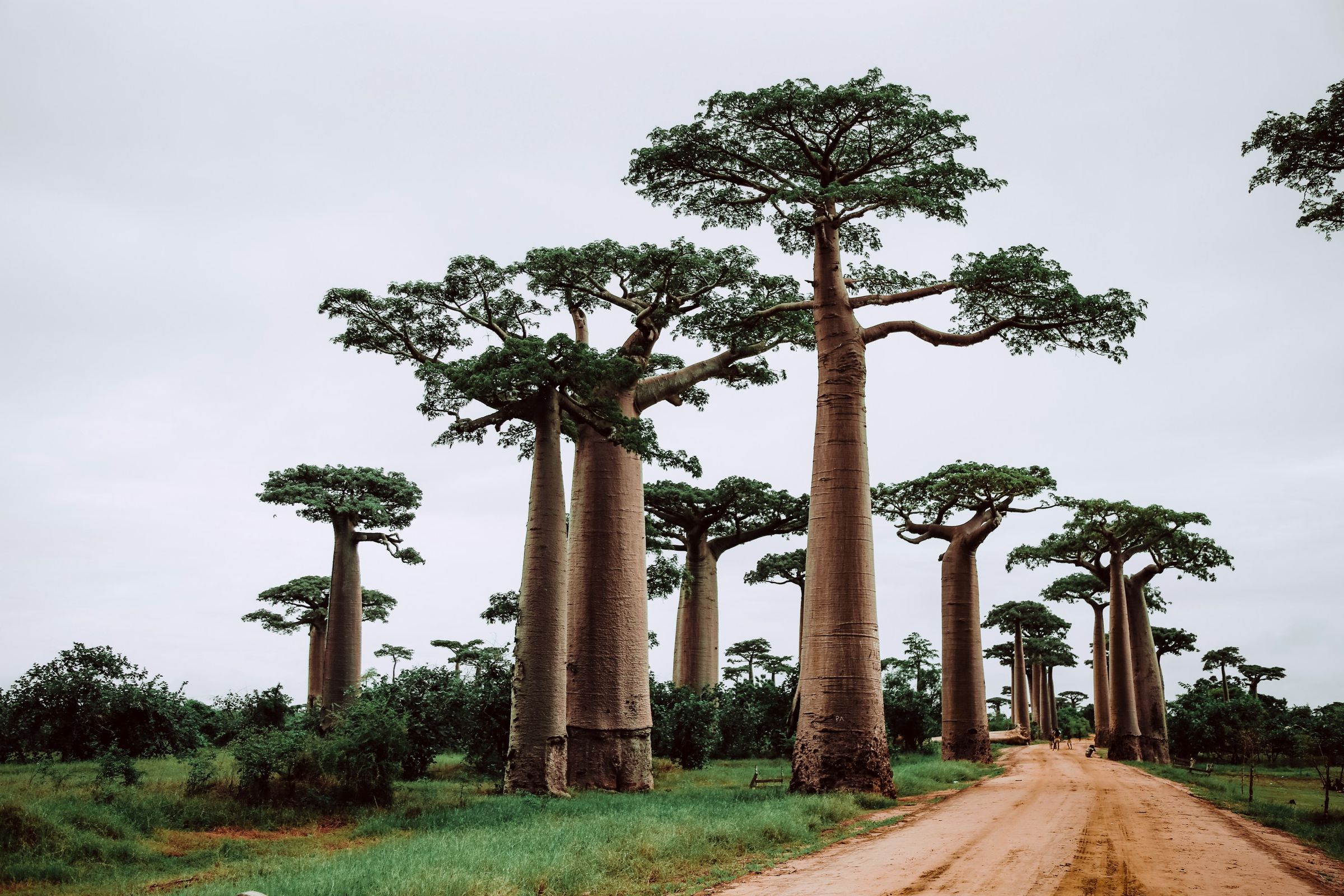
Around Morondava you don't have to hunt for them: Grandidier's baobabs stand in the fields beside the road. These are the places to aim for.
Tell us your dates and what you would like to see. We reply within 24 hours with a written itinerary and a firm price.
The six fall into two groups. Grandidier's and the Suarez baobab flower in the dry season, on bare branches. The other four flower in the rains, when they're in leaf or coming into it.
So for the classic silhouettes, come from June to September, which also suits the dirt roads north to the Tsingy. During flowering, look up into the crowns around dusk: binoculars help when the flowers are high above you. At Ifaty the fony baobabs are in leaf from about November to April.
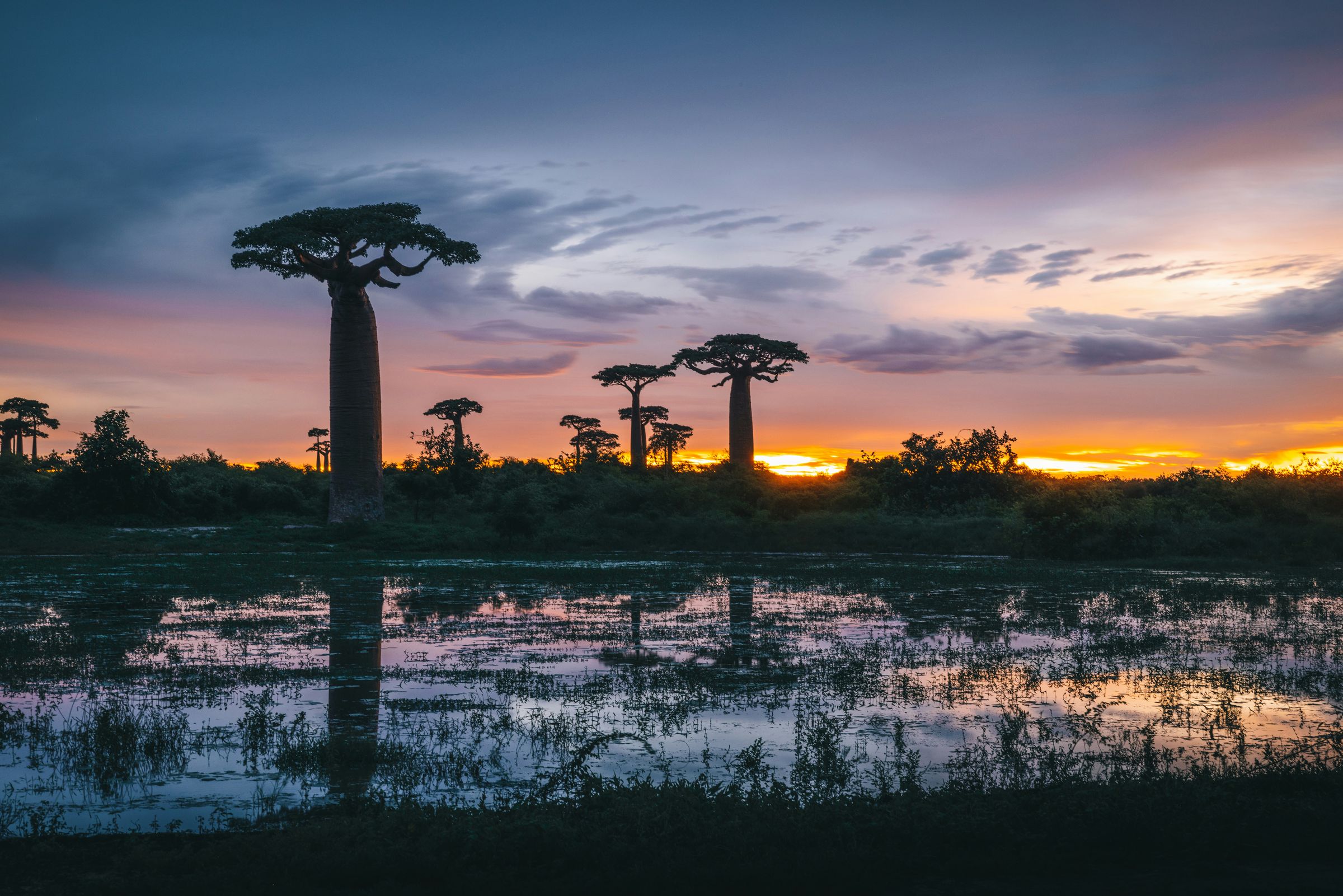
In the rains, roughly December to March, the trees are green and the rice fields around them flood, which is when you get reflections like this one. But the Tsingy de Bemaraha closes and the road north turns to mud, so a wet-season trip means the baobabs from Morondava and little else (more in our cyclone season guide).
The light and the atmosphere change through the day. Sunset is the popular visit, while sunrise can be quieter. Neither offers a particular sky on demand, so choose the time for the pace you want as well as for photographs.
From Morondava, allow time for the road rather than arriving at the moment of sunset. A sunrise visit means leaving town in darkness. Confirm the departure time locally and bring a torch for the walk to or from the vehicle. Keep to the road and visitor paths and leave the bark alone.
The 5-day West trip stops at the Avenue on day 1 and returns for sunset on day 5. The 10-day West Adventure has a sunset on day 9 and sunrise on day 10. The 20-day trip includes sunset, with an optional sunrise. Our Avenue of the Baobabs guide covers the practical visit.
Baobabs are useful trees as well as photographic subjects. Kew records food uses for Grandidier's fruit, cooking oil made from the seeds and fibres from the bark and wood used in crafts and thatching.
Look at the lower trunks and ask your guide about the marks rather than making your own. A scar may reflect a long history of local use. Visitors shouldn't cut, peel or climb a tree for a photograph.
If you want to buy a locally made product, ask where it comes from and follow your destination country's import rules. A labelled jar is easier to make sense of than a bag of seeds sold without a name.
Half of them are. On the IUCN Red List, Perrier's baobab is Critically Endangered, and Grandidier's and the Suarez baobab are Endangered. The za, fony and Madagascar baobabs are listed as Least Concern, but the authors of the 2024 Nature paper point out that their numbers are falling too, and they call for closer attention to the Suarez and Grandidier's baobabs.
For Grandidier's, the biggest threat is the clearing of its forest for farming. The old trees are usually left standing, which is how the Avenue came to look the way it does, but in farmland very few young ones grow up to replace them. In the north, the IUCN assessments point to fire, cutting for charcoal and timber, and land cleared for fields, towns and mines.
The Avenue has protected status, with a tree nursery and planting projects. Keep to visitor paths and don't damage bark or young trees. Park fees and local guides are included in our set-trip prices.
The 10-day and 20-day trips both include the Tsiribihina. At the time of writing, the UK Foreign Office says armed criminals have boarded boats on the river and robbed passengers, and it advises seeking alternative routes. We can reshape either trip without it, for example by flying to Morondava and joining the western route there (more in our safety guide).
Tell us which baobabs you're after and when you can travel, on the booking form or WhatsApp. A real person in Antananarivo replies, usually within 24 hours, with a written itinerary and a firm price.
Photos: Graphic Node and Nicolas Jehly on Unsplash.
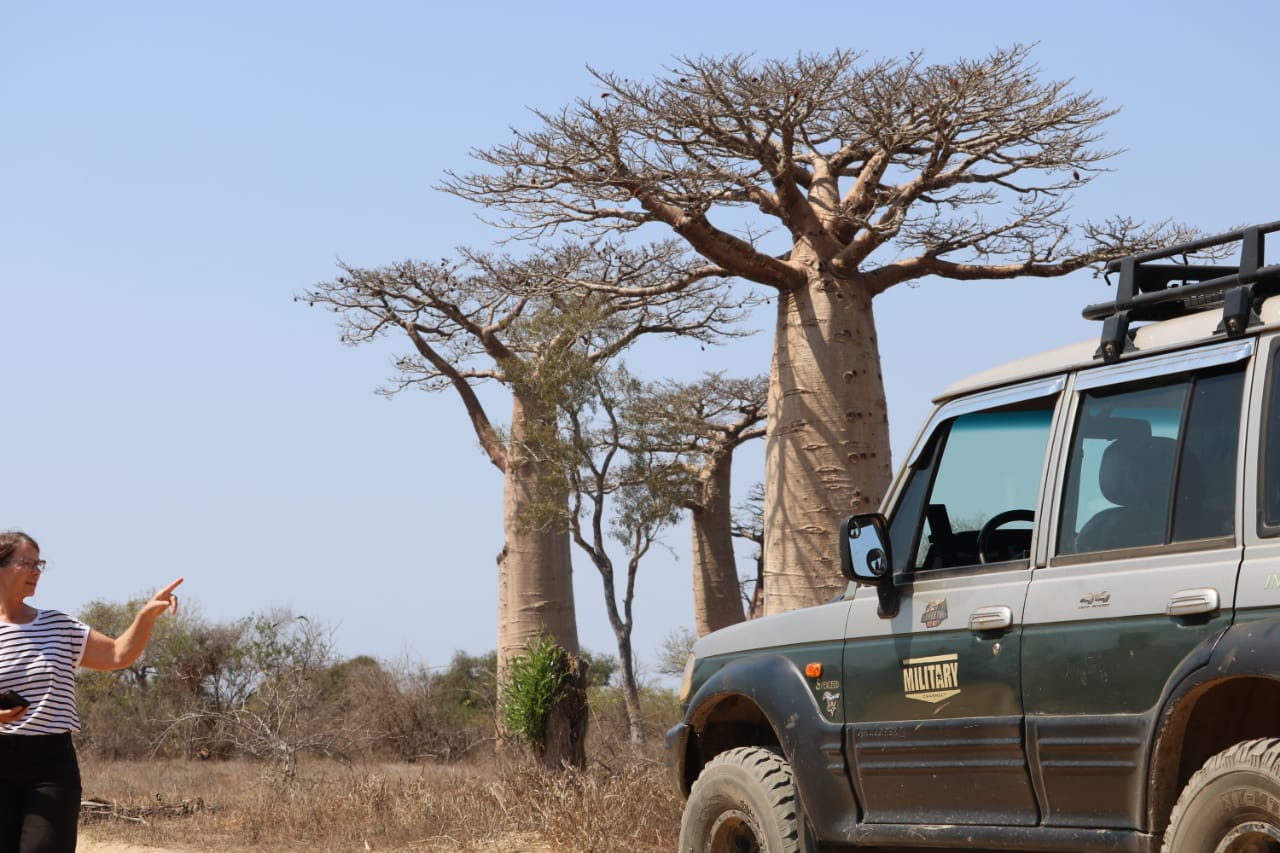
Six grow wild only in Madagascar, out of eight baobab species in the world: Grandidier's, the za, the fony (Adansonia rubrostipa), the Madagascar baobab, the Suarez baobab and Perrier's. The other two are the African baobab, which also grows in Madagascar but isn't native, and one species in north-western Australia. Some guidebooks say nine, counting an African tree described in 2012 that's no longer recognised as a separate species.
The Avenue of the Baobabs, 15 to 20 km north of Morondava, for Grandidier's baobab, the biggest and best known. For more species, add the spiny forest around Ifaty, north of Tulear, where the Reniala reserve protects spiny forest with fony baobabs, or Ankarana in the far north, where Madagascar National Parks lists three species.
Adansonia grandidieri, the largest of Madagascar's baobabs and the tree that lines the Avenue of the Baobabs. It has a smooth, reddish-grey trunk up to 3 m across and 25 to 30 m tall, with a flat crown of horizontal branches. It grows only in the south-west, roughly from Morondava to Morombe, and is listed as Endangered. In Malagasy it's reniala, "mother of the forest".
For bare silhouettes, June to September, when Grandidier's baobabs have dropped their leaves and the roads in the west are dry. Kew gives May to July for flowering, with the white flowers opening around dusk. From about October to May they're in leaf, and in the rains the fields around the Avenue flood, but the Tsingy de Bemaraha closes and the western roads turn to mud.
Three of the six are. On the IUCN Red List, Perrier's baobab is Critically Endangered, and Grandidier's and the Suarez baobab are Endangered. The za, fony and Madagascar baobabs are Least Concern, though their numbers are falling too. The main threats are forest cleared for farming, fire, and cutting for charcoal and timber.
The Baobab Amoureux: two baobabs near Morondava whose trunks have grown wound round each other, a short detour off the road north towards Kirindy, beyond the Avenue of the Baobabs. Sources disagree on the species, some calling them za baobabs and others fony. Our 5-day West trip and 20-day Ultimate Madagascar both stop there.
Private trips with your own vehicle and driver-guide. Every one can be reshaped around your dates.
Sunset on the Avenue of the Baobabs, a night walk in Kirindy, the Grand Tsingy hike and a canoe on the Manambolo River.
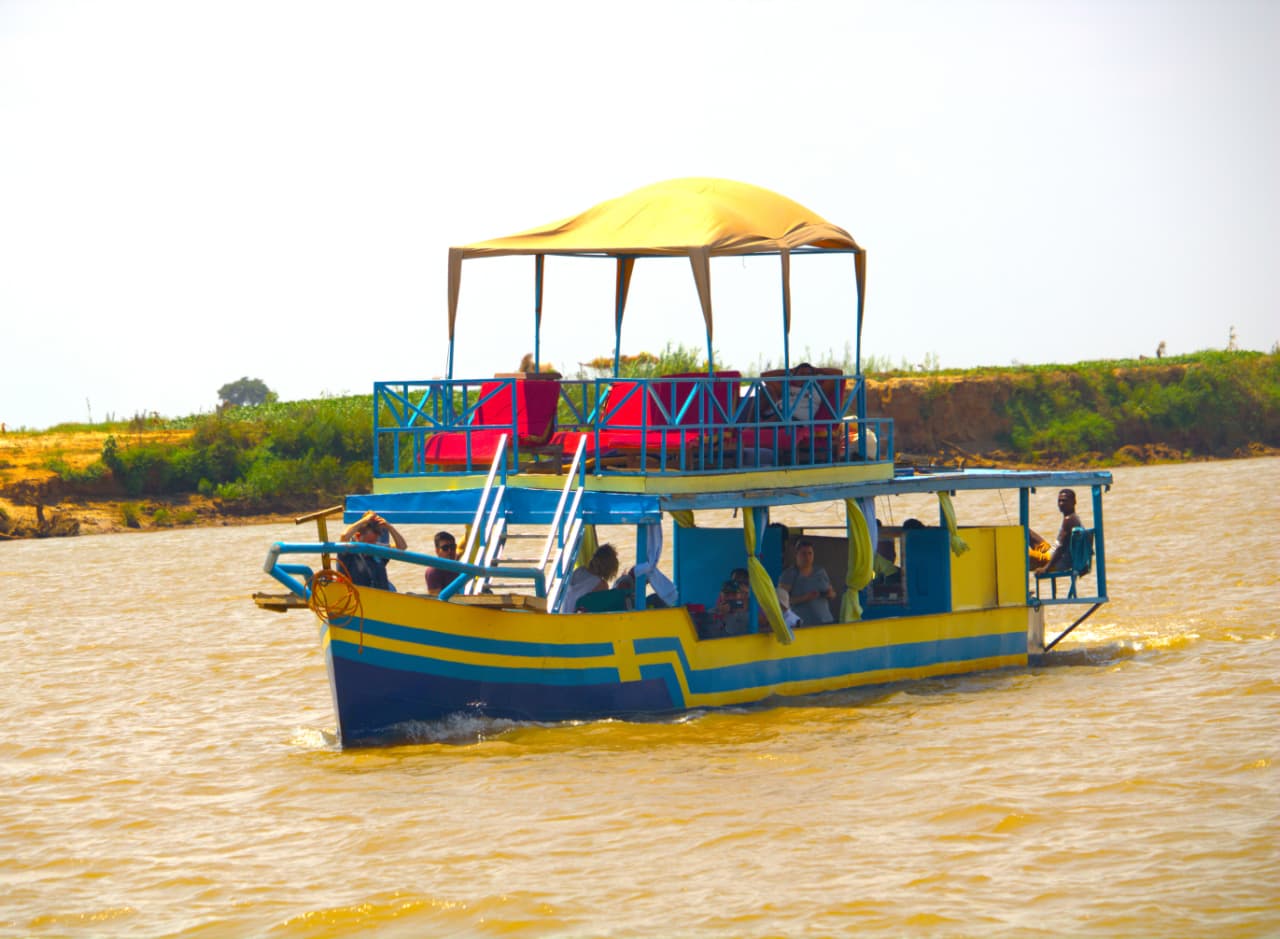
Four days drifting down the Tsiribihina with camps on the riverbank, then the Grand Tsingy, Kirindy's nocturnal forest and the baobabs.
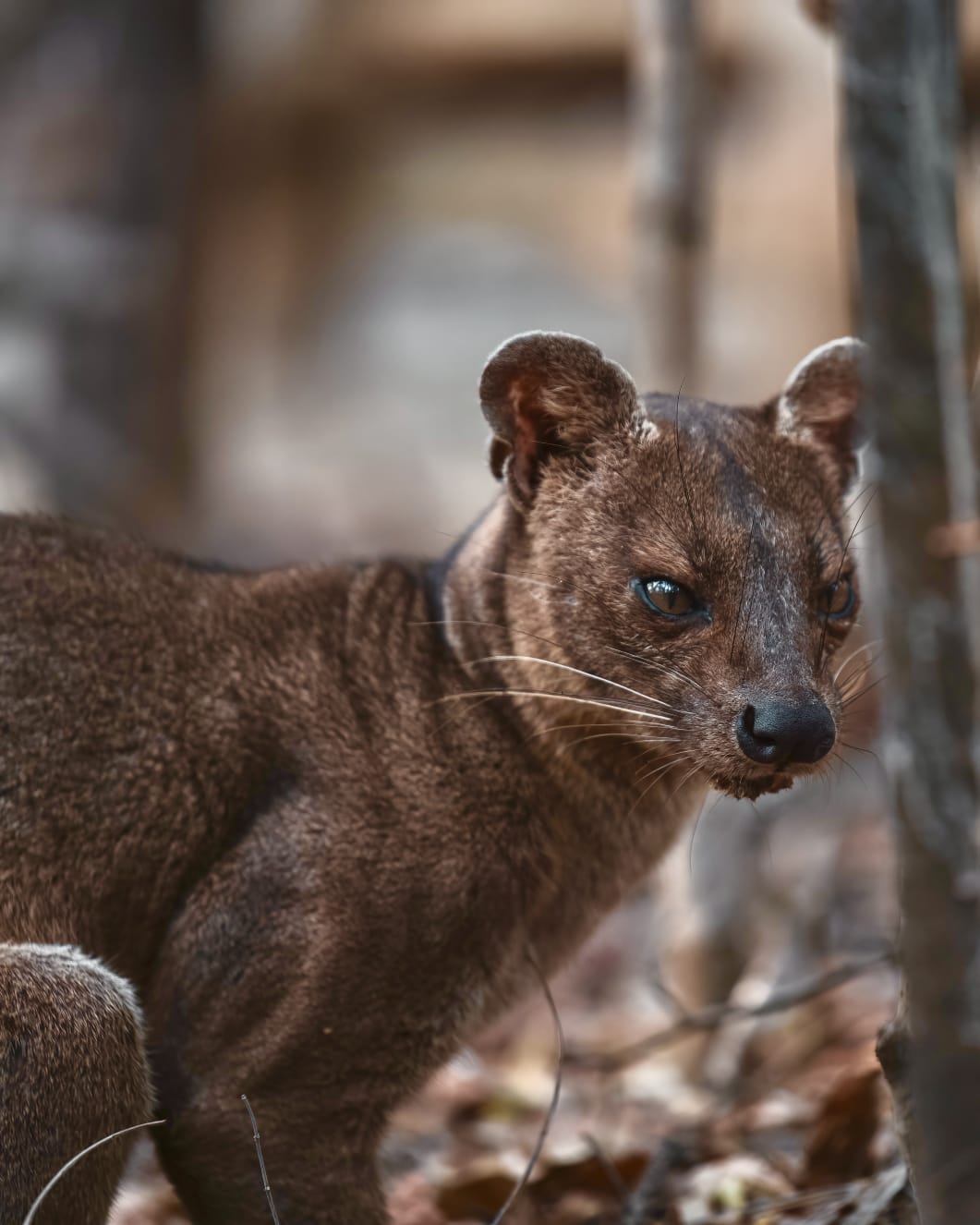
Three weeks and nearly every landscape the island has: river cruise, Tsingy, baobabs, remote Vezo coast and the southern parks.

The classic route done properly: Andasibe, Ranomafana, Anja's ring-tailed lemurs, the canyons of Isalo and the reef at Ifaty.
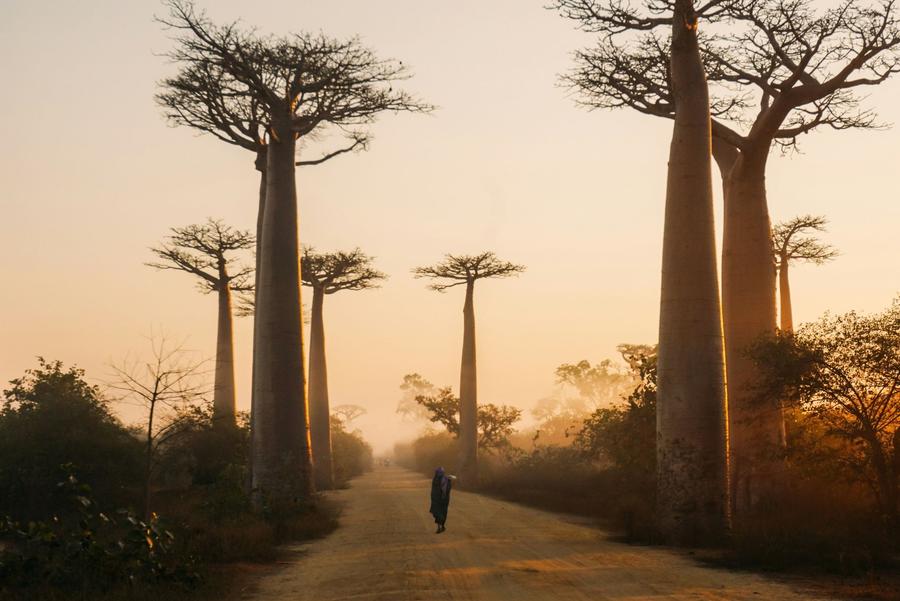
When to go, how to get to Morondava, what the rains change, and how to fit the Avenue in with Kirindy and the Tsingy.
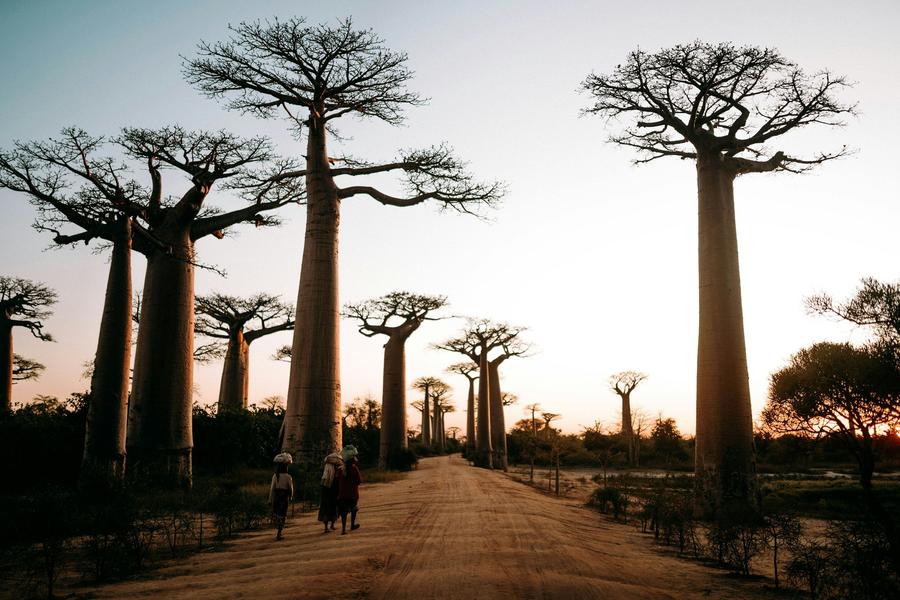
The flight or the long road in, Kirindy to the north, Belo-sur-Mer to the south, the beach the sea is eating, the dry months and how many nights to stay.
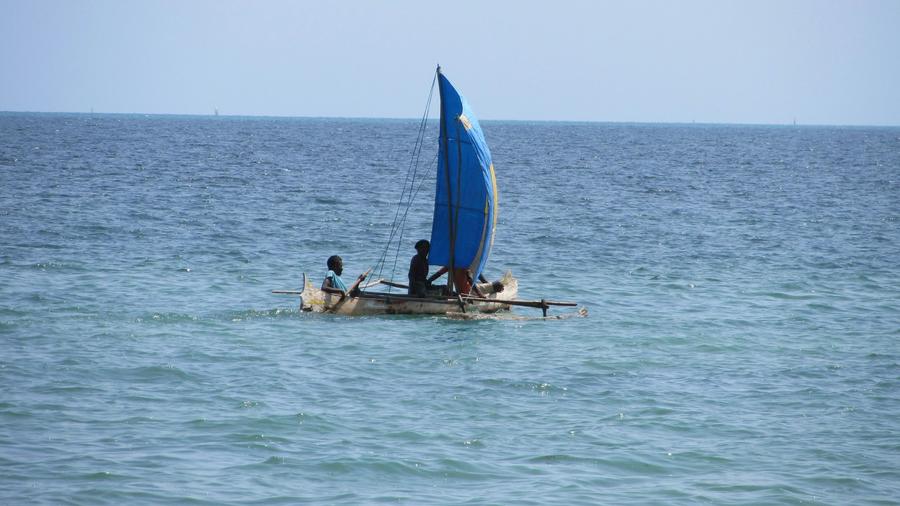
Ifaty's lagoon and reef, the baobabs and birds of the Reniala spiny forest, Tulear and its flights, Anakao by boat, the heat and whale months, and how many nights to stay.
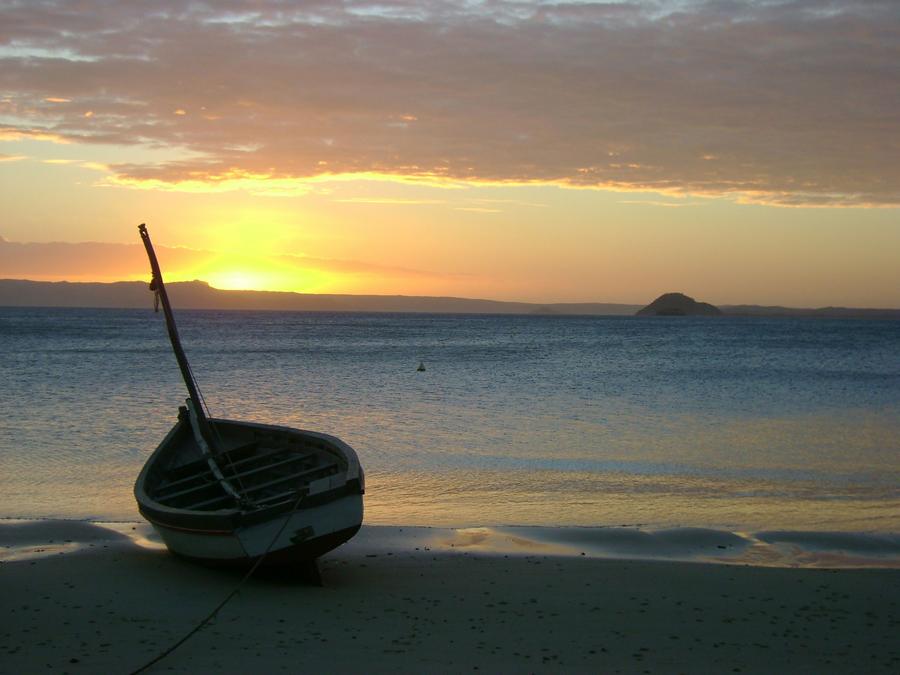
Diego Suarez and the far north: the Three Bays, the Emerald Sea, Montagne d'Ambre, the Tsingy Rouge and Ankarana, the dry windy months, and how many nights to give it.

Send your dates and a rough idea. We reply within 24 hours with a written itinerary and a firm price. No deposit to ask a question.