
2 days · East
Andasibe: Lemurs & Rainforest Trails
Chameleons at Peyrieras, a walk among the lemurs at Vakona, a guided night walk, and an early start in Analamazaotra, where the indri call most mornings.
Where the rainforest grows and how much is left, the indri and the frogs that live in it, the forests you can walk in from Andasibe to Marojejy and how hard each one is, then the leeches and the months that suit it.
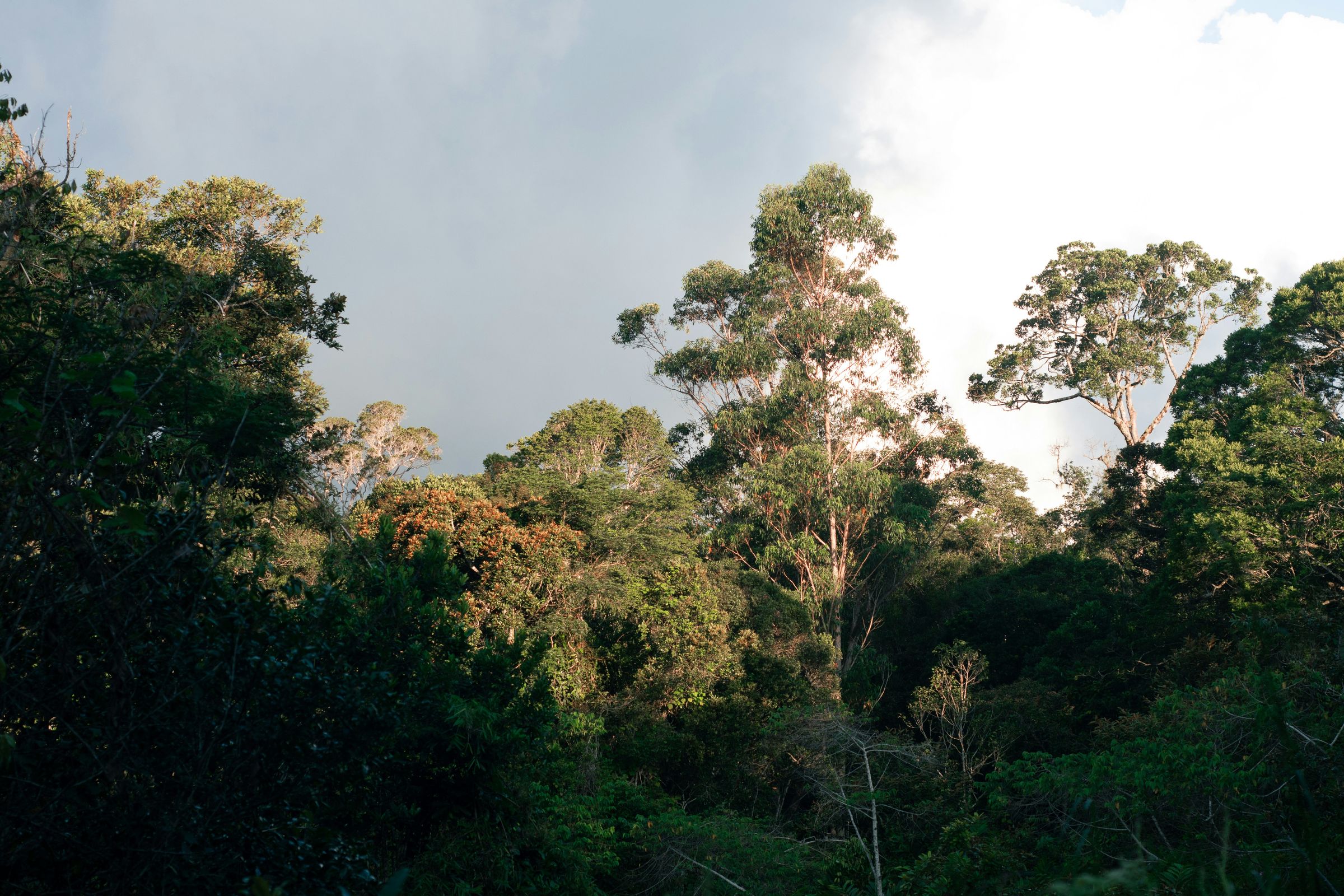
Madagascar's rainforest grows down the eastern side of the island, on the mountains where the moist south-east trade winds drop their rain. It runs in a broken band from Marojejy and the Masoala peninsula in the north-east to Andohahela in the far south-east, with outliers on Montagne d'Ambre in the far north and around Nosy Be in the north-west. For a short visit from the capital, start with Andasibe-Mantadia, three to four hours by road from Antananarivo, where the indri sing most mornings.
Our 2-day Andasibe trip, from €320 per adult, is the short way in: private, with your own vehicle and driver-guide, a night walk and an early morning with the indri.
The eastern forests receive much more rain than the west, which lies beyond the mountains.
A historical comparison found that about half the moist forest mapped in the 1950s had gone by 2014. Those dates matter: it isn't a measurement of the forest remaining today. A 2018 study by Ghislain Vieilledent and colleagues joined aerial photographs from around 1953 to satellite data and found about 8.6 million hectares of moist forest then and 4.4 million in 2014. In 2010 to 2014, forest of all kinds was still going at about 99,000 hectares a year.
The study blames slash-and-burn farming and pasture, as a growing population needed farmland and firewood. In the east the practice is called tavy: forest is cut and burned for crops, then left to fallow, and as the fallows get shorter the fields push further in. Logging matters too. In the political crisis of 2009, rosewood and ebony were cut in large numbers inside Marojejy and Masoala, and in 2010 the Rainforests of the Atsinanana went on UNESCO's list of World Heritage in Danger, coming off it on 9 July 2025.
That's why the fees matter. Park entry and local guides are included in our set-trip prices.
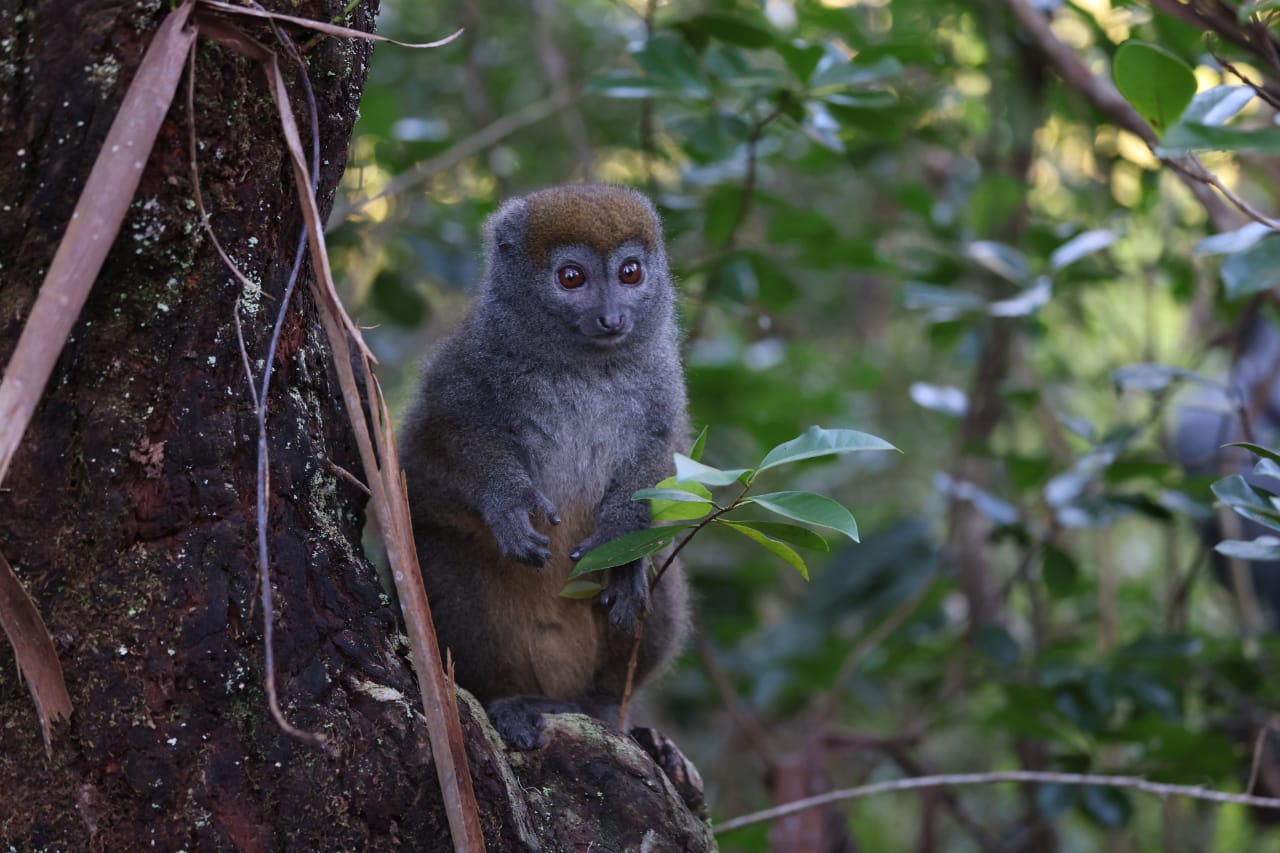
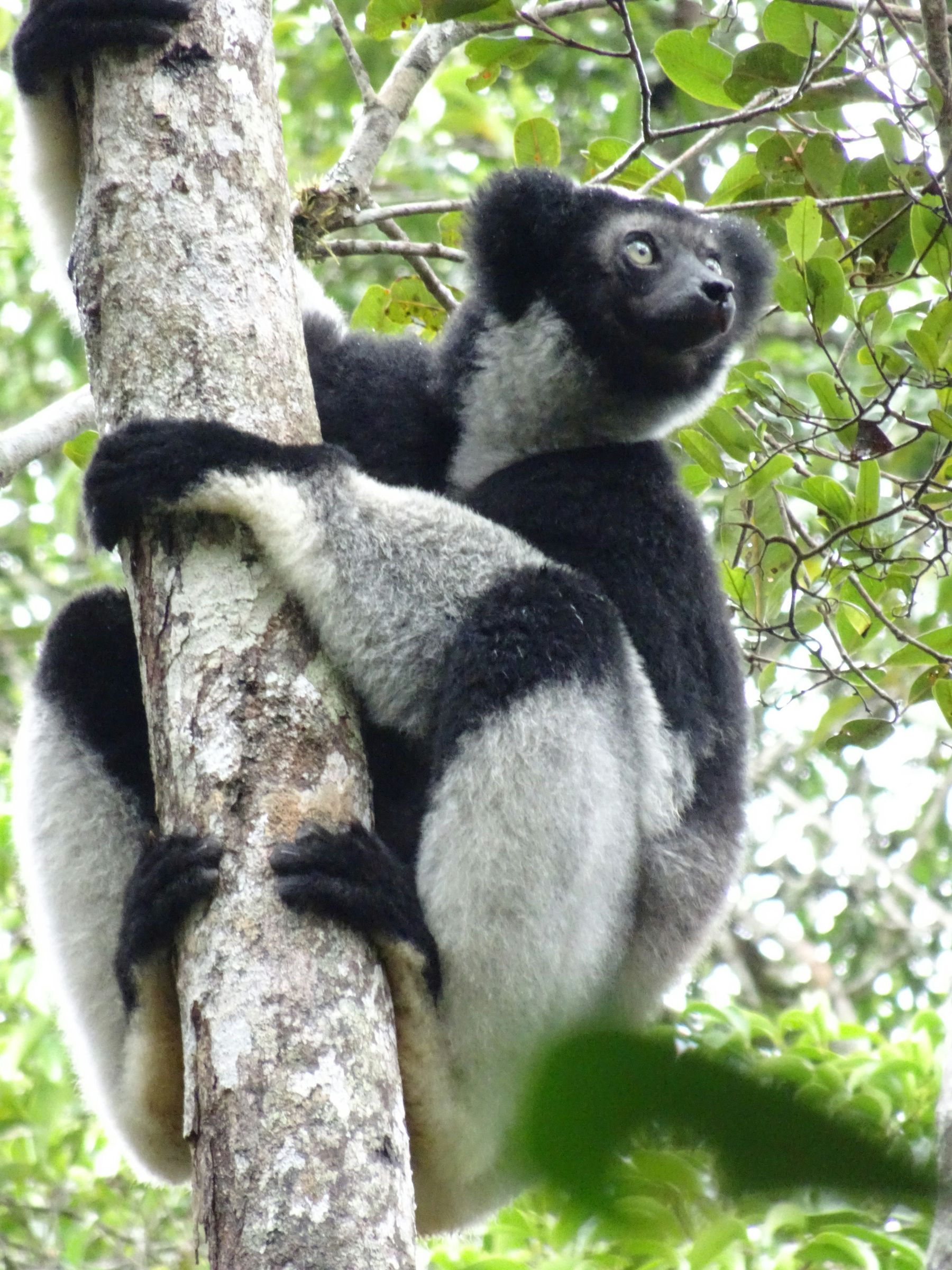
Many of Madagascar's best-known lemurs live in these eastern forests:
They're all wild, so no one can promise any of them, and the park lemurs keep their distance. More in where to see lemurs.
Parson's chameleon, one of the heaviest chameleons in the world at up to about 700 g, lives in the eastern rainforest, Andasibe-Mantadia included. The tiny brown leaf chameleons, Brookesia, are easiest to find asleep on low twigs at night. Our chameleon guide says where to look.
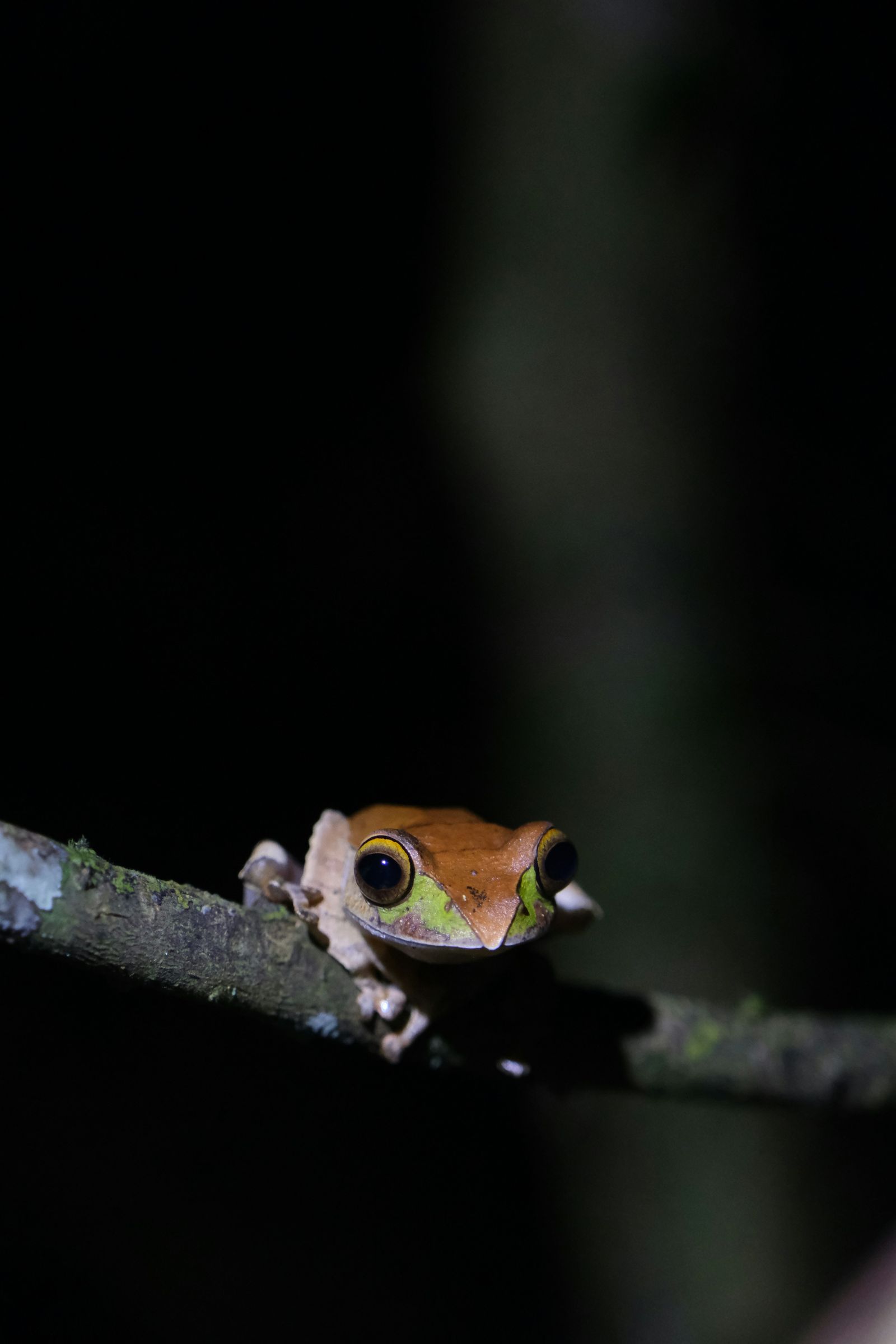
Frogs are everywhere: Madagascar National Parks counts 84 amphibian species at Analamazaotra and 101 at Ranomafana. The satanic leaf-tailed gecko, about 9 cm long with a tail like a dead leaf, lives here too, flat against the bark by day. A guide may spot one that you would walk straight past.
Orchids, mosses and ferns deserve a look too. Madagascar National Parks records abundant orchids at Analamazaotra. Flowering depends on the species, so say if plants are your main interest rather than expecting every visit to find flowers. For birds, see our birdwatching page.
Tell us your dates and what you would like to see. We reply within 24 hours with a written itinerary and a firm price.
Andasibe is about 140 km east of Antananarivo on the paved RN2, and the main trails are gentle. Analamazaotra, the small part by the village, has the habituated indri families, and Madagascar National Parks rates most of its circuits easy or moderate, at about two hours each. Mantadia, 15 to 20 km north up a rough track, is bigger and quieter, with steeper trails and a better chance of ruffed lemurs and diademed sifakas.
Give it at least one night, for the night walk and an early start. Our 2-day trip does exactly that, and the Eastern trip and the Classic South both start here. More in our Andasibe guide.
Ranomafana is mountain rainforest in the south-east, about 65 km from Fianarantsoa and 10 to 12 hours' drive from Antananarivo, so it goes with a trip down the RN7. The trails climb and drop along long slopes with a lot of steps, slippery after rain, and a usual circuit takes three to four hours. The golden bamboo lemur and Milne-Edwards' sifaka are among the animals to look for. The Classic South gives it two nights, with a night walk along the forest edge. More in our Ranomafana guide.
Montagne d'Ambre, south of Diego Suarez, is easy walking for a rainforest. Madagascar National Parks rates the short circuits to the waterfalls easy, at 45 minutes to an hour. Longer ones take three or four hours, and only the summit trail, 12 km and eight hours or more one way, is hard. Look for crowned lemurs, Sanford's brown lemurs, chameleons and frogs, and bring a layer. Both north trips, the 11-day Northern Madagascar trip and the 12-day Adventure, spend day 4 here.
Neither is on our set trips. If one of them is why you're coming, ask us and we'll tell you plainly what it would take.
On the Eastern trip, after Andasibe, a boat takes you along the Pangalanes, the long chain of rivers, lakes and canals behind the east coast, to Ankanin'ny Nofy. The Palmarium there is a private reserve where habituated lemurs, indri and black-and-white ruffed lemurs among them, come close, and the night walk looks for the aye-aye.
Lonely Planet counts seven lemur species there, two of them hybrids and some not native to the area. It's good for photographs and a poor guide to wild rainforest, which is why we pair it with Andasibe.
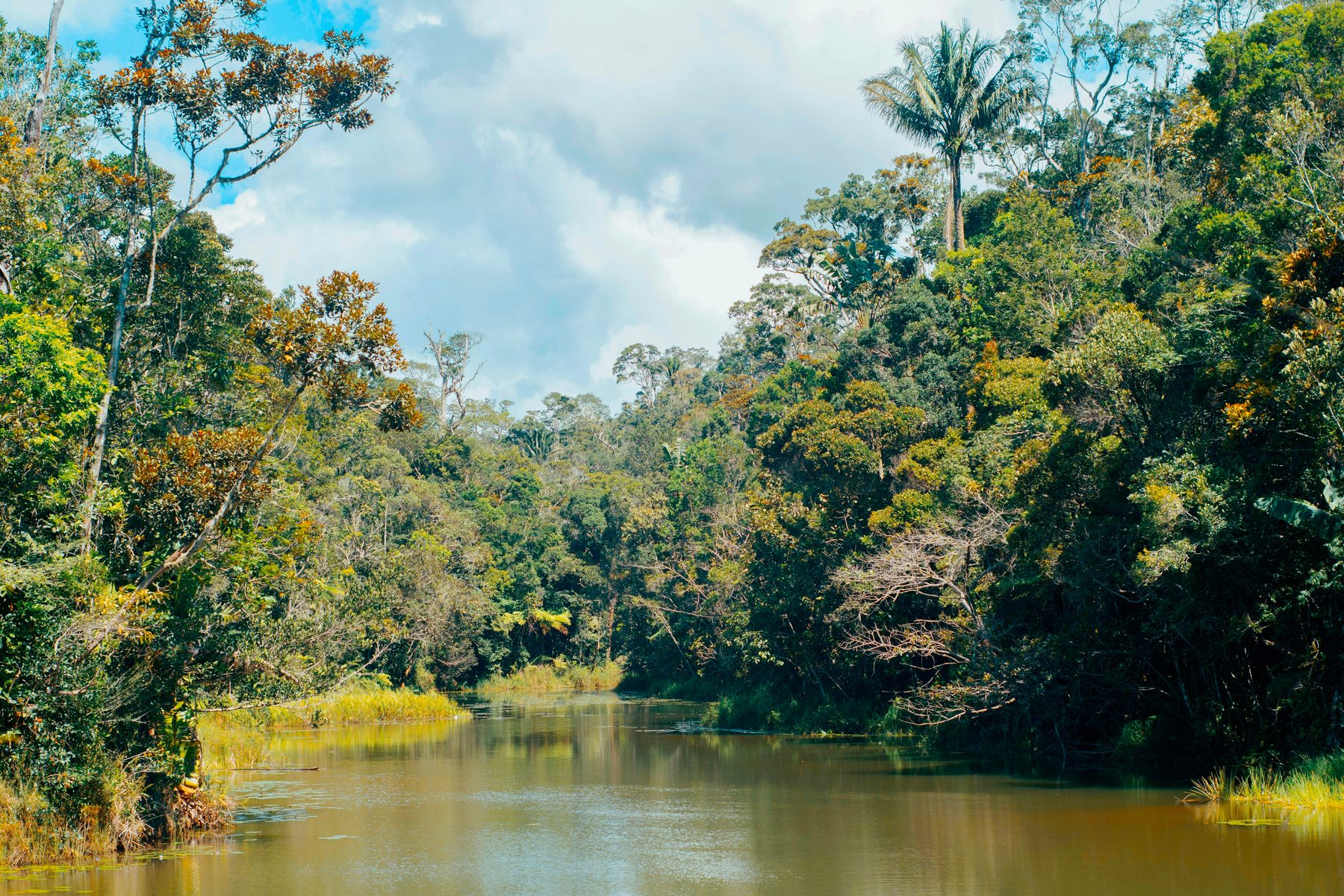
Madagascar National Parks says Andasibe has no true dry season, and showers come even in the drier months. The clay on the trails turns slippery.
After rain the leeches come out, at Andasibe and Ranomafana in particular, and in a damp spell that can be any month. The bites can itch, so cover your ankles and avoid scratching them. Tuck your trousers into your socks and check your ankles after the walk.
From January to March come the heaviest rains and the chance of a cyclone, mostly on the east coast: in February 2026 Cyclone Gezani made landfall at Toamasina. A short Andasibe trip may be possible then, but confirm road and weather conditions before committing. More in our cyclone season guide.
Andasibe receives visitors throughout the year, and Madagascar National Parks calls May to October the ideal time for wildlife. Our pick is September to November. It's warming up, the main rains usually haven't started, birds are breeding and calling, and common brown lemurs have babies from September.
June to August is fine, but nights at Andasibe can drop to around 10 °C, and night walks find less as dwarf lemurs and some reptiles go quiet. November to March suits frogs and chameleons, most active in the warm rain, but it's wet. For Masoala and Marojejy, aim for about September to November. Month by month, see the best time to visit Madagascar.
Confirm the reserve and circuit for an evening walk when you book. Private and community reserves around Andasibe run their own visits, while national parks set their own access arrangements. Madagascar National Parks lists night visits at some sites, including Masoala and Nosy Mangabe, but that doesn't establish the hours or availability of a circuit elsewhere.
On our trips there's a guided night walk at Andasibe (optional on the Eastern trip), along the forest edge at Ranomafana, and at Ankanin'ny Nofy, where the walk looks for the aye-aye. Mouse lemurs, frogs and sleeping chameleons are among the possibilities. More in our night walks guide.
The rest is in our packing guide.
The Andasibe trip does it in two days, from €320 per adult. Eastern Madagascar, 10 days from €1,620, adds the Palmarium and three nights on Île Sainte-Marie. The Classic South, 11 days from €1,730, starts at Andasibe, then takes in Ranomafana on the way down the RN7. All are private and can be reshaped.
Tell us which forests you want and how much walking you're up for on the booking form or WhatsApp. A real person in Antananarivo replies, usually within 24 hours, with a written itinerary and a firm price.
Photos: Sandy Ravaloniaina, Tony Tang and Ingeborg Korme on Unsplash.
Mostly down the eastern side of the island, in a broken band from Marojejy and Masoala in the north-east to Andohahela in the south-east, with outliers on Montagne d'Ambre in the far north and around Nosy Be. The easiest to visit is Andasibe-Mantadia, three to four hours east of Antananarivo by road.
Roughly half of what there was in the 1950s. A 2018 study by Vieilledent and colleagues mapped about 8.6 million hectares of moist forest in 1953 and 4.4 million in 2014. Most of the loss came from slash-and-burn farming and pasture, and illegal logging of rosewood and ebony hit Marojejy and Masoala hard in 2009.
The indri, the largest living lemur, plus sifakas, ruffed lemurs, bamboo lemurs and, at night, mouse lemurs. Then chameleons and leaf-tailed geckos, and frogs everywhere: Ranomafana alone counts 101 amphibian species. All are wild, so none can be promised.
Andasibe receives visitors throughout the year, as there's no true dry season and lemurs don't migrate. September to November suits most people, with birds breeding and lemur babies before the main rains. November to March is best for frogs and chameleons but wet, and cyclones are possible from January to March, mostly on the east coast.
Yes, after rain, at Andasibe and Ranomafana in particular, and in a damp spell that can mean any month. Their bites can itch. Keep bites clean and seek advice if they become inflamed. Tuck long trousers into your socks and check your ankles after each walk.
Private trips with your own vehicle and driver-guide. Every one can be reshaped around your dates.
Chameleons at Peyrieras, a walk among the lemurs at Vakona, a guided night walk, and an early start in Analamazaotra, where the indri call most mornings.

Indri at Analamazaotra, the Palmarium's approachable lemurs, boat rides on the Pangalanes Canal, then island time on Sainte Marie.

The classic route done properly: Andasibe, Ranomafana, Anja's ring-tailed lemurs, the canyons of Isalo and the reef at Ifaty.
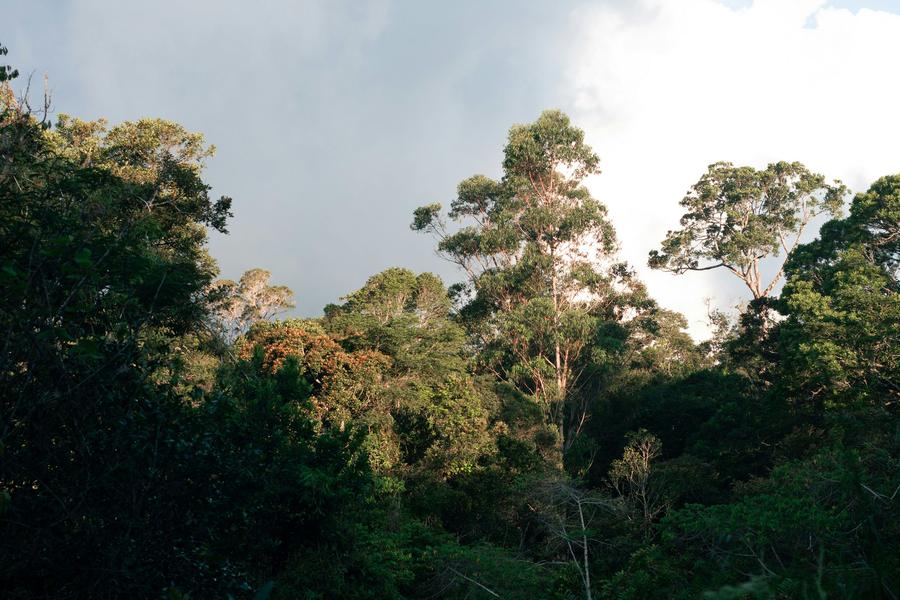
The indri, how to arrange a guided night walk, Mantadia, Vakona and Peyrieras, rain and leeches, and how many days to give Andasibe.
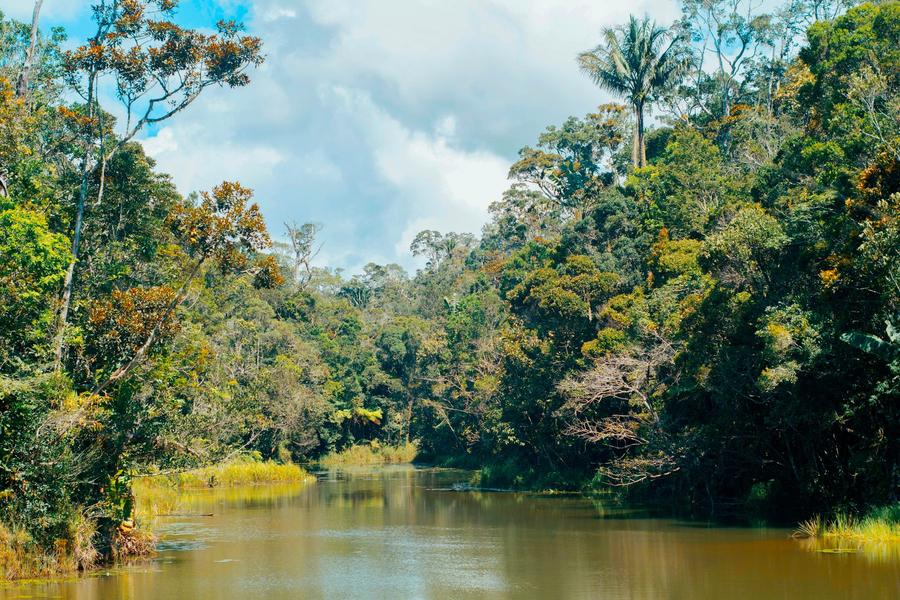
The golden bamboo lemur and Ranomafana's other lemurs, how hard the trails are, guided night walks, the fees, Centre ValBio and how many nights to stay.
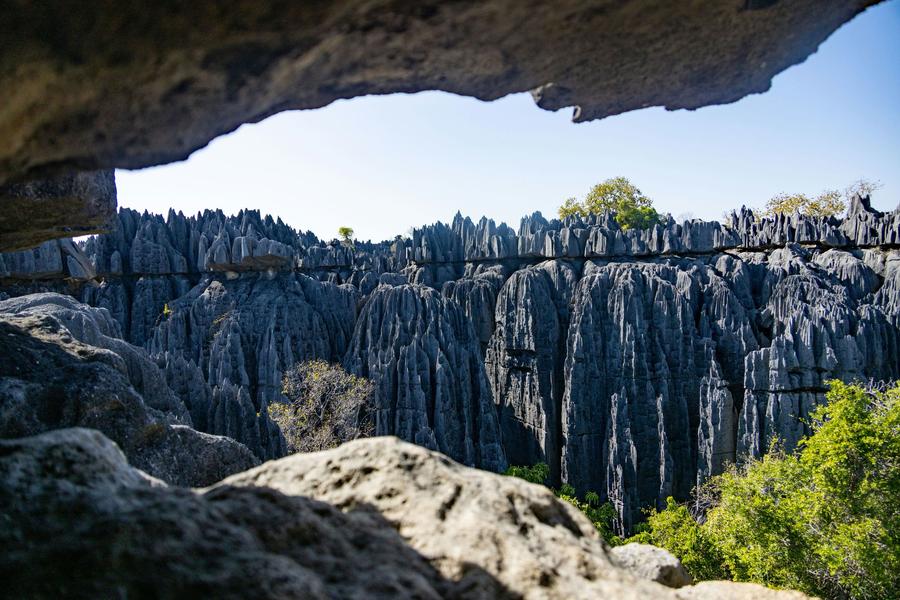
Andasibe-Mantadia, Ranomafana, Isalo, the Tsingy, the north and the remote parks: what each is for, how long to give it, the months that work and the trips that go there.
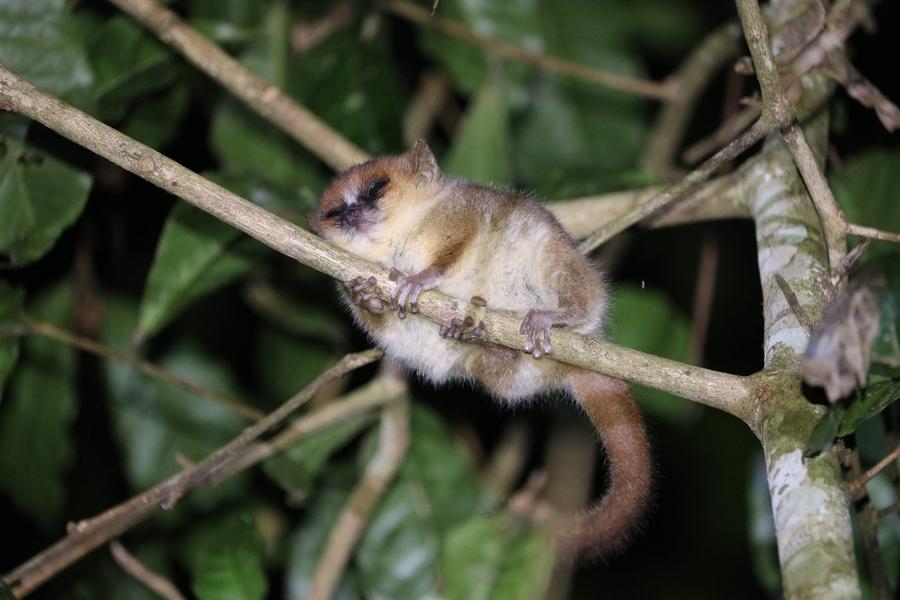
Mouse lemurs, sportive lemurs, sleeping chameleons and frogs: where night walks run, access rules, what to bring and the months when there's most to find.

Send your dates and a rough idea. We reply within 24 hours with a written itinerary and a firm price. No deposit to ask a question.