
5 days · West
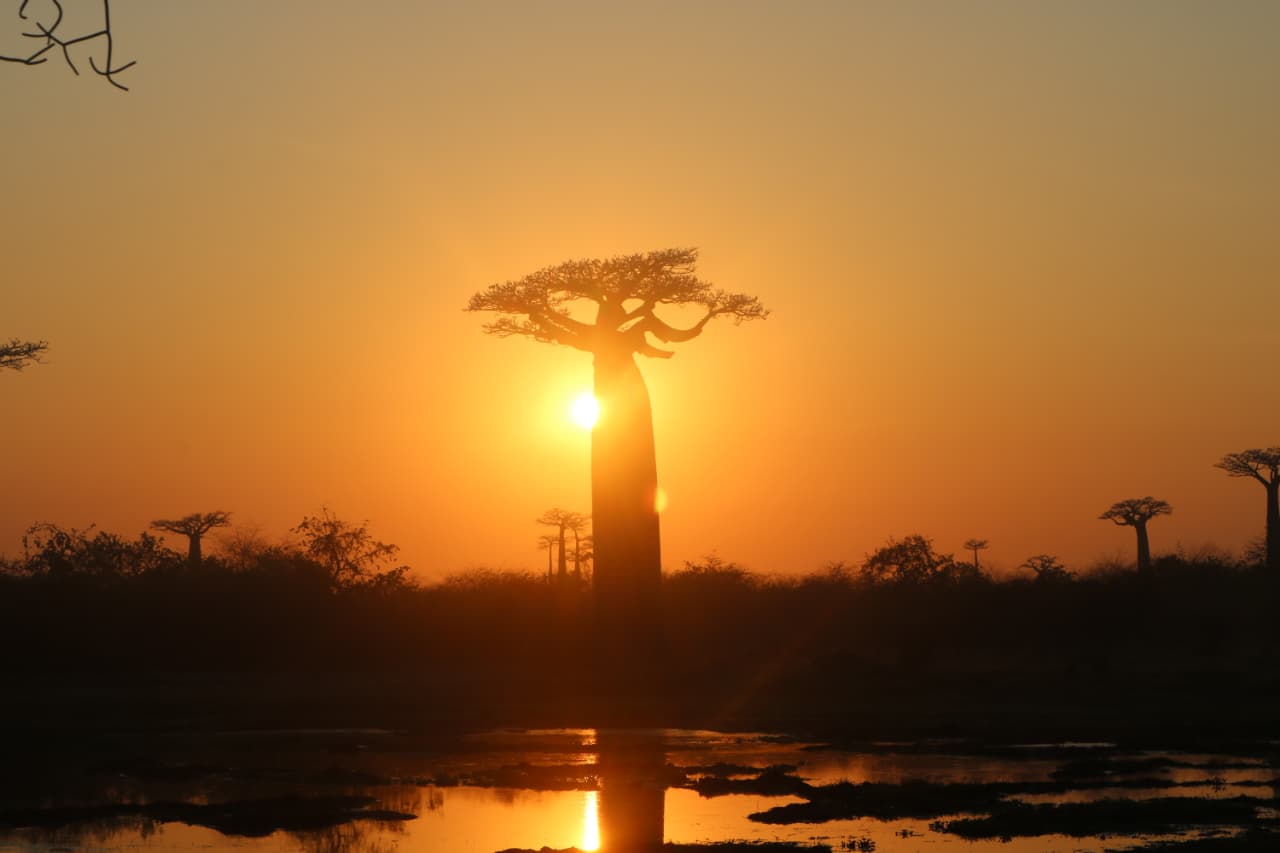
West: Baobabs and Tsingy
Sunset on the Avenue of the Baobabs, a night walk in Kirindy, the Grand Tsingy hike and a canoe on the Manambolo River.
What the fossa is and isn't, why Kirindy Forest is a practical place for a chance of a sighting, the months to aim for, what the night and morning walks are like, and how Kirindy fits between the baobabs and the Tsingy.
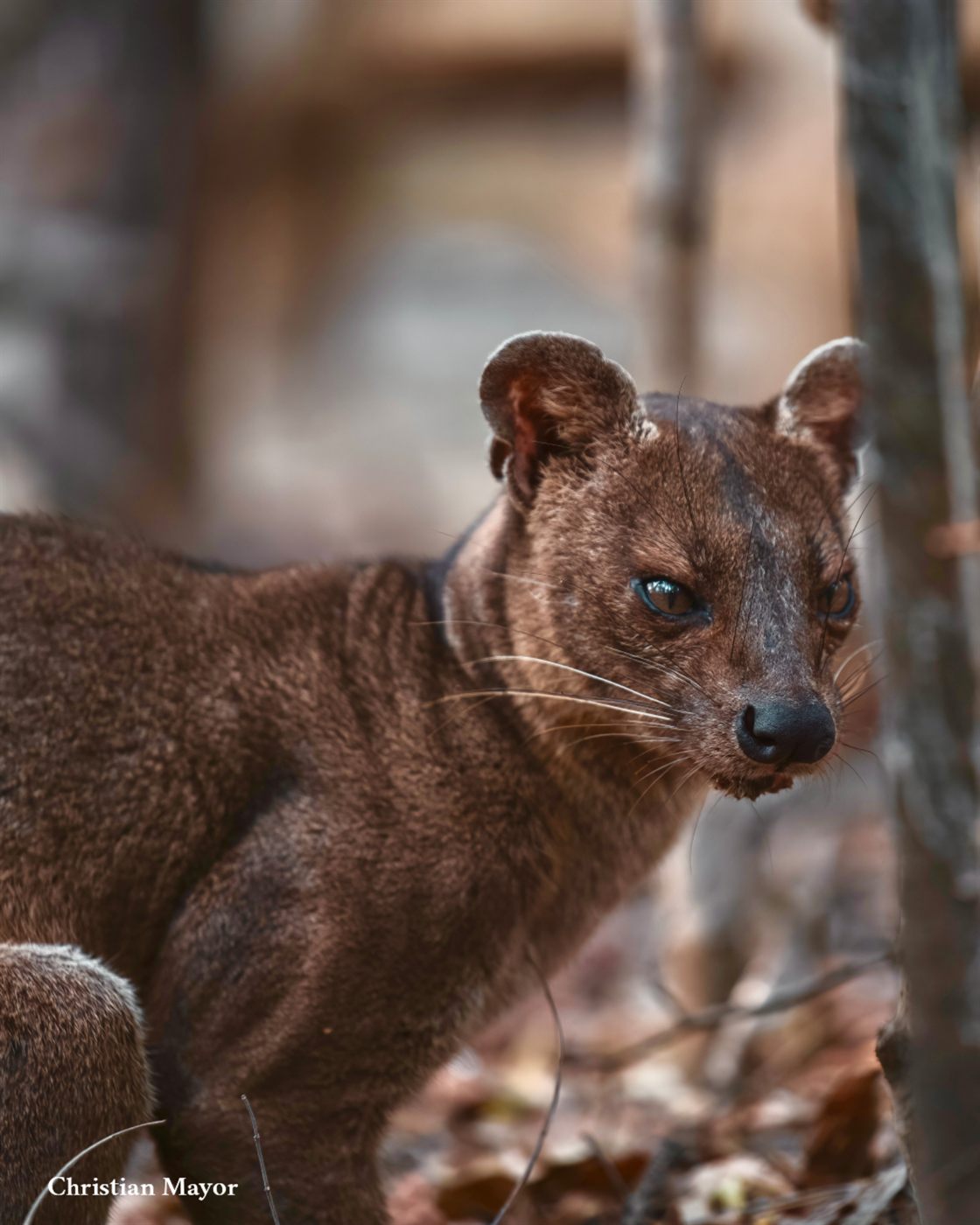
The fossa is Madagascar's largest native carnivore: a slim, red-brown hunter of lemurs, about 1.4 m from nose to tail tip, that looks like a small puma but isn't a cat. It lives in forests over most of the island, and Kirindy Forest, about 60 km north-east of Morondava, is a practical place for a chance of a sighting. October overlaps the mating season described by wildlife researchers and usually fits a western trip. Even then a sighting comes with luck.
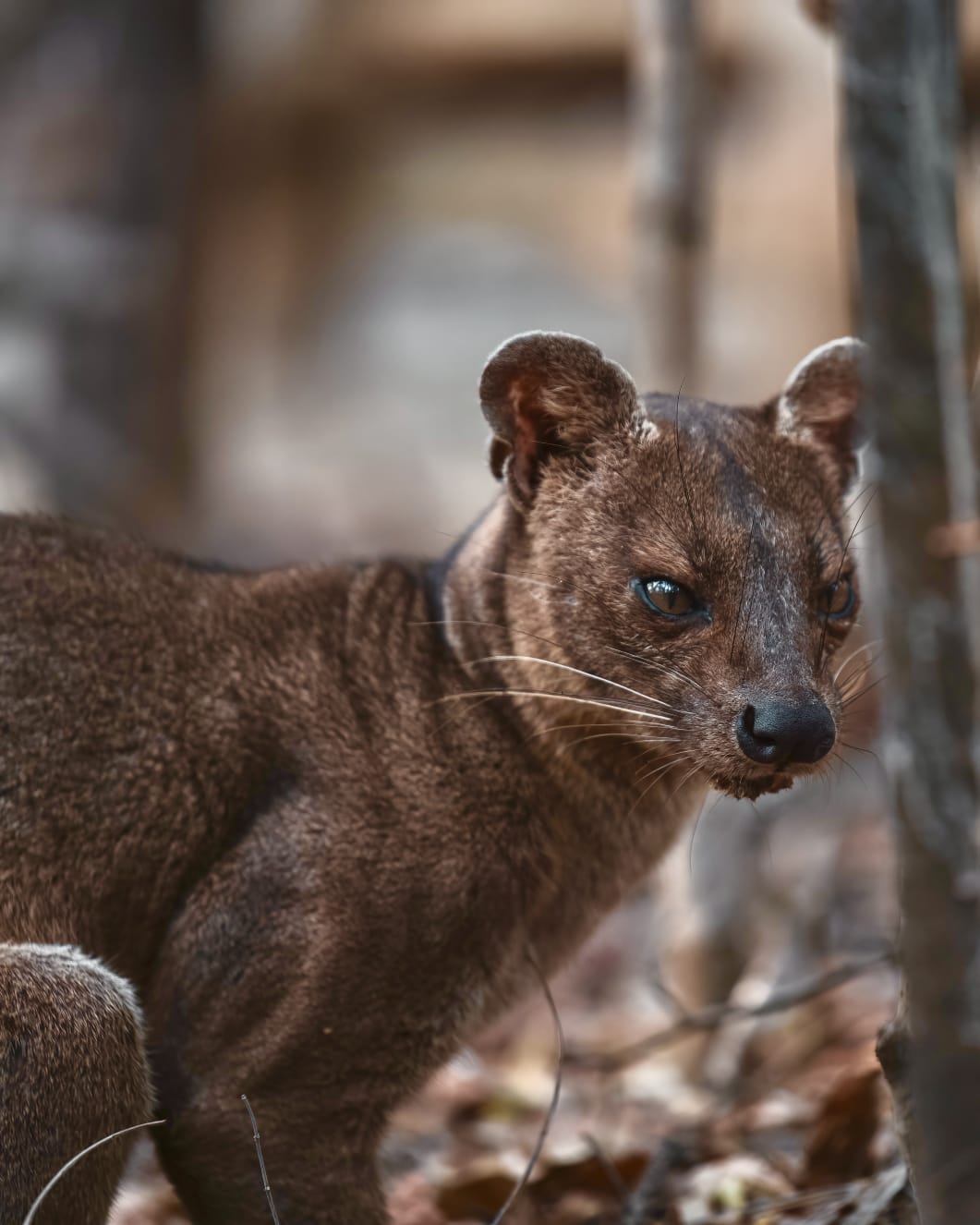
Kirindy is on the way from the Avenue of the Baobabs to the Tsingy de Bemaraha, so all three of our western trips stop there for a night, with a guided night walk in the evening and a walk in the forest the next morning. The fossa at the top of this page is one of Christian's own photos. Any fossa sighting happens with luck.
A grown male weighs about 6 to 9 kg and a female 5.5 to 6.8 kg. The head and body measure 70 to 80 cm, and the tail adds almost as much again, which helps it balance and brake as it moves through the trees. The coat is a plain reddish-brown with no spots or stripes, the head is more like a mongoose's than a cat's, and the large eyes face forward.
It isn't a cat. The fossa belongs to the Eupleridae, a family of carnivores that lives only on Madagascar, and its closest relatives anywhere else are the mongooses. The cat-like body evolved separately. One name causes confusion: Fossa fossana is a different animal, the Malagasy civet or fanaloka, a relative of under 2 kg.
It hunts by day and by night and climbs well. Much of its life happens away from people, which is why a fossa encounter comes with luck. The IUCN lists it as Vulnerable, and habitat loss and hunting threaten it.
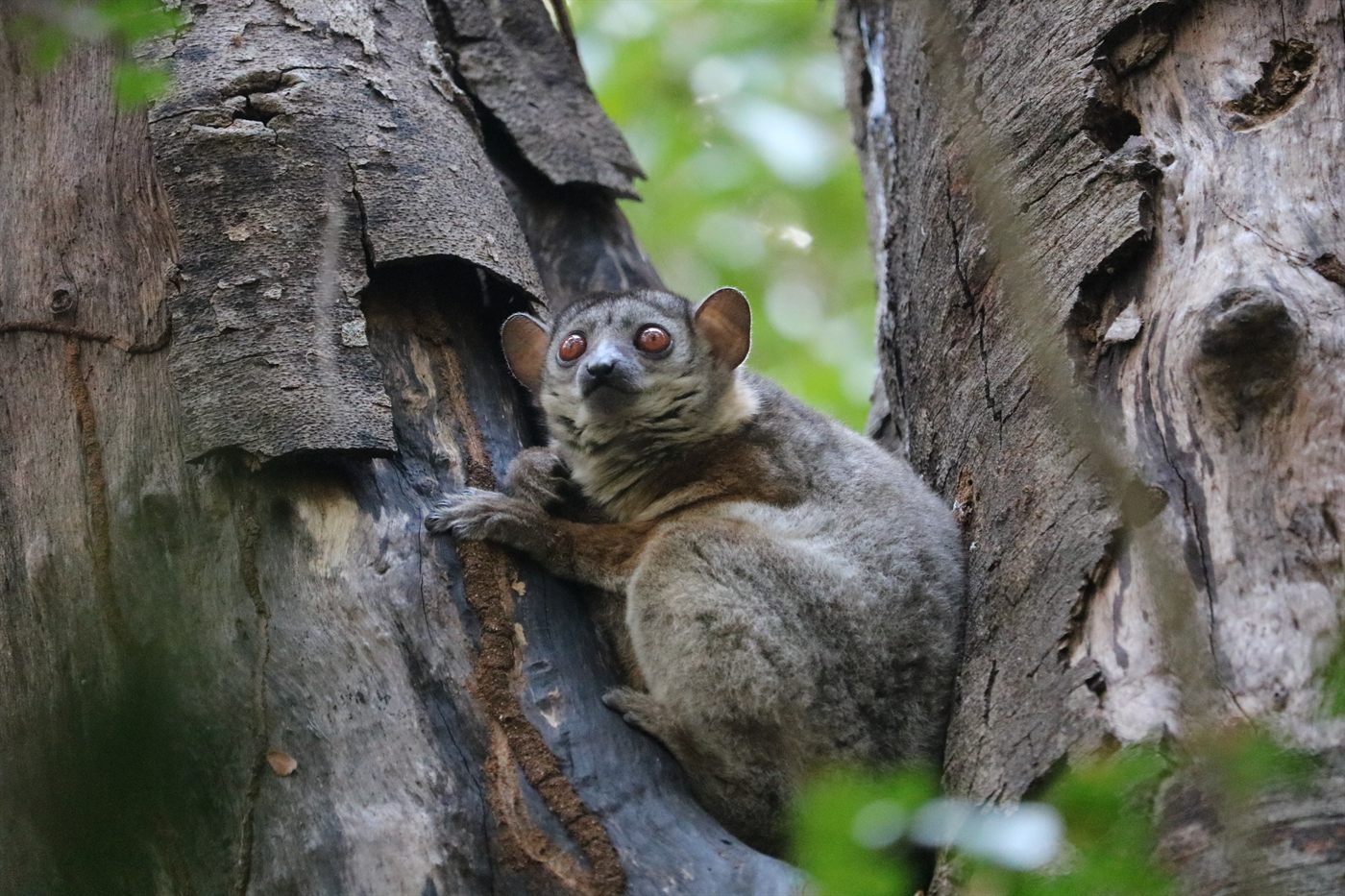
Lemurs make up more than half of what a fossa catches. At Kirindy its usual prey are small night lemurs, the red-tailed sportive lemur and the fork-marked lemurs among them. Sportive lemurs, like the one in this photo, spend the day in tree hollows. The fossa also takes tenrecs, rodents, snakes, birds and lizards, and near villages it raids chicken coops.
The giant jumping rat, a burrowing rodent of about 1.2 kg, also lives in this small corner of western Madagascar.
Kirindy's night walks are worth doing for their smaller mammals too, even when the chance of a fossa sighting comes to nothing.
Kirindy is a forest reserve, not a national park: roughly 10,000 to 12,500 hectares of dry deciduous forest on flat, sandy ground, around two hours' drive from Morondava, mostly on dirt. The German Primate Center runs a research station there, and a good deal of what is known about wild fossas comes from studies in this forest.
Kirindy is a sensible forest to choose if a chance of a fossa sighting matters to you. It is an established research site and a stop on our western itineraries. Allowing time in one forest is more useful than hurrying between reserves, but there are no published visitor odds we can turn into a percentage.
Fossas have an unusual mating system, with mating often taking place on a branch in a tree. Sources give slightly different months: Animal Diversity Web names September and October, while San Diego Zoo Wildlife Alliance gives October to December in the wild. October is the overlap, rather than a precise timetable for every animal.
For travellers, access matters just as much. Our western trips run in the dry season. The Grand Tsingy has its own opening calendar and can be affected by the first rains. If you want both the Tsingy and a chance of a fossa sighting, the first half of October is a practical period to discuss with us.
Earlier dry-season trips still include Kirindy's daylight and night walks, and a fossa sighting remains possible with luck. In the wet season, ask about the road before building a trip around it. Our month-by-month guide covers the rest of the island.
Tell us your dates and what you would like to see. We reply within 24 hours with a written itinerary and a firm price.
Each of our western trips gives Kirindy an evening and the following morning.
The night walk starts in the early evening, before dinner, with a local guide. It's usually fairly short, and it's about the small animals first. Look for mouse lemurs, including Madame Berthe's, which at about 30 g is the smallest primate in the world and lives only in this corner of the west. Sportive lemurs sit at the mouths of their tree holes, chameleons sleep on the ends of twigs, and there may be owls. If you're lucky, a giant jumping rat crosses the torchlight. With luck, so does a fossa, its eyes shining orange in the beam.
Bring a head torch with a red setting and closed shoes. Follow the guide's lighting instructions and avoid shining a bright beam into an animal's eyes.
The morning walk is for Verreaux's sifakas, white with dark faces, which cross open ground in sideways hops on two legs. Red-fronted lemurs move through the trees in groups, and the birds are busiest early. You might also meet the narrow-striped mongoose, a small, Endangered carnivore that lives in family groups and occurs only between the Tsiribihina and Mangoky rivers.
Fossas can be active by day as well as after dark, so a lucky sighting needn't happen on the night walk. Our lemur safari page shows what else the forests hold.
Give it room, and let it decide how close it comes. Stay on the trail and keep your voice down. If it moves off, let it go. Keep a bright beam out of its eyes, and don't use flash.
Never feed a fossa, and don't go along with anyone who puts out meat or scraps to draw one in for photographs. Fossas that go into villages after chickens get trapped or killed, so teaching one to link people with food does it no favours. A lucky sighting on a walk is worth more than one set up with bait. Our guide to where to see lemurs has the same rules for lemurs.
Fossas live in nearly every kind of forest on the island, from rainforest to dry and spiny forest. Outside Kirindy, any sighting means you were lucky.
Kirindy lies off the dirt road north from Morondava to Belo-sur-Tsiribihina and Bekopaka, the village by the Tsingy de Bemaraha. The Avenue of the Baobabs is on the same road, 15 to 20 km from town, and Bekopaka is 8 to 10 hours' drive away, so a night at Kirindy breaks the journey and puts you in the forest at the right hours.
One night gives you one dusk and one morning. If the fossa is the reason you're coming, a second night at Kirindy gives you another of each, and every trip can be reshaped, so tell us and we'll look at it.
At the time of writing, the UK Foreign Office advises using a recognised tour operator between Besalampy and Morombe, which takes in Morondava and the road to Kirindy and the Tsingy, because of violent highway robbery, particularly at night. It also says armed criminals have boarded boats on the Tsiribihina and robbed the passengers, and advises seeking alternative routes. We can reshape the 10-day and 20-day trips without the river, for example by flying to Morondava and joining the western route there. Our safety guide has the current advice.
Send your dates on the booking page or on WhatsApp, and say the fossa matters to you. A real person in Antananarivo replies, usually within 24 hours, with a written itinerary and a firm price.
No. It looks like a small puma, but it belongs to the Eupleridae, a family of carnivores that lives only on Madagascar, and its closest relatives anywhere else are the mongooses. Its cat-like body evolved separately. It's the largest of Madagascar's native carnivores: males weigh about 6 to 9 kg and measure around 1.4 m from nose to tail tip, nearly half of it tail.
Kirindy Forest, about 60 km north-east of Morondava in western Madagascar. With luck, you may see a fossa on a guided visit. October overlaps the mating season reported by researchers and can suit the western roads, subject to current conditions. All three of our western trips spend an evening and a morning there. Elsewhere, at Ankarafantsika, Ankarana or in the eastern rainforests, you'd be lucky.
Roughly September to December, depending on the source, and the specialist operators who send people to Kirindy mostly name October and November. Fossas mate on a branch up a tree, often the same tree year after year and usually near water. A female may stay there for up to a week, and up to 18 males have been recorded converging on one tree.
Treat it as a wild carnivore: keep your distance, don't approach or feed it, and let it move away. It hunts lemurs and other animals and can take poultry near villages. On a guided walk a glimpse of a fossa comes with luck; don't try to turn one into a close encounter.
The IUCN lists it as Vulnerable, one step below Endangered. Its forests are shrinking, and in some villages it's hunted for meat or killed when it takes chickens or livestock. In some places a local fady, or taboo, has helped protect it.
Private trips with your own vehicle and driver-guide. Every one can be reshaped around your dates.
Sunset on the Avenue of the Baobabs, a night walk in Kirindy, the Grand Tsingy hike and a canoe on the Manambolo River.
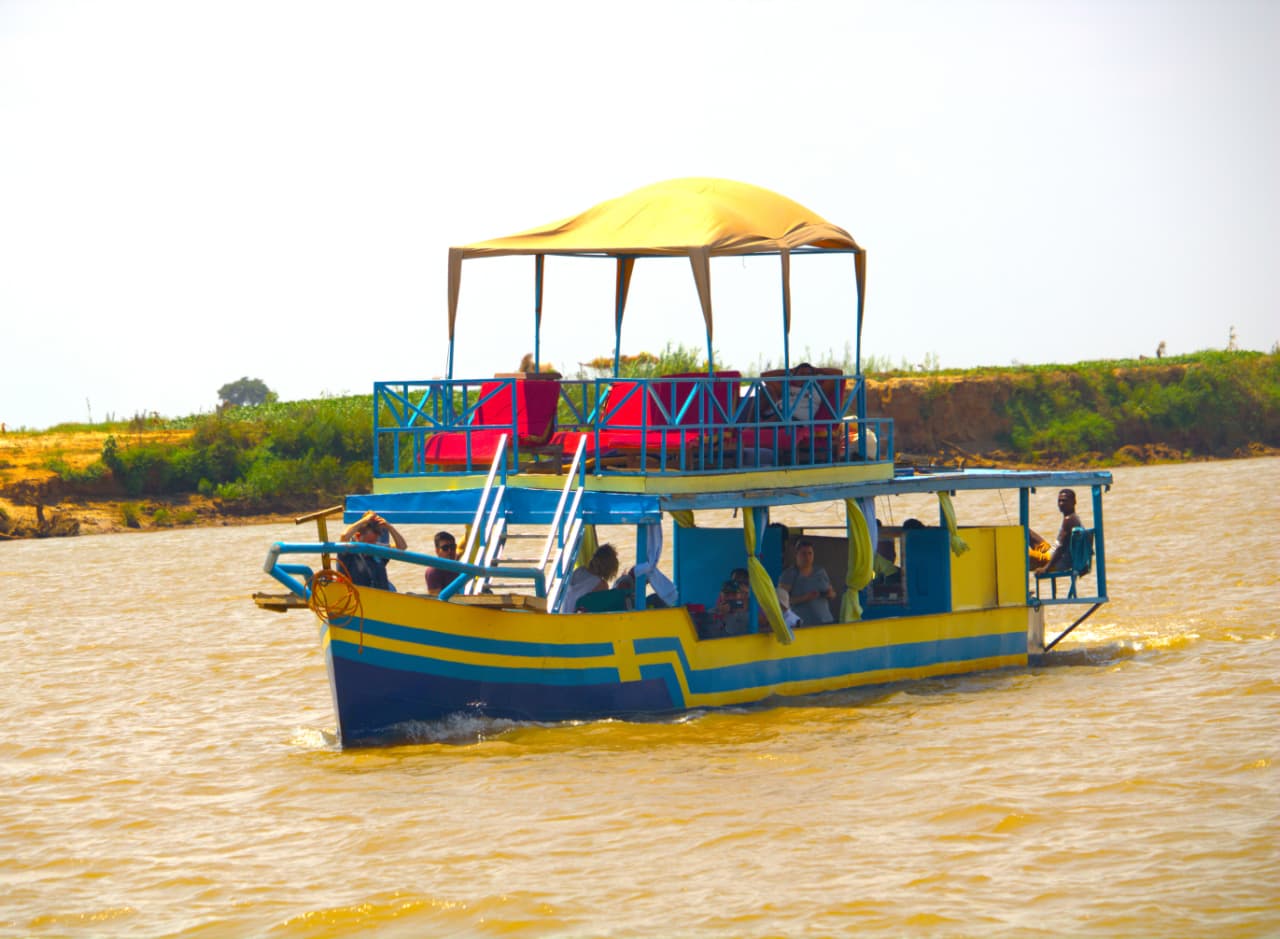
Four days drifting down the Tsiribihina with camps on the riverbank, then the Grand Tsingy, Kirindy's nocturnal forest and the baobabs.
Three weeks and nearly every landscape the island has: river cruise, Tsingy, baobabs, remote Vezo coast and the southern parks.
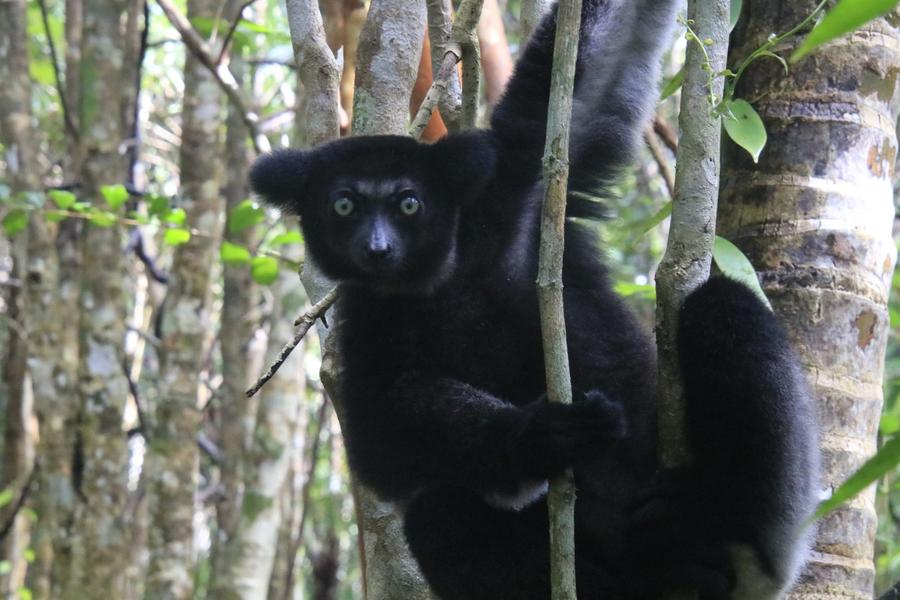
Lemurs, tenrecs, chameleons, frogs, birds, whales and, with luck, the fossa: what you can realistically see in Madagascar, where each lives, and how close you get.
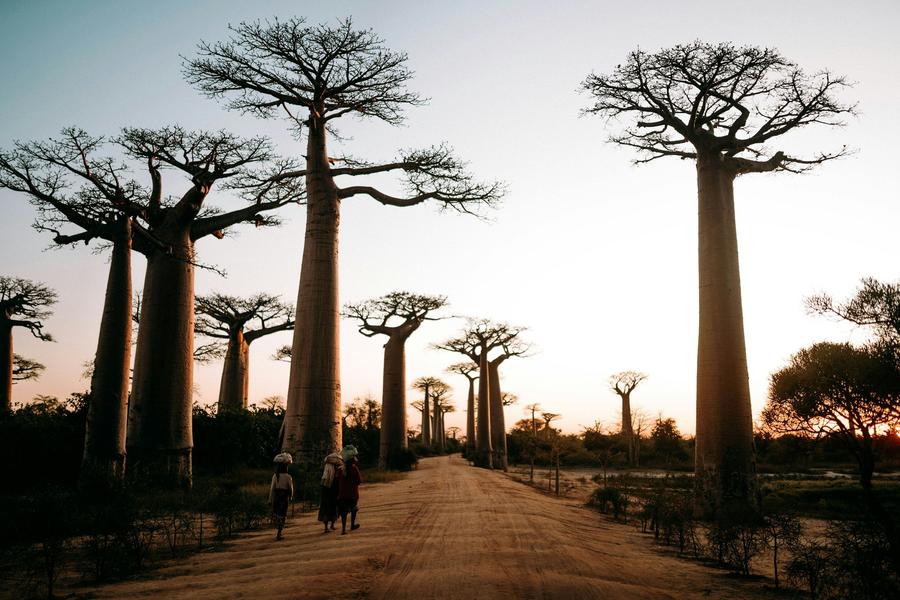
The flight or the long road in, Kirindy to the north, Belo-sur-Mer to the south, the beach the sea is eating, the dry months and how many nights to stay.
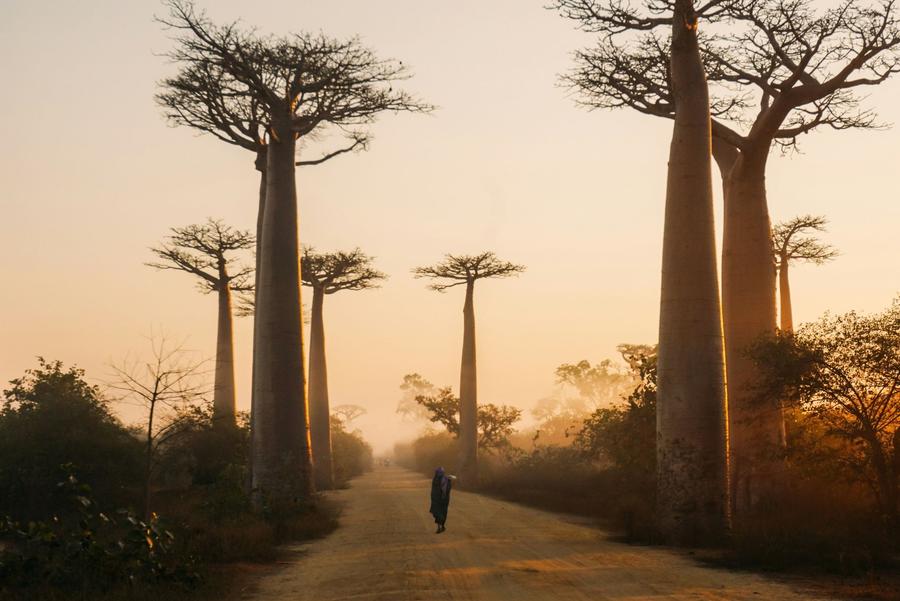
When to go, how to get to Morondava, what the rains change, and how to fit the Avenue in with Kirindy and the Tsingy.
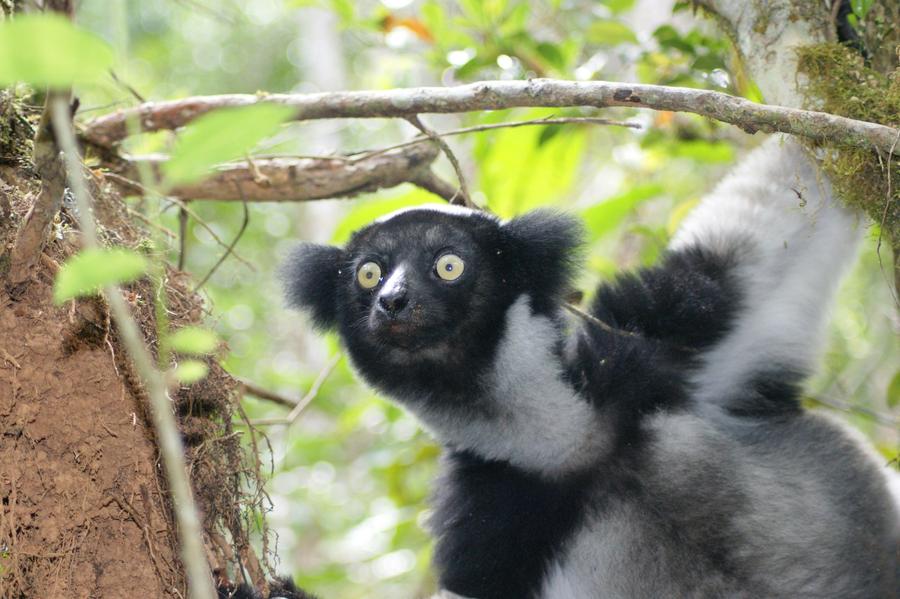
Indri, ring-tails, sifakas, the aye-aye and mouse lemurs: where each one lives, when to go, and how close you really get.

Send your dates and a rough idea. We reply within 24 hours with a written itinerary and a firm price. No deposit to ask a question.