
11 days · North
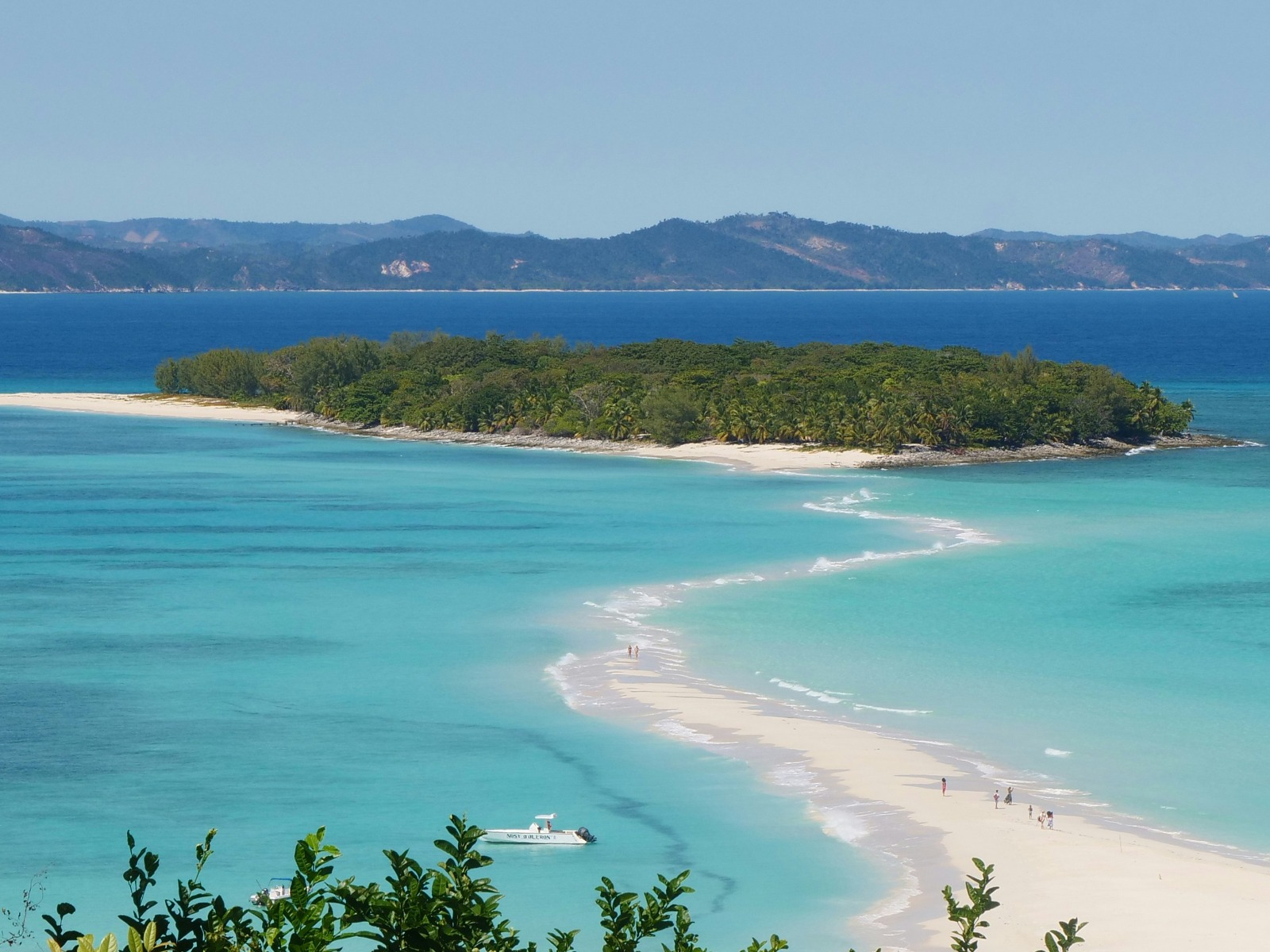
Northern Madagascar: Beaches, Tsingy & Wildlife
The Three Bays, Montagne d'Ambre, the red Tsingy and a full day in Ankarana's caves, then Lokobe and the sand of Nosy Iranja.
The black lemurs of Ampangorina and why we'd leave the bananas, the chameleons and day geckos, embroidery and carvings, snorkelling at Nosy Tanikely, the boat from Hell-Ville, and how Nosy Komba compares with Lokobe.
Nosy Komba is a small volcanic island with no roads, in the channel between Nosy Be and the mainland of north-west Madagascar, about 3 km off Nosy Be's Lokobe peninsula. It's called lemur island because the black lemurs around Ampangorina, the main village, are used to people and come within arm's reach. Motorboats from Hell-Ville take 20 to 30 minutes, and most visitors give it half a day, often combined with snorkelling at Nosy Tanikely.
It's worth a morning if you want black lemurs close up. Just know what you're looking at: these lemurs are fed by the village and its visitors, so it's closer to a village attraction than a walk in the forest. For black lemurs living wild, Lokobe National Park on Nosy Be is the better visit, and it's day 8 on both of our north trips: the 11-day Northern Madagascar trip, from €1,790 per adult, and the 12-day Northern Madagascar Adventure, priced on request. Nosy Komba isn't on either set itinerary, but every trip we run can be reshaped, so ask us if you'd like it added.
The island is roughly round, about 7 to 8 km across, and climbs steeply from the shore to a forested summit. You arrive by boat and get about on foot. A few thousand people live here, most of them Sakalava, mainly from fishing and from the visitors who come over from Nosy Be. Komba is the local name for the black lemur. The island's older name is Nosy Ambariovato.
Ampangorina (you'll also see it spelled Ampangorinana) sits on the north shore, facing Nosy Be. Boats usually land on its beach, and it's often a wet landing, so wear sandals you don't mind getting wet. Away from the village the slopes are mostly secondary forest and plantations, with mango and jackfruit trees. A small protected forest patch remains; much of the island has been changed by cultivation.
The village has long kept a fady, a local taboo, against hunting lemurs, and the black lemurs whose territories border it have lost their fear of people. Villagers charge a small fee to visit the lemur area, about 500 m from the village, and a guide calls the lemurs down from the trees with bananas. Some jump straight onto visitors' shoulders. Encounters can be close, although the lemurs can also be away feeding elsewhere.
Only the males are black. The females are chestnut to golden brown with white ear tufts, and babies are born from late August to November, so in those months you may see one riding on its mother. The species is Endangered.
We'd ask you not to feed them or let them climb on you. The IUCN's primate specialists advise against feeding or touching habituated lemurs anywhere: they can bite, and diseases pass both ways. Their guidelines also suggest staying about 7 m away. On Nosy Komba that's hard, because the lemurs close the gap themselves, so if one comes to you, stay still and let it move on. The population is also small and isolated. A 1996 genetic study found less variation in Nosy Komba's black lemurs than in those on the Ambato peninsula, on the mainland opposite.
Tell the guide at the start that you'd rather watch than feed, and let the animals choose their distance. If one bites or scratches you, wash the wound with soap and water and seek medical care immediately, for the reasons in our vaccinations and malaria guide. For lemurs elsewhere in Madagascar, see where to see lemurs.
Tell us your dates and what you would like to see. We reply within 24 hours with a written itinerary and a firm price.
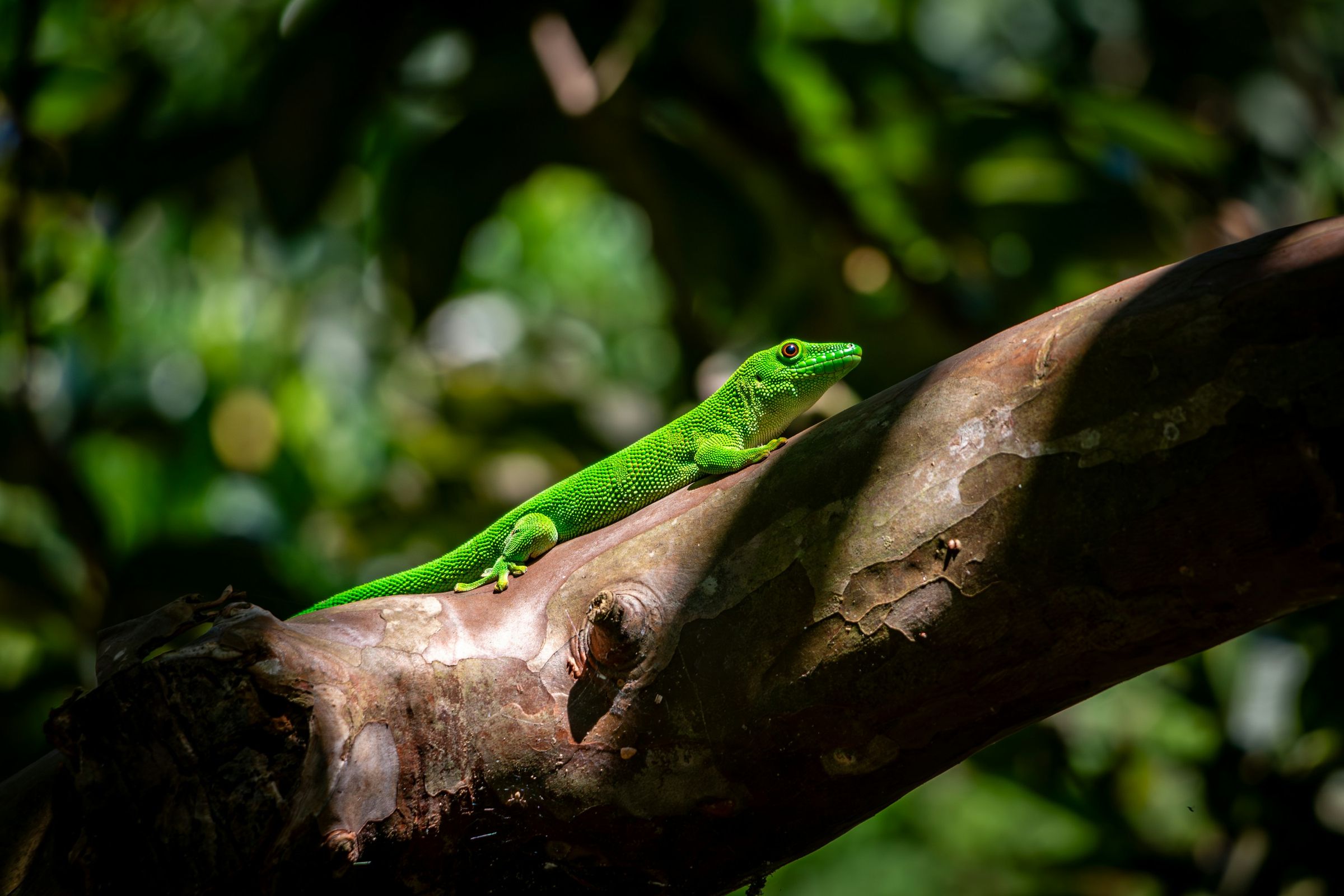
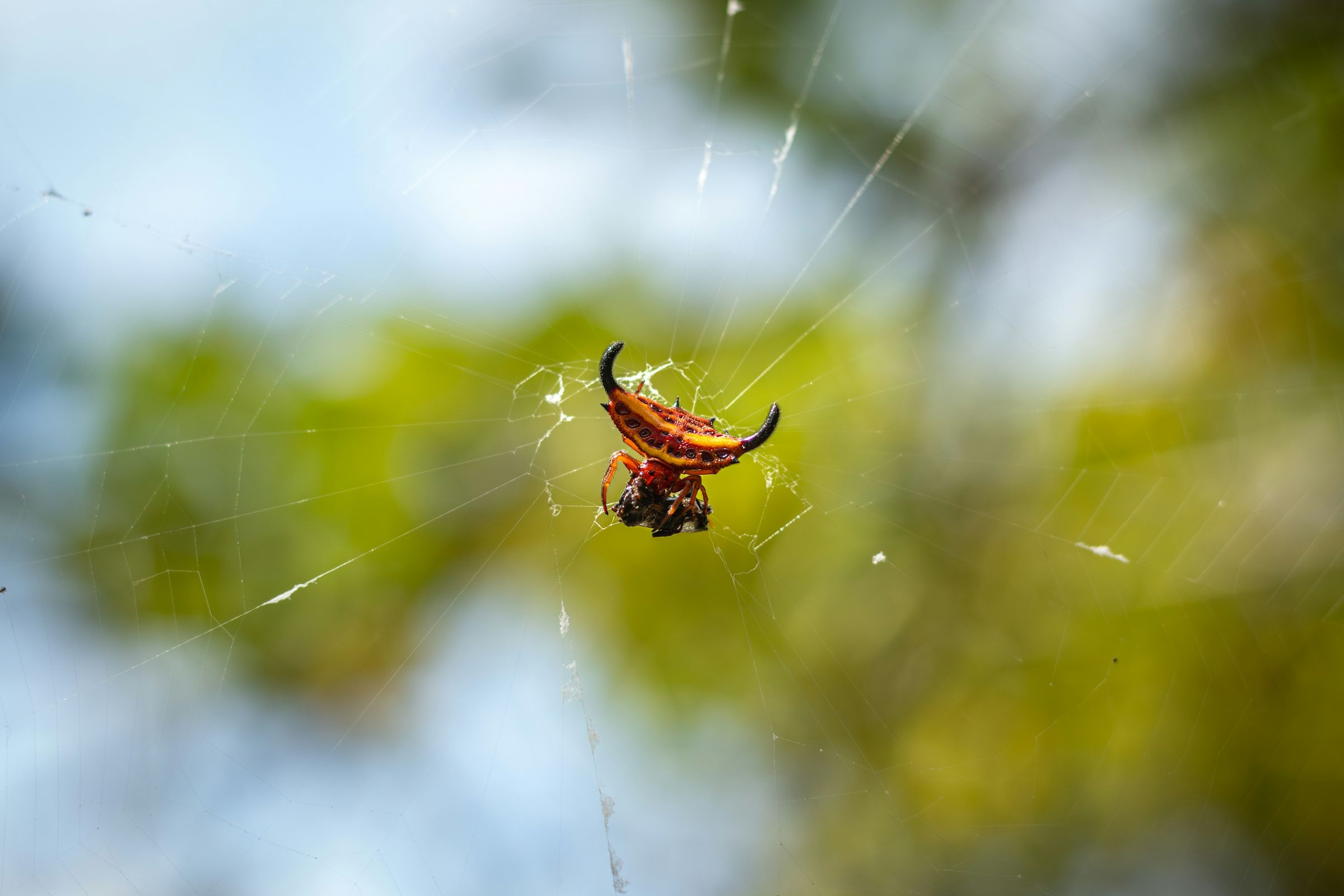
Look sideways and down as well as up. Panther chameleons live almost everywhere on the island, mostly in the scrub and secondary growth, and the males around here are usually turquoise or blue-green. Bright green day geckos sun themselves on branches, like the one at the top of this page, and you may spot a spiny orb-weaver, a small spider with two curved horns, waiting in its web.
The island's reptiles are only partly known: a survey in 2013, made outside the rainy season, still recorded 17 species here for the first time. The warm, wet months, roughly November to March, are when they're most active.
If someone offers to put a chameleon on your arm for a photo, say no and photograph it on its branch. Our chameleon guide explains why, and where else to look.
Souvenir stalls take up a good share of Ampangorina. They sell embroidered tablecloths and linen, often in sets with napkins and made on the island, along with woven baskets and wood carvings, a lot of them lemurs.
One thing to skip: carvings in precious hardwoods such as rosewood or ebony. The IUCN's lemur guidelines ask visitors not to buy them, because the wood is logged illegally from the forests the lemurs need. If a seller says rosewood, or can't tell you what the wood is, leave it.
The lemur fee, the guide and the stalls are all paid in cash, so take ariary in small notes. Nosy Be usually has a cash machine or two, and our money guide has the rest.
There's a small reef off Nosy Komba with colourful fish. For proper snorkelling, though, most boats go on to Nosy Tanikely, a marine national park around an islet about 9 km to the west. Madagascar National Parks counts 154 fish species and 110 kinds of coral there, along with green and hawksbill turtles, and a path climbs to the lighthouse on the islet. Touching the animals is forbidden, and it gets busy in high season.
Together, Nosy Komba and Nosy Tanikely make an easy full day from Nosy Be.
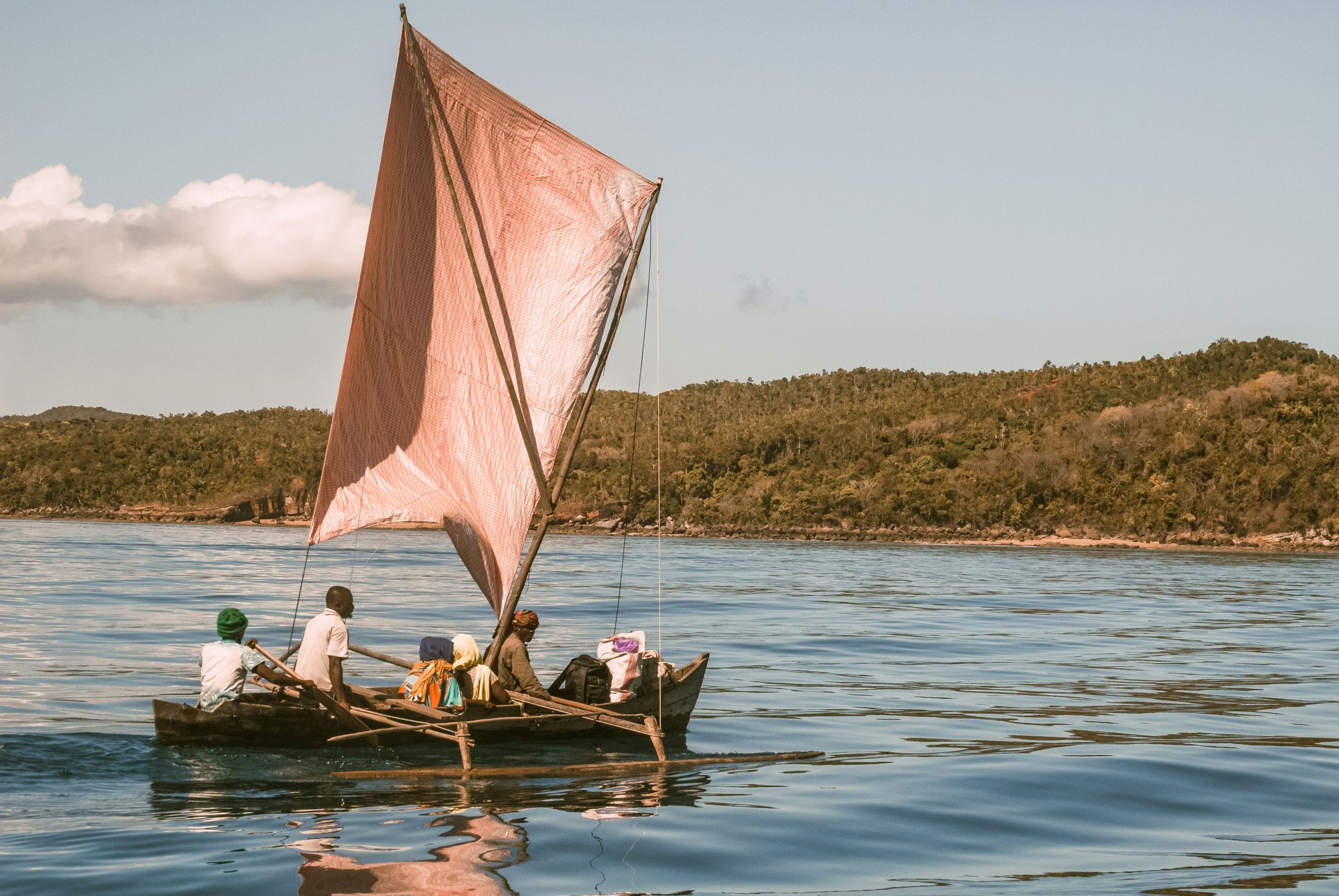
Motorboats take 20 to 30 minutes from Hell-Ville, Nosy Be's main town, about 9 km away. Hotels and boat operators on Nosy Be arrange the trips, and boats also leave from west-coast beaches such as Ambatoloaka, nearly twice as far. Canada's travel advice says to check that there are life jackets for everyone, not to board a boat that looks overloaded, and to stay ashore in bad weather. The dry season, May to October, suits boat days best. From December to March it's wet, cyclones are possible and plans can change at short notice (when to go, month by month).
Half a day allows a guided visit to the lemur area and time in the village. Allow longer for a walk inland or a boat onward to Tanikely.
You can also stay the night, in a handful of small lodges and guesthouses on the beaches, some of them simple. That suits you if you want to walk over the hills with a local guide on a route matched to your fitness or see the island after the day boats have gone. For a village visit, half a day is enough; an inland hike needs a separate plan.
Both have black lemurs, and they're very different visits. Lokobe, in the south-east corner of Nosy Be, has been a national park since 2011, and Madagascar National Parks calls it one of the last refuges of primary forest in Madagascar. You reach it by pirogue through the mangroves in the morning, then walk in with a local guide. The lemurs there are wild: you watch from the trail, and they may be high in the canopy or out of sight. On Nosy Komba, the lemurs come to you.
If you have one morning, we'd choose Lokobe: it's real forest, with chameleons and tree boas as well, and you see the lemurs behaving as lemurs do. Nosy Komba is another option for a village visit and embroidery shopping, with clear limits around animal contact.
On both north trips day 8 is Lokobe, with the canoe in, a guided walk and lunch near the park. The 11-day trip then spends two days on Nosy Iranja, and the 12-day trip a day at Nosy Sakatia and a day on Nosy Iranja. The afternoon you arrive from Ankify is free on both. If you'd like Nosy Komba added somewhere, say so when you ask for a quote and we'll tell you honestly whether it fits. For Nosy Be's other boat days and the flights, see our Nosy Be guide.
Tell us your dates and which islands you'd like on the booking form or WhatsApp. A real person in Antananarivo replies, usually within 24 hours, with a written itinerary and a firm price.
Photos: David Bruyndonckx and Alessandro Zanini on Unsplash.
In the channel between Nosy Be and the mainland of north-west Madagascar, about 3 km off Nosy Be's Lokobe peninsula and about 4 km from the mainland near Ankify. It's a small volcanic island with no roads. The main village, Ampangorina (also spelled Ampangorinana), is on the north shore facing Nosy Be.
By boat from Nosy Be. Motorboats take 20 to 30 minutes from Hell-Ville, and longer from west-coast beaches such as Ambatoloaka. Hotels and boat operators arrange the trips, often combined with snorkelling at Nosy Tanikely. Expect a wet landing, and check there are life jackets for everyone.
Guides there have long handed out bananas, but we'd ask you not to feed them. The IUCN's primate specialists advise against feeding or touching habituated lemurs anywhere, because they can bite and diseases pass both ways. Tell the guide you'd rather watch, and let the lemurs choose their distance. If one bites or scratches you, wash it with soap and water and seek medical care immediately.
For half a day, if you want black lemurs close up and some embroidery to take home. The lemurs are fed and used to people, so it isn't a wildlife walk in the usual sense. For wild black lemurs in real forest, Lokobe National Park on Nosy Be is the better choice. With only one morning, we'd pick Lokobe. If you want a night, a handful of small lodges and guesthouses sit on the beaches.
Not on the set itineraries. Both of our north trips spend four nights on Nosy Be, with a day in Lokobe National Park for its black lemurs and boat days to Nosy Iranja. Every trip can be reshaped, so if you'd like Nosy Komba added, ask when you request a quote and we'll tell you whether it fits.
Private trips with your own vehicle and driver-guide. Every one can be reshaped around your dates.
The Three Bays, Montagne d'Ambre, the red Tsingy and a full day in Ankarana's caves, then Lokobe and the sand of Nosy Iranja.
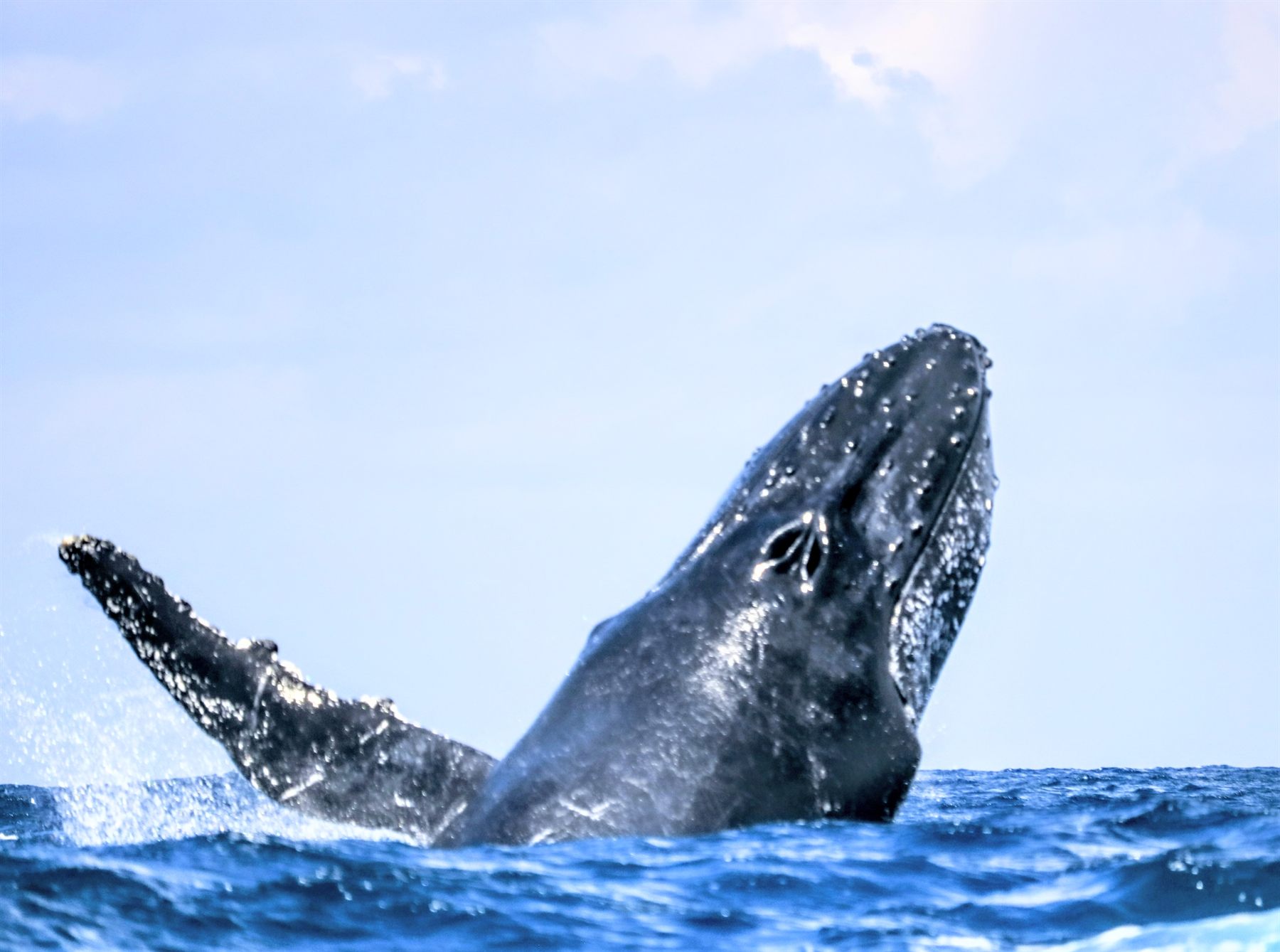
Everything the north has, plus the sea: Ankarana's caves, snorkelling at Sakatia, and a day out looking for humpback whales in migration season.
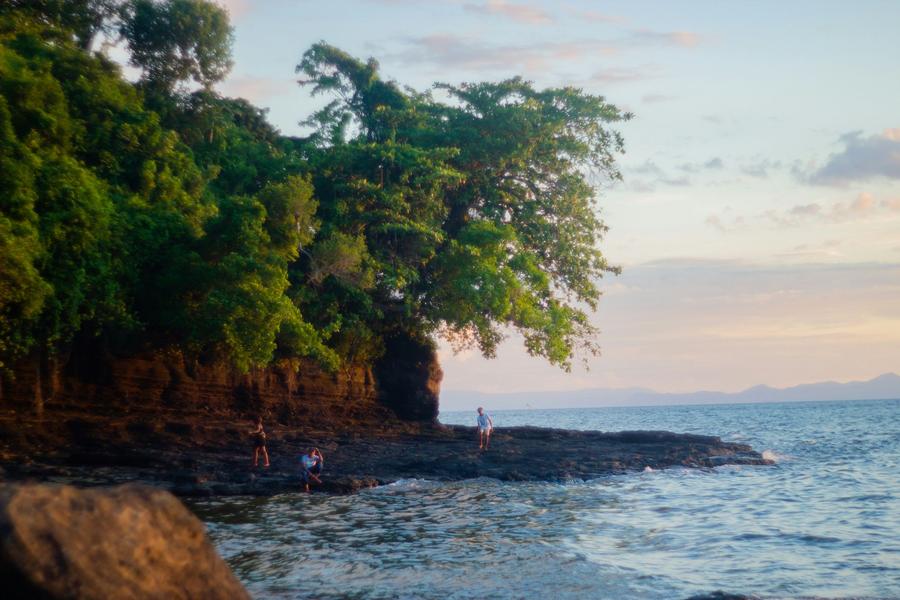
Lokobe, Nosy Komba, Tanikely and Iranja, when the rains and the whales come, flights and the Ankify boat, and how many nights to give Nosy Be.
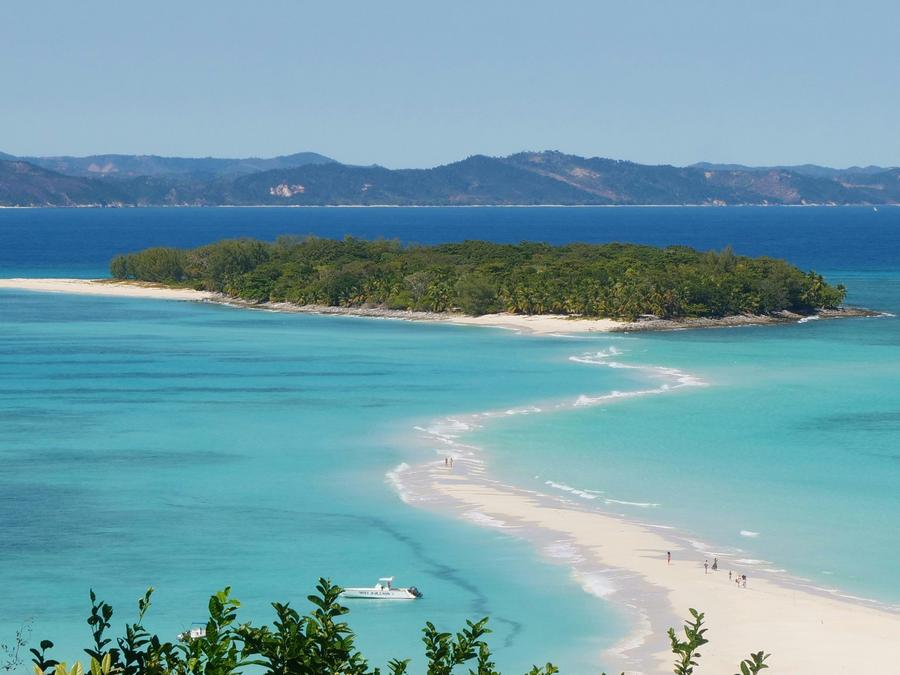
Nosy Be and its neighbours, Nosy Iranja, Mitsio, Sainte-Marie, Nosy Hara and Nosy Ve: what each island is for, the boats, the best months, and Mauritius or Réunion next door.
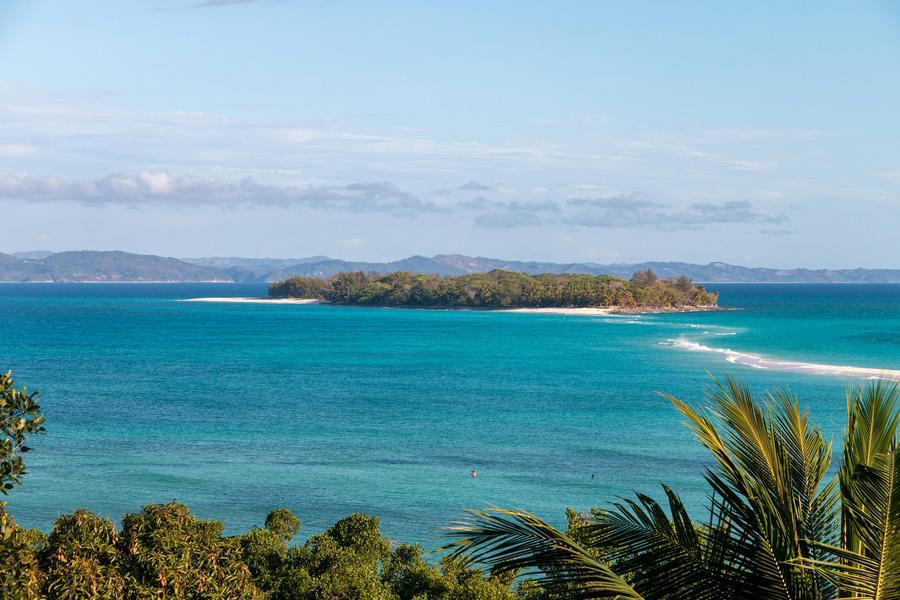
Two islets joined by a sandbar at low tide: the boat from Nosy Be, timing the tide, turtles, the lighthouse walk, and whether to stay the night.
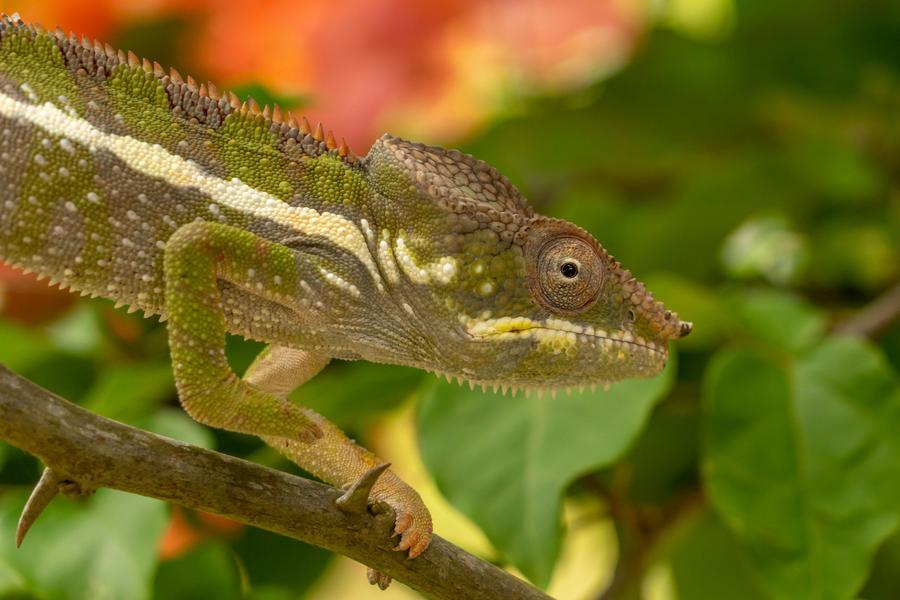
Panther, Parson's and leaf chameleons: where to find them, how the night walks work, what the colours really mean, and the months they're most active.

Send your dates and a rough idea. We reply within 24 hours with a written itinerary and a firm price. No deposit to ask a question.