
11 days · South

Classic South, Expanded Version
The classic route done properly: Andasibe, Ranomafana, Anja's ring-tailed lemurs, the canyons of Isalo and the reef at Ifaty.
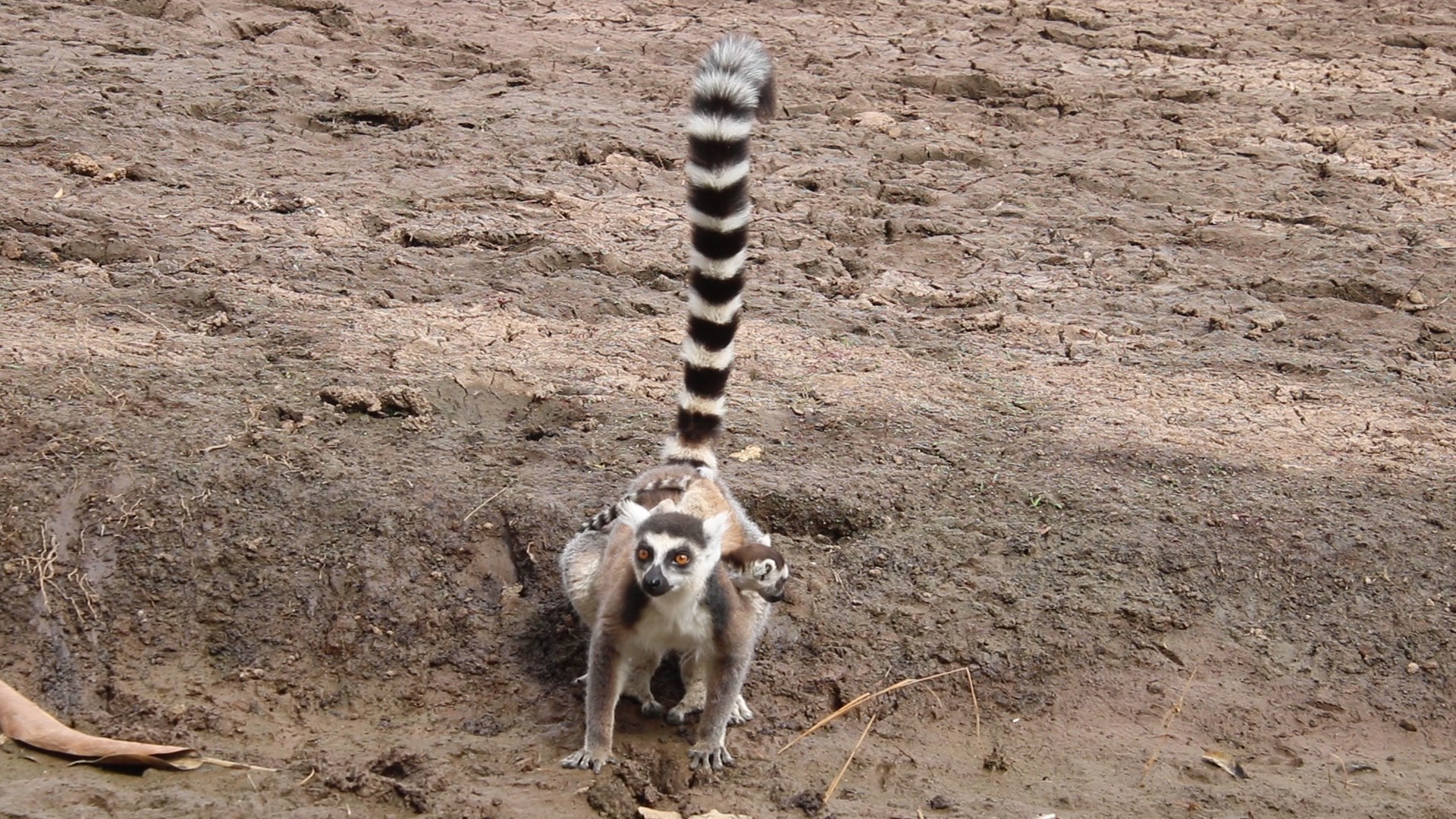
Where ring-tails live, how a visit to Anja works, what Isalo and the Tsaranoro valley add, when the babies ride on their mothers' backs, and why nobody should feed them. Plus which of our private trips stop for them.
Ring-tailed lemurs live naturally in southern and south-western Madagascar, in habitats ranging from gallery forest to spiny bush and rocky country. The easiest place to see them is Anja Community Reserve, a village-run reserve on the RN7 about 12 km south of Ambalavao, where the troops are used to people and start their mornings sunning on granite boulders. Isalo National Park, further down the same road, and the Tsaranoro valley are the other good bets. They're wild, so nobody can promise you a sighting.
Our Classic South, 11 days from €1,730 per adult, stops at Anja on day 6 and spends day 8 in Isalo. The Ultimate Madagascar Adventure, from €3,070, takes in both on its way back north. Both are private, with your own vehicle and driver-guide.
Only in Madagascar's southern third. The Duke Lemur Center puts their range from Fort-Dauphin in the south-east, west across the south and up the west coast as far as Morondava, with a separate population around the Andringitra mountains. They live in gallery forest along rivers, but they also live in dry forest, spiny bush and open rocky country, and on Andringitra above the tree line at about 2,500 m. Those forests are sparse, and they spend more time on the ground than any other lemur.
Ring-tails aren't native to Andasibe, the far north or Nosy Be. Even Kirindy, the dry forest on our western trips, has sifakas but no ring-tails. Ask how any hotel keeps its lemurs and avoid places offering pet-lemur photographs.
The places worth planning around:
Anja is small: about 30 hectares of forest and tumbled boulders at the foot of three granite domes that rise some 400 m above the plain. Since 1999 a village association, Anja Miray, has run it, and it won the UN's Equator Prize in 2012. Its ecotourism income funds village projects such as schools and health clinics.
You walk with a guide from the association. The reserve's lodge lists three loops: a flat, shaded one of one to two hours, a middle one of two to three hours with views over the Ambalavao plain, and a summit loop of four to five hours with some scrambling. Wear shoes with grip and take water and a hat. Betsileo tombs sit in the cliffs and the site has its fady (local taboos), so stay on the path your guide takes.
Early is best. Ring-tails start the day warming up in the sun, and Rough Guides advises going as soon after dawn as you can. On the Classic South, Anja is the late afternoon of day 6, after the Antemoro paper workshop in Ambalavao, so the visit is planned for afternoon light rather than morning sunbathing. You sleep in Ambalavao and Anja is on the road to Isalo, so if the morning matters to you, ask us about going at first light on day 7 instead. The Ultimate, coming north, stops there on the afternoon of day 16.
On our trips the reserve's fee and its guide are in the price.
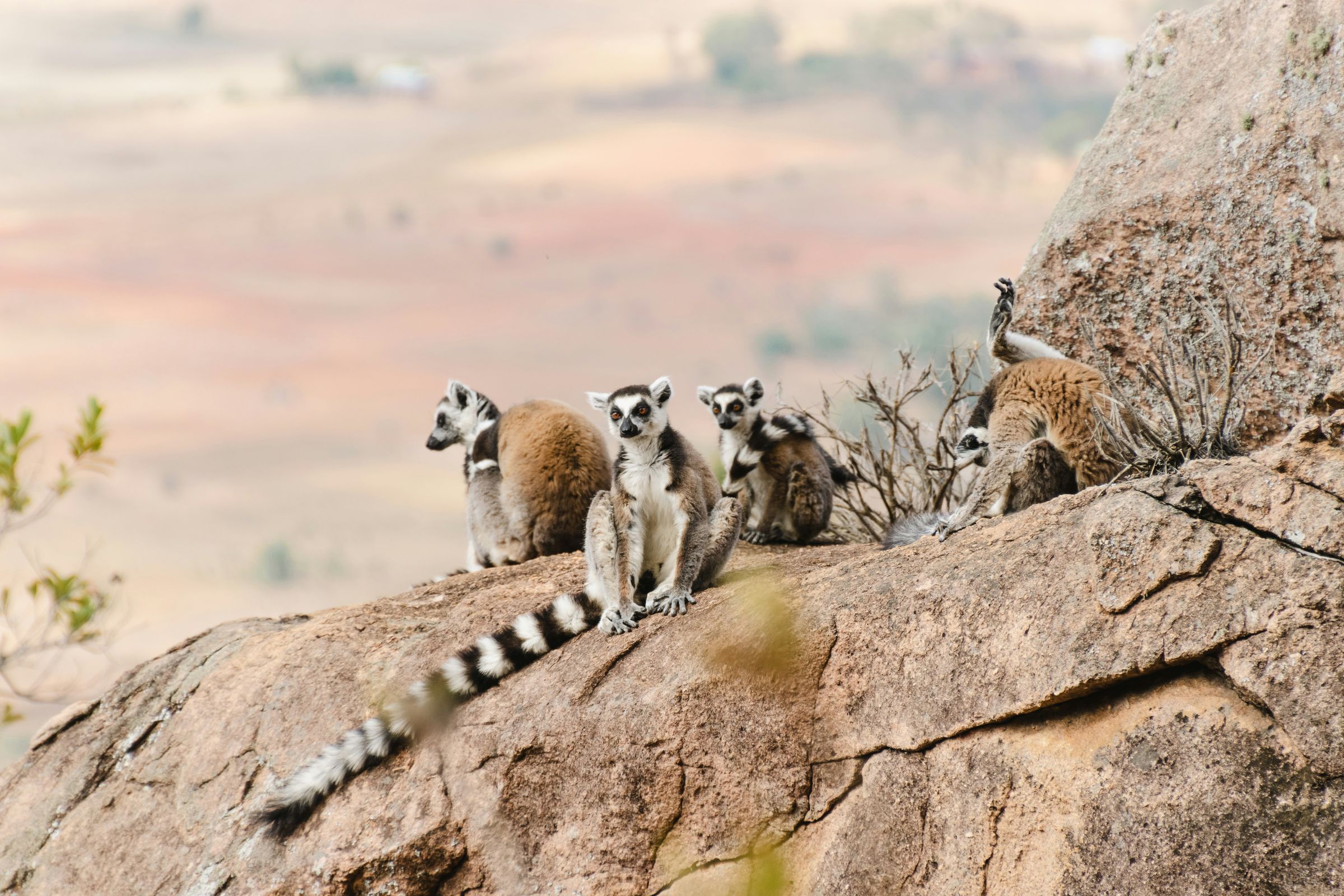
Isalo National Park is a sandstone massif about 700 km down the RN7, and most people come for the canyons and the natural pools. Of the seven lemur species Madagascar National Parks counts there, you might meet ring-tails, Verreaux's sifakas and brown lemurs by day.
Rough Guides says ring-tails tend to turn up far off on the cliffs and open rocky ground, or close up around the campsites, where they're rather too familiar with people. Around the Namaza campsite, where many walkers stop for lunch, some have learned that people mean food. Keep your lunch in your bag.
So treat Isalo's ring-tails as a possible bonus on a day of walking: day 8 on the Classic South, day 15 on the Ultimate. Our Isalo guide compares the walks, and our RN7 guide covers the drive from Anja and the travel advice for that stretch.
Tell us your dates and what you would like to see. We reply within 24 hours with a written itinerary and a firm price.
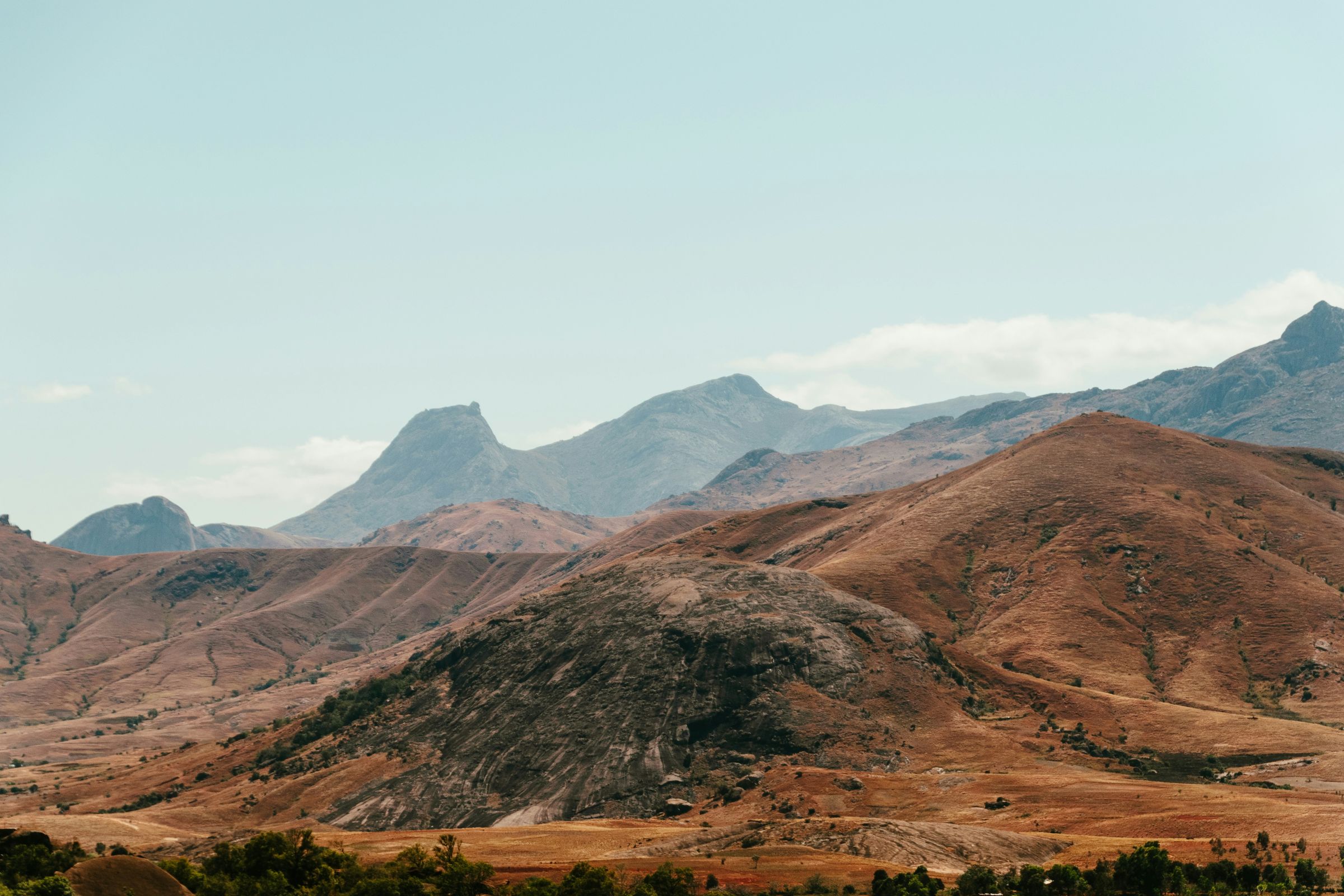
West of Andringitra National Park, the Tsaranoro valley is rice fields and villages under granite walls up to 800 m high. Its ring-tails live around the sacred forest at the foot of Tsaranoro, the burial ground of the valley's villages, and range out over the rocks and grassland. With luck you'll find them early in the morning, warming up in the sun.
A 2010 University of Victoria study found some of these groups going more than 400 m out of the forest to reach a tourist lodge, so keep your distance here too, and don't feed them. Higher up, a 1996 survey found ring-tails living above the tree line on the Andringitra massif at about 2,500 m.
The valley isn't on our set trips. The track leaves the RN7 about 35 to 37 km south of Ambalavao and needs a 4x4 for the last stretch, so allow two extra nights for a look and a day walk. Our Andringitra guide has the walks and the camps.
Berenty is where the primatologist Alison Jolly studied ring-tails for more than three decades. It's a private reserve of about 2.5 km² of gallery forest beside the Mandrare River, about two hours' drive on a bumpy road from Fort-Dauphin. Its ring-tails and Verreaux's sifakas are very habituated, and Rough Guides adds that it isn't representative of natural lemur society.
None of our set trips goes there. Fort-Dauphin is a long way from the RN7, in the corner of the south that the UK Foreign Office calls tense (more in our safety guide). For most trips, Anja gives you close-up ring-tails on the road you're already driving. If Berenty matters to you, tell us and we'll look at it.
Ring-tails live in troops of usually 15 to 20 and sometimes up to 30, bigger groups than any other lemur. Females dominate the groups. Females generally remain in their birth troop, while males move between groups. On the move a troop holds its tails up like flags, which keeps everyone together.
They're noisy, with at least 28 different calls. Males have scent glands on their wrists, and in a stink fight two rivals draw their tails through those glands, then wave them over their heads at each other until one gives up and runs off.
The habit everyone photographs is sun worship. On cool mornings a troop sits facing the sun with legs stretched out, warming up through the thinner fur on their bellies. Then they spread out to feed on fruit, leaves, flowers, bark and sap, with the odd insect.
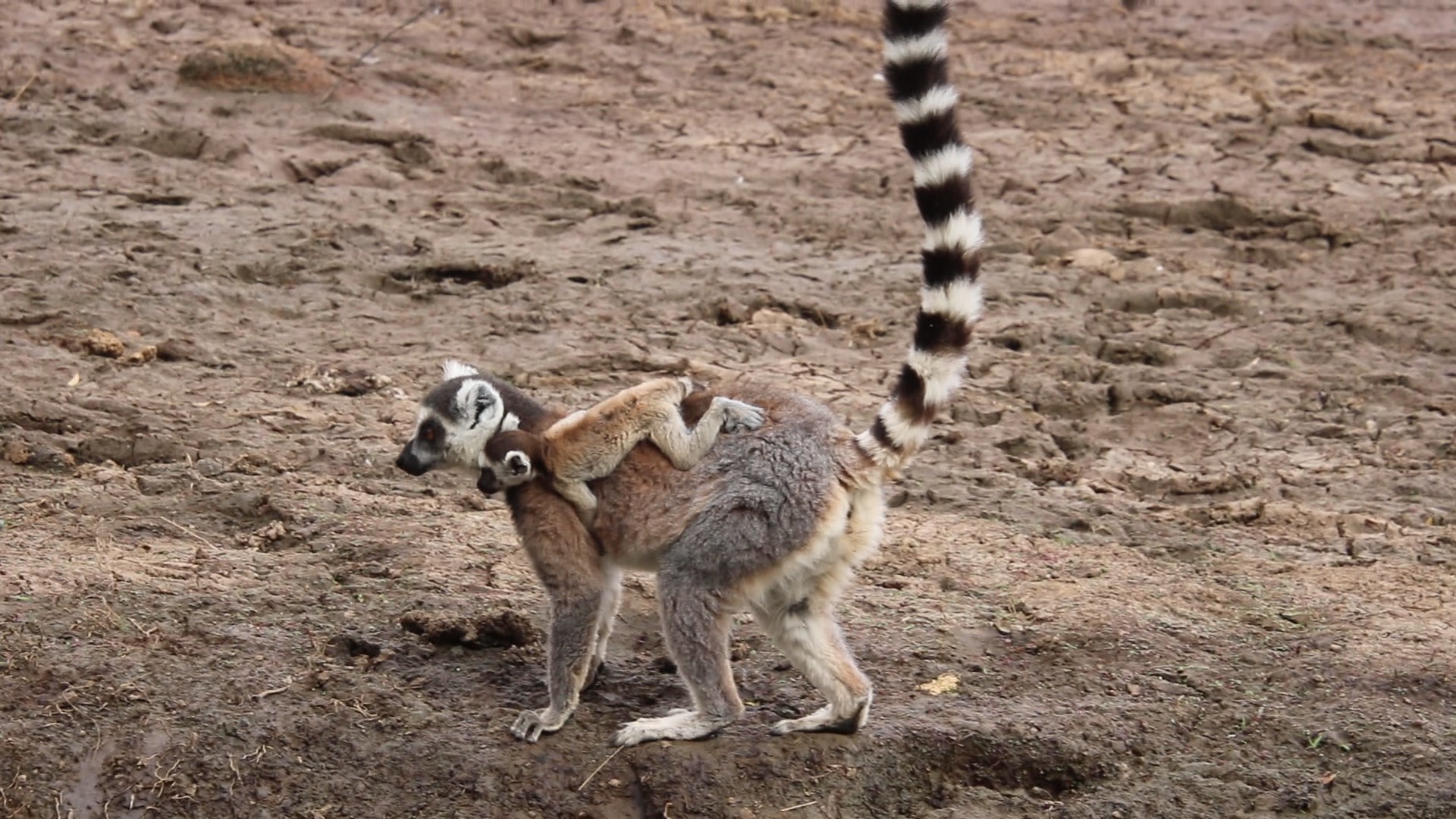
Mating starts in mid-April, and about four and a half months later the babies are born, in August and September, with some variation between years and locations. A baby clings to its mother's belly at first and rides on her back, jockey style, from about three weeks. Weaning comes at five to six months.
So September to November is the time for babies on backs at Anja and in Isalo. Christian filmed this mother, also the one at the top of the page, in September 2026. Isalo is at its hottest in October and November, so walk there early. The best time to visit Madagascar goes month by month.
Outside Madagascar the ring-tail is the lemur everyone knows: Duke counts more than 1,000 in about 140 zoos. In the wild it's Endangered on the IUCN Red List. Duke says satellite images suggest its habitat is disappearing even faster than forest elsewhere in Madagascar, as gallery forests are turned into farmland, overgrazed and cut for charcoal. It's hunted for food in some areas too.
And it's the pet lemur people see most. Keeping a lemur without a government permit is illegal in Madagascar, yet a 2019 national survey found the ring-tail was the pet lemur most often reported in central and southern Madagascar. Its estimate of roughly 3,800 pet lemurs across 12 towns covered lemurs of all species, rather than 3,800 ring-tails.
So turn down the photo with a lemur on your shoulder, and the hotel or restaurant that keeps one. The IUCN's primate specialists say most tourist businesses that keep lemurs obtain and keep them illegally.
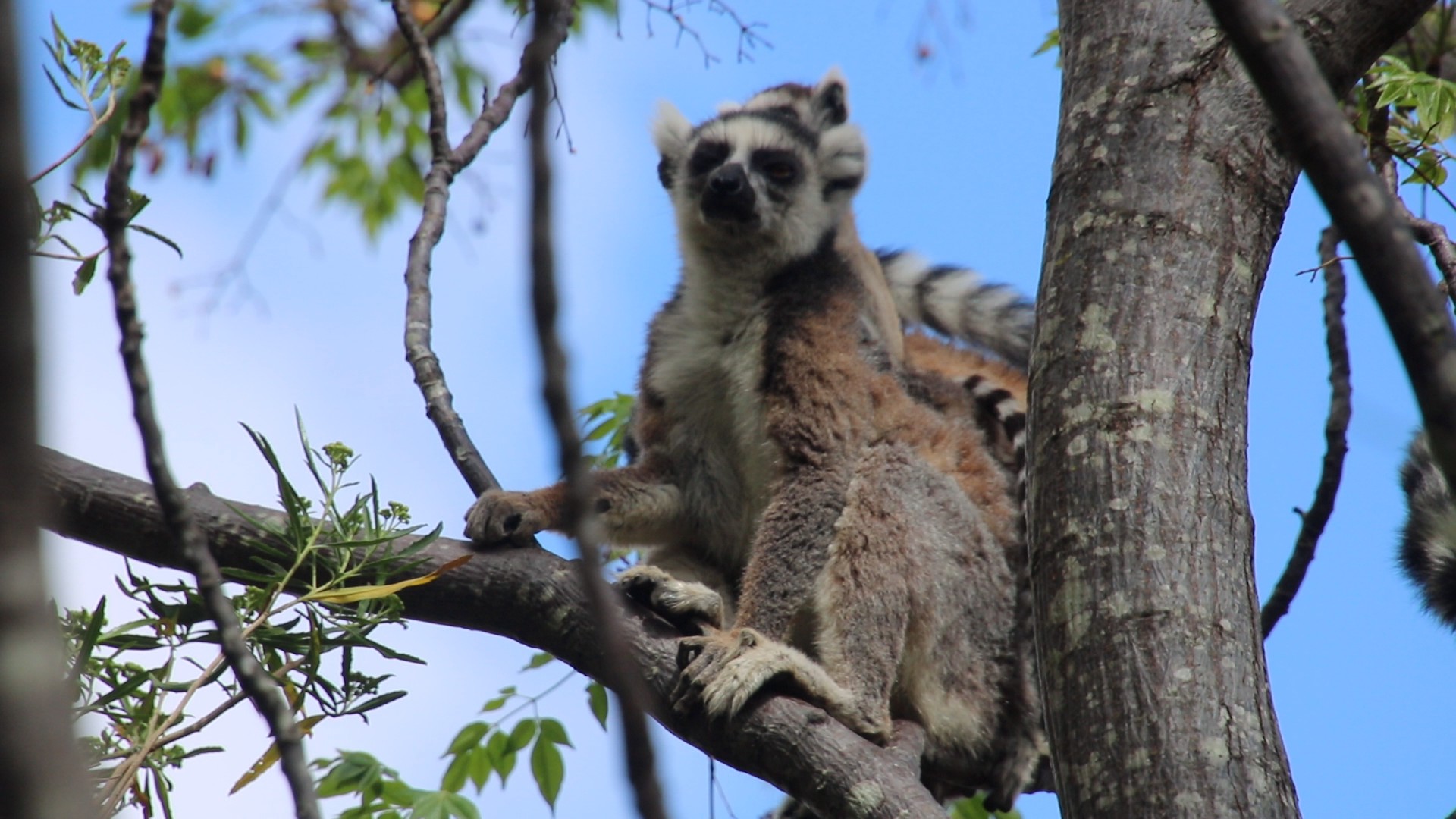
At Anja the troops are used to people, which is what makes a close look possible: they carry on with their day instead of moving off. That's habituation, and it doesn't make them tame.
The IUCN's lemur-watching recommendations hold everywhere:
If one walks up to you anyway, stay still and let it move on. For the picture, a long lens or a patient guide is what gets you the shot.
Two of our set trips stop for ring-tails. Both can be reshaped, for a first-light visit to Anja, say, or two extra nights in the Tsaranoro valley.
For the island's other lemurs, see where to see lemurs in Madagascar and our lemur safari.
Tell us your dates and which animals matter most, on the booking form or WhatsApp. A real person in Antananarivo replies, usually within 24 hours, with a written itinerary and a firm price.
Photos: Guillermo Suarez on Unsplash.
In the wild, only in southern and south-western Madagascar: gallery forest along rivers, dry forest, spiny bush and rocky country, from around Fort-Dauphin west and north to about Morondava, plus a population in the Andringitra mountains. They spend up to half the day on the ground, more than any other lemur. They aren't native to Andasibe or the far north.
A village-run reserve of about 30 hectares of forest and granite boulders on the RN7, about 12 km south of Ambalavao, managed since 1999 by the Anja Miray association. Its ring-tailed lemurs are used to people, which makes it one of the easiest places to see them up close. You walk with a local guide, on loops of one to five hours. Our Classic South (from €1,730 per adult) stops there on day 6.
It's possible, though nobody can promise it. Ring-tails, Verreaux's sifakas and brown lemurs live in the park, and ring-tails are often seen on open rocky ground and around the campsites, where some have grown too used to people. For close-up ring-tails, Anja, a few hours north on the RN7, is the better bet.
In August and September, with some variation between years and locations. Babies cling to their mother's belly at first and ride on her back from about three weeks old, so September to November is the time to see mothers carrying young. They're weaned at five to six months.
Yes, they're Endangered on the IUCN Red List. Their forests are being cleared for farms, grazing and charcoal, they're hunted in some areas, and a 2019 survey found them the pet lemur most often reported in central and southern Madagascar, though keeping a lemur without a permit is illegal. Say no to any photo with a pet lemur.
No. The IUCN's primate specialists advise against feeding or touching lemurs anywhere: they can bite, and diseases pass both ways. Keep at least 7 m away, even from troops used to people, and keep food out of sight.
Private trips with your own vehicle and driver-guide. Every one can be reshaped around your dates.
The classic route done properly: Andasibe, Ranomafana, Anja's ring-tailed lemurs, the canyons of Isalo and the reef at Ifaty.
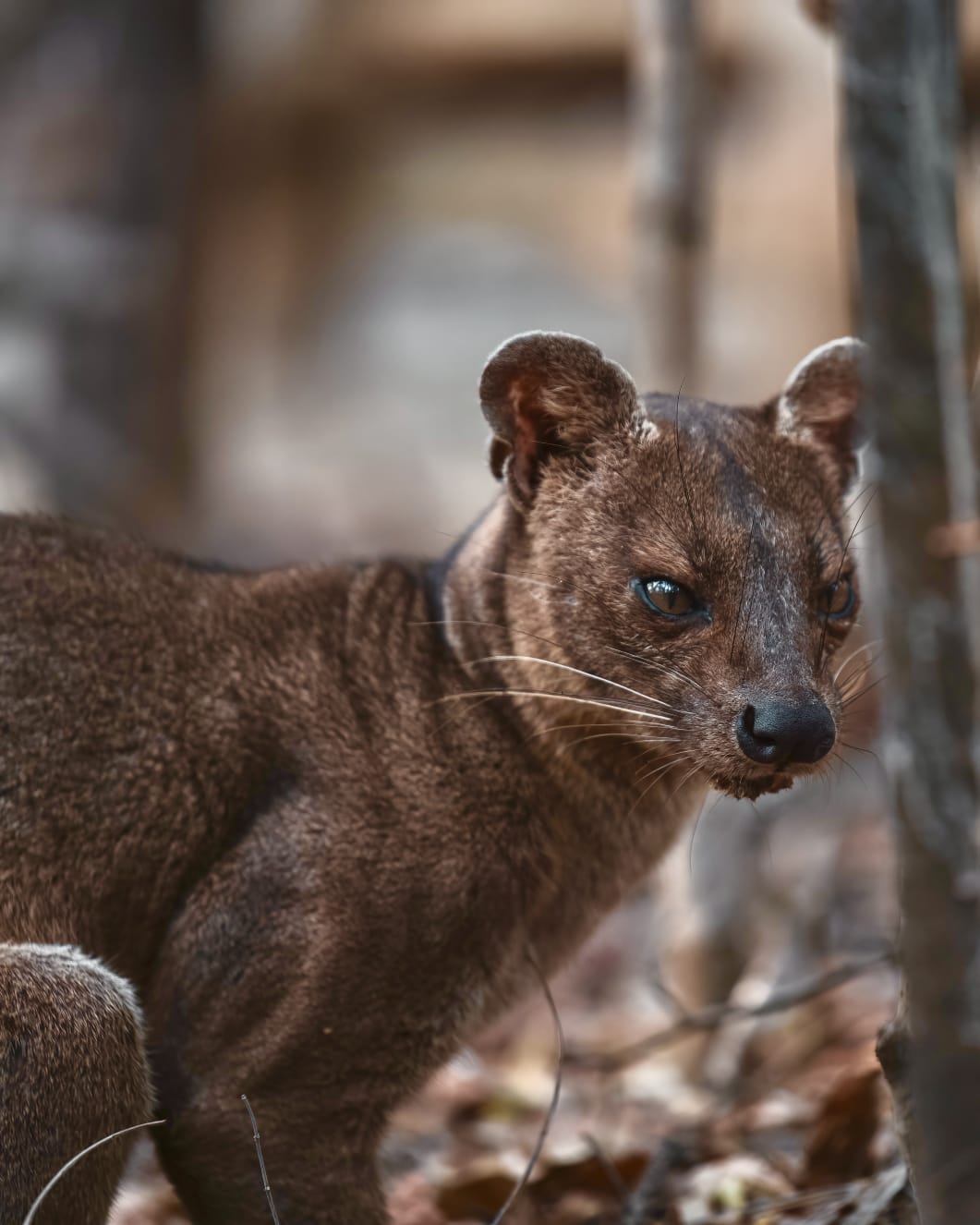
Three weeks and nearly every landscape the island has: river cruise, Tsingy, baobabs, remote Vezo coast and the southern parks.
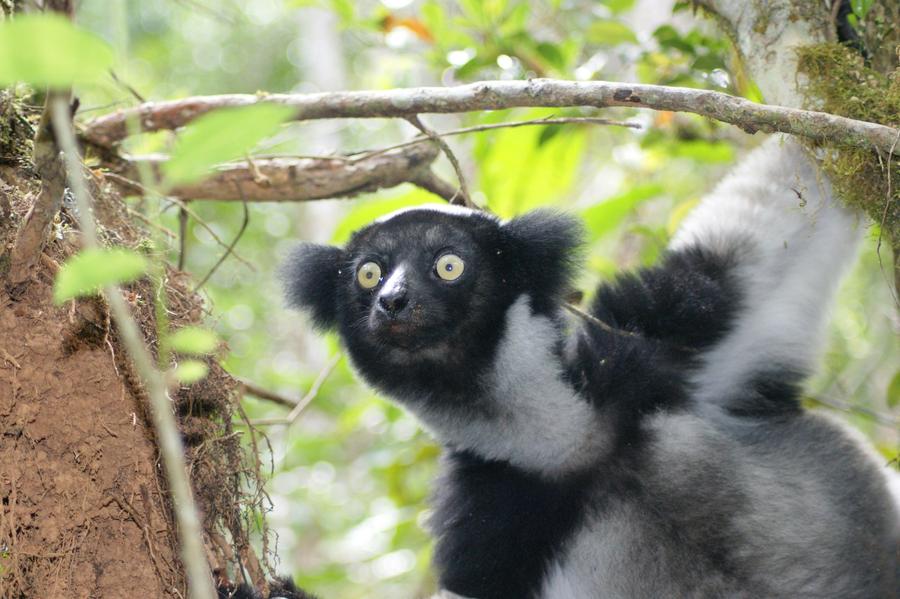
Indri, ring-tails, sifakas, the aye-aye and mouse lemurs: where each one lives, when to go, and how close you really get.
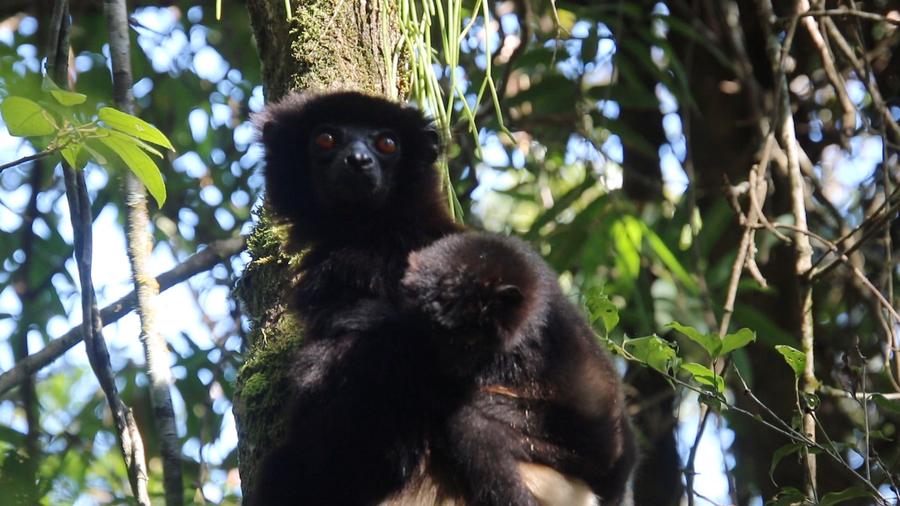
The nine sifakas, why they dance on two legs, which forest holds which species, the months for babies and how close you really get.
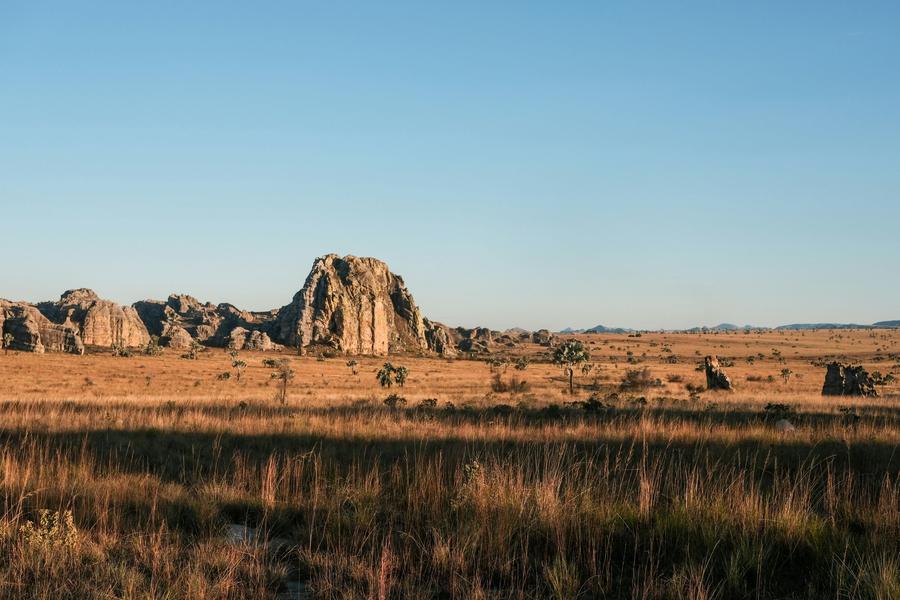
How the Isalo walks compare, how many days to give it, when the heat bites, the 2026 park fees and where it fits between Anja and the coast.
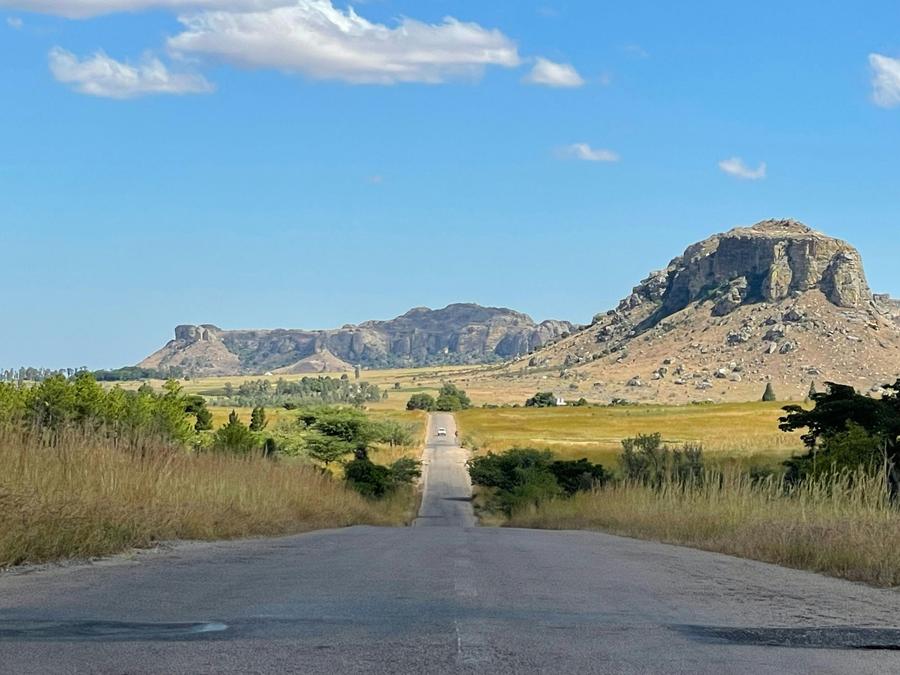
Antsirabe to Ifaty stop by stop: road-day allowances, optional visits, the flight back and how to fit the Classic South into your total calendar days.

Send your dates and a rough idea. We reply within 24 hours with a written itinerary and a firm price. No deposit to ask a question.